Picture yourself riding a Vespa along Sardinia’s coastline, stopping at viewpoints above turquoise bays and visiting small villages at your own pace. It sounds like the perfect Mediterranean holiday. But is renting a scooter actually safe, or are Sardinia’s coastal roads too fast and dangerous?
The answer is that a scooter can be a wonderful way to explore parts of Sardinia, but it is not the right choice for every route or every rider. Your experience, the type of scooter, traffic, weather and road conditions matter far more than the postcard scenery.
Are scooters and Vespas available to rent in Sardinia?
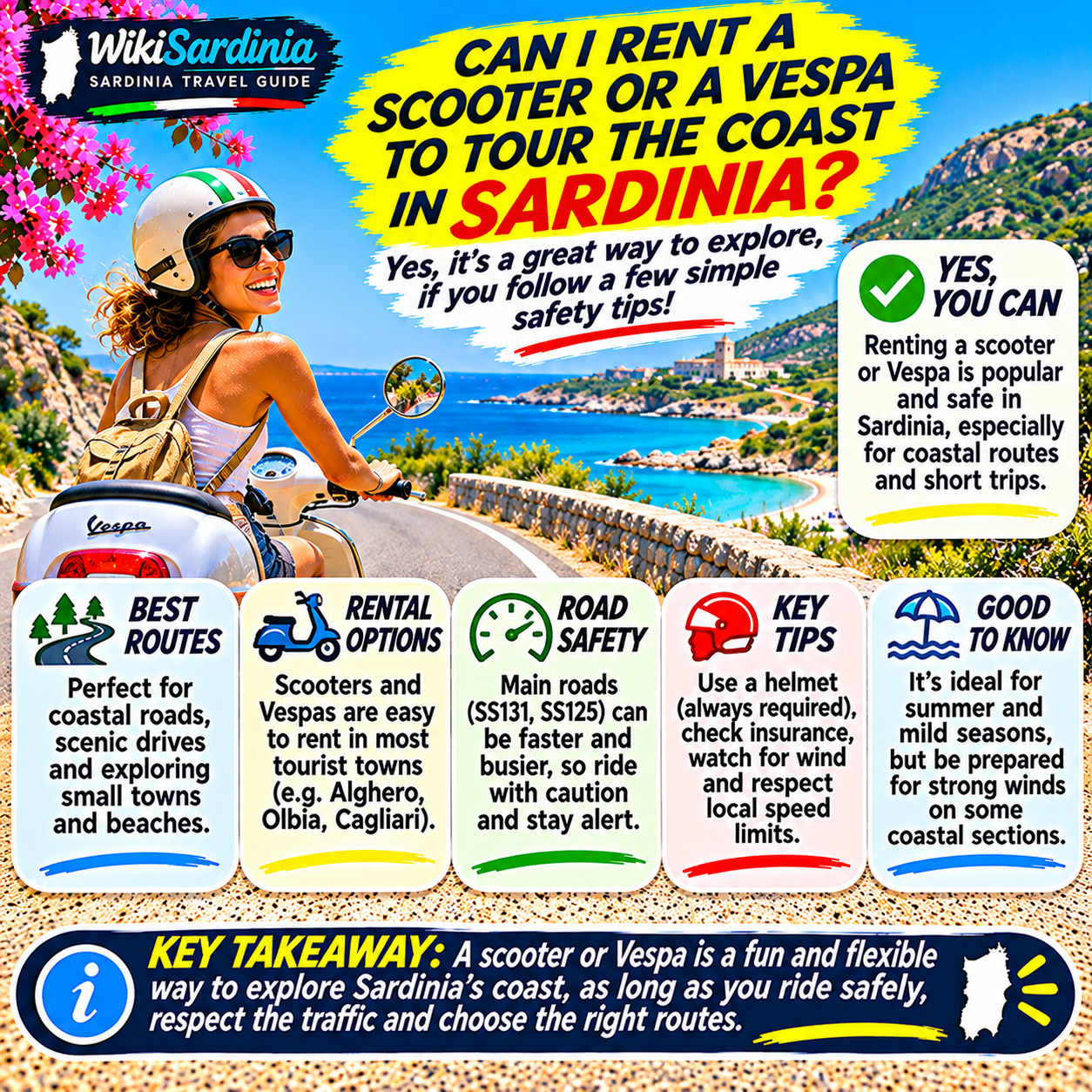
Yes. Scooter rental businesses operate in several tourist destinations, including areas around Olbia and other coastal towns. Availability, models, minimum age, deposit, mileage allowances and insurance vary between providers, so check the rental conditions before booking. A Vespa is a scooter brand, not a separate licensing category: what matters legally is the vehicle’s engine capacity, power and classification.
Are Sardinia’s coastal roads safe for scooters?
Some local coastal roads are suitable for experienced scooter riders in good conditions, especially for short trips between towns, beaches and nearby attractions. Others have tight bends, steep gradients, narrow lanes, limited shoulders and exposed sections where strong crosswinds can be uncomfortable or dangerous. In summer, traffic on popular coastal roads increases significantly. Sardinia’s official tourism website specifically advises visitors to account for heavy coastal traffic when planning journeys.
Before choosing a route, consider how comfortable you are with overtaking traffic, roundabouts, steep descents and riding in gusty wind. If you have never ridden a scooter before, a busy coastal road is not a good place to learn.
What about the SS125 and other major roads?
The SS125 Orientale Sarda includes scenic stretches, but parts of the broader road network are designed for faster traffic and others are winding mountain routes. Road classification and access restrictions can differ by section. A 50cc moped is not suitable for high-speed through routes and cannot use roads legally restricted to certain motor vehicles. Under current Italian rules, qualifying motorcycles of at least 120cc driven by adults may use autostrade and main extra-urban roads, subject to the relevant conditions; that legal permission does not make a fast road a good touring choice on a small scooter.
When planning a journey, distinguish between the scenic old road and faster bypasses, and check signs rather than assuming every road with the same number has identical access rules.
What are the best types of coastal trips?
For many visitors, the most enjoyable scooter day is a modest loop around a coastal base, with frequent stops and a return before dark. The famous Alghero–Bosa coastal route offers beautiful views but is winding and exposed to wind; it is better suited to confident riders who have checked the forecast and allowed ample time. Shorter local outings around established resorts may be more manageable, but still require attention to traffic and road surfaces.
Do you need a motorcycle licence?
Always check before paying for a rental. In Italy, an AM entitlement covers eligible mopeds, while A1 covers qualifying motorcycles up to 125cc and 11 kW. Italian category B licence holders have a national entitlement to ride qualifying A1 vehicles in Italy, but visitors with foreign car licences must not assume that the same entitlement applies. Recognition depends on the issuing country, licence categories, international driving permit rules where applicable and the rental company’s conditions. Larger scooters may require A2 or A entitlement. Ask the rental provider to verify your actual licence before confirming the booking.
Official reference: Italian Highway Code, Article 116 and Article 125.
What safety equipment should you use?
A properly fastened, approved motorcycle helmet is compulsory for rider and passenger. For real protection, also wear a jacket, gloves, long trousers and closed footwear, even when the weather is hot. Avoid riding in flip-flops or beachwear. Check tyres, brakes, lights and mirrors before leaving the rental location, and photograph existing damage. Make sure the insurance covers your intended use and understand the excess, theft provisions and roadside assistance.
Watch out for the Maestrale wind
Sardinia can experience strong Maestrale winds, particularly on exposed stretches of coast. Gusts may affect a lightweight scooter and make passing larger vehicles more stressful. Check the weather before setting off, and postpone an exposed route if winds are strong. Avoid riding at night on unfamiliar winding roads, when visibility and the ability to spot road hazards are reduced.
What about beach access roads?
Some beaches are reached by rough, sandy or unpaved tracks. Standard road scooters are not off-road vehicles: loose gravel, deep sand and potholes can cause a loss of traction. Many rental contracts also restrict unpaved-road use. Park legally on a suitable paved surface and walk the remaining distance when necessary. Never enter protected dunes or restricted access tracks.
Should you rent a 50cc, 125cc or larger scooter?
A 50cc moped may work for short local journeys where permitted, but its limited speed makes it a poor choice for long-distance touring among faster traffic. A 125cc scooter can be more versatile for experienced, properly licensed riders, although it may still struggle with hills, luggage or a passenger. Larger scooters can be more comfortable for some routes but demand additional skill and the appropriate licence. Choose based on experience and terrain, not simply on rental price.
The WikiSardinia takeaway
Renting a scooter or Vespa in Sardinia can be a fantastic way to enjoy the coast, provided you have the correct licence and real riding experience. Stick to routes suited to your vehicle, wear protective equipment, respect speed limits and be cautious about summer traffic, exposed bends and strong wind. If you are a complete beginner, travelling with substantial luggage or planning long fast-road journeys, a car or organized excursion may be the safer, more comfortable choice.
For general local driving advice, consult SardegnaTurismo’s official safe-driving guide.