Enjoying fresh bread, grilled vegetables or a salad in Sardinia? If you want extra virgin olive oil rather than a generic cooking oil, a short Italian phrase will make your request clear. You do not need complicated vocabulary—just ask politely and, if necessary, specify that you do not want seed oil.
The phrase to remember
In Italian, say:
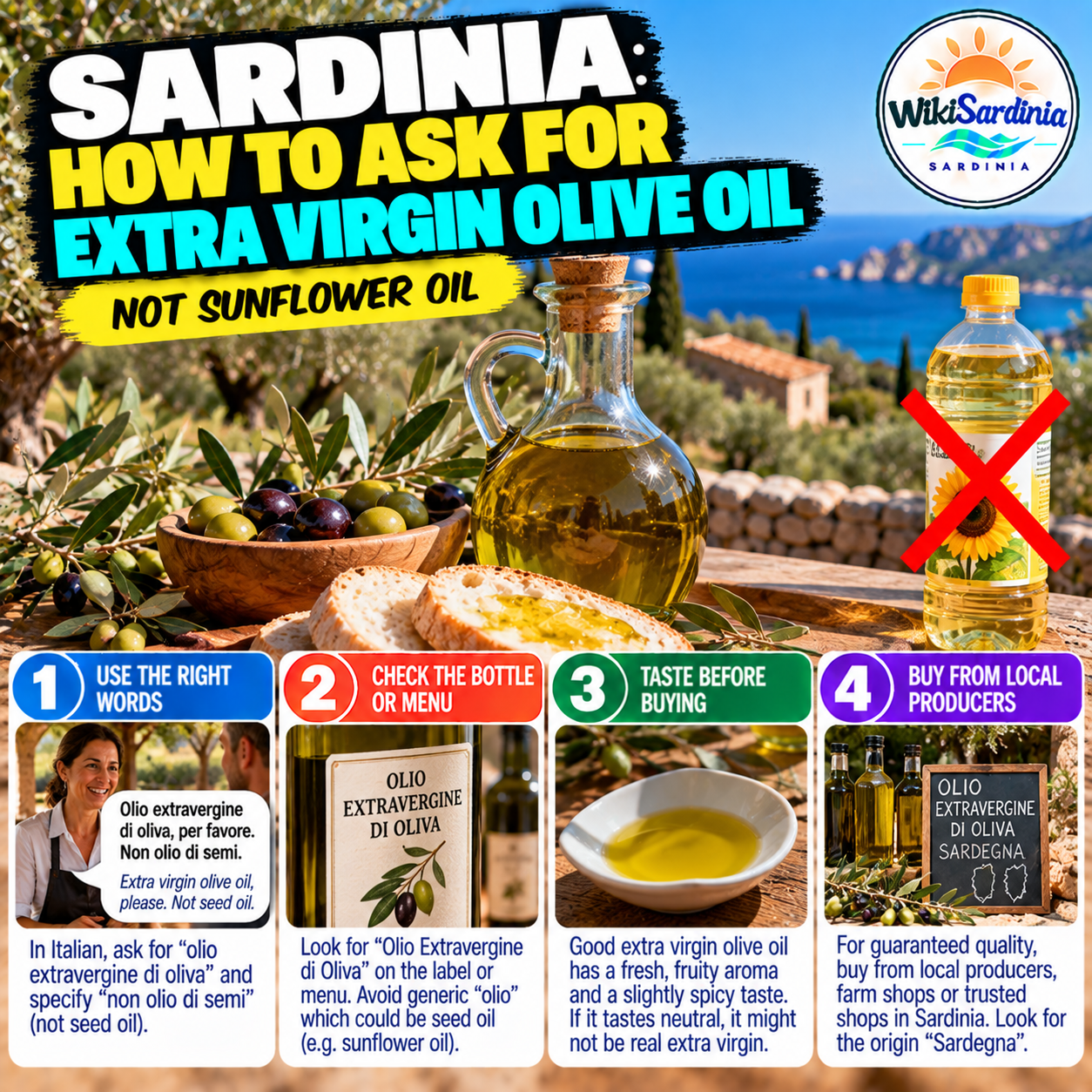
“Olio extravergine di oliva, per favore. Non olio di semi.”
It means: “Extra virgin olive oil, please. Not seed oil.” You can also ask, “È olio extravergine di oliva?” (“Is it extra virgin olive oil?”).
The wording “olio extravergine” is commonly understood, but the full phrase olio extravergine di oliva is more precise. Avoid “olio d’olivo” if you want to be specific about the extra virgin category.
Check the menu or bottle
At a restaurant, ask the server what oil is used for dressing salads or serving with bread. If a bottle is brought to the table, look for the words olio extra vergine di oliva on the label. A generic reference to olio (“oil”) does not tell you which kind it is.
If you are asking about the oil used in cooking rather than the bottle at the table, make that distinction clear. A restaurant may use different oils for frying, cooking and finishing dishes.
How to ask naturally at a restaurant
- “Avete olio extravergine di oliva?” — Do you have extra virgin olive oil?
- “Posso avere dell’olio extravergine di oliva per il pane?” — Could I have extra virgin olive oil for the bread?
- “Che olio usate per condire l’insalata?” — What oil do you use to dress the salad?
- “Preferirei olio extravergine di oliva, non olio di semi.” — I’d prefer extra virgin olive oil, not seed oil.
A friendly question is usually enough. If the restaurant does not have extra virgin olive oil available, you can decide whether to order something else or simply enjoy the meal as served.
How to recognise good extra virgin olive oil
Extra virgin olive oil is a regulated category, not just a phrase used to describe any olive-flavoured oil. When buying a bottle, check the label for the exact category and look for clear information about the producer and origin. If you want oil from Sardinia specifically, check that the label identifies Sardinia as the origin rather than assuming that every bottle sold on the island was produced there.
Fresh extra virgin olive oil can have fruity aromas and may taste slightly bitter or peppery, depending on the olives and harvest. Taste alone, however, cannot prove the legal category or origin of an oil; the label and a reliable producer are more useful checks.
Where to buy Sardinian olive oil
For a bottle to take home, consider a local olive mill, farm shop, farmers’ market or reputable food shop. Ask where the olives were grown and milled, and whether the oil is from the current harvest. Producers can often explain the variety, flavour profile and best ways to use their oil.
Keep the bottle away from direct sunlight and heat, and close it after use. Olive oil is best stored in a cool, dark place so its aroma and quality are better preserved.
A small phrase that makes ordering easier
Remember: “Olio extravergine di oliva, per favore. Non olio di semi.” It is clear, polite and useful when ordering in Sardinia. If you want to know what is already being served, ask “È olio extravergine di oliva?”—and check the label when you buy a bottle to take home.