
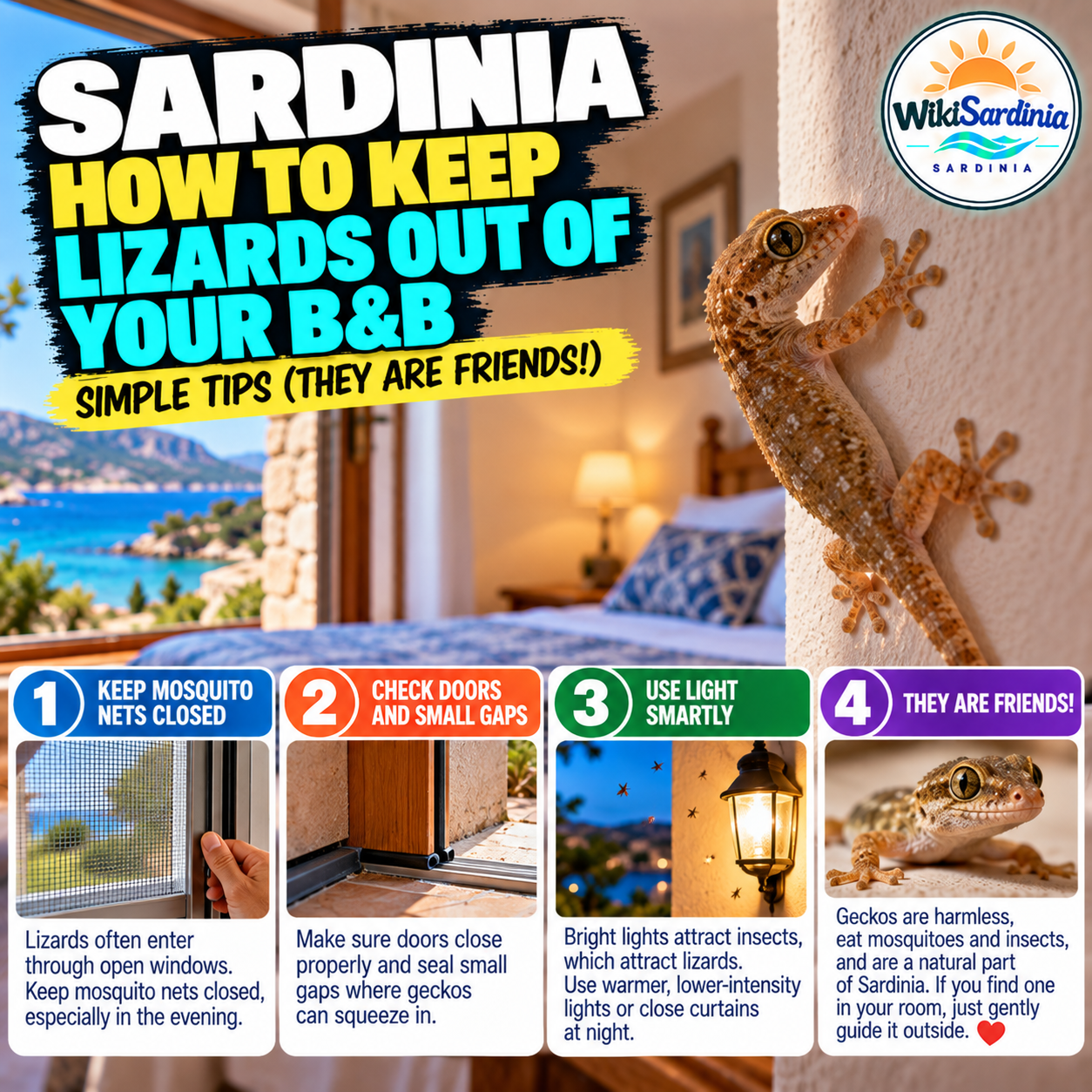
You arrive at your Sardinian B&B, open the window to enjoy the sea breeze, and spot a tiny gecko on the bedroom wall. Before you panic, here is the good news: geckos are a familiar part of life in Sardinia, and the small species often seen around homes are generally harmless to people. They also feed on insects, including moths and other little visitors attracted to outdoor lights.
You do not need pesticides or dramatic measures to keep them out of your room. A few simple habits—especially keeping mosquito screens closed—can reduce the chances of an unexpected night-time visitor.
1. Keep mosquito screens closed
This is the easiest and most useful step. If your room has a mosquito screen, make sure it closes fully and check that it has no tears or loose edges. Close the screen before switching on lights in the evening, when geckos may be active and insects gather around illuminated windows.
If there is no screen, keep the window closed when the room lights are on, particularly after dusk. You can still ventilate the room at other times when insects and geckos are less likely to enter.
2. Check doors and small gaps
Geckos can squeeze through surprisingly small openings. Make sure balcony doors close properly, use fitted door seals where available, and ask your host to check any obvious gaps around frames or damaged screens. Do not block ventilation openings or make permanent changes to a rental property yourself.
3. Reduce the insect attraction near windows
Outdoor lights can attract moths and other insects, and geckos often hunt near these food sources. If you control the lights in your accommodation, switch off unnecessary exterior lights when you do not need them. Where suitable bulbs are available, warmer lights can attract fewer insects than some brighter, cooler lights, although the effect depends on the bulb and surroundings.
This will not guarantee a gecko-free room, but it can make the area around windows less attractive to the insects geckos feed on.
4. What if a gecko is already inside?
Stay calm and give it a clear route out. If possible, open an exterior door or window with a screen arrangement that allows a safe exit, and gently encourage the gecko towards it from a distance. Avoid grabbing it by the tail, which some lizards can shed as a defence, and do not use glue traps, poison or insecticide sprays against it.
If you are uncomfortable handling the situation, ask your host for help. In most cases, a gecko will hide in a quiet corner and can be guided out without touching it.
Are Sardinian geckos dangerous?
The geckos commonly seen on walls around Sardinian homes are not considered dangerous to people. The regional SardegnaForeste wildlife guide describes the Mediterranean house gecko, Hemidactylus turcicus, as widespread in Sardinia, especially in warmer coastal areas. It is active mainly around dusk and at night, hunting small insects along walls and buildings. Read the SardegnaForeste species guide.
As with any wild animal, do not squeeze, injure or try to keep it as a pet. If you see an animal you cannot identify, simply leave it alone and ask your host for advice.
Remember: they are little neighbours, not pests
It is understandable not to want wildlife in your bedroom, especially when you are on holiday. But geckos are part of Sardinia’s everyday natural world and can help keep insect numbers down. The kindest solution is prevention: intact screens, closed doors, and fewer insects gathering around open windows.
So keep the mosquito net closed, check the balcony door before bedtime, and if a tiny gecko does make an appearance, treat it as a harmless visitor and help it find its way back outside.


