
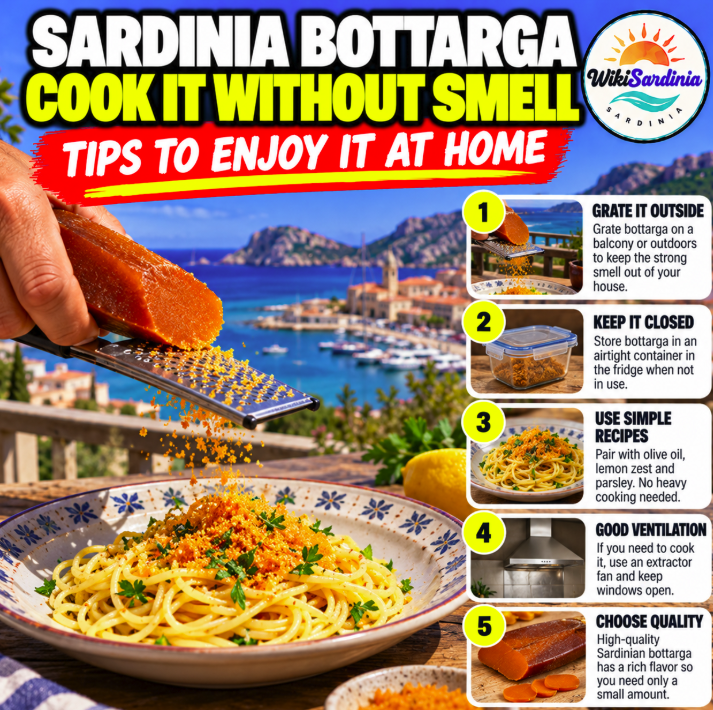
Love Sardinian bottarga but not the lingering seafood smell in your kitchen? You can keep the aroma under control with a few simple habits: grate bottarga just before serving, use good ventilation, keep the product cold until needed, and clean the grater promptly. Grating it outside can help if the weather and setting make that practical, but it is not essential—and avoid preparing food outdoors where it could be exposed to dust or insects.
Bottarga, often made from cured mullet roe, has a naturally intense, savoury marine aroma. The goal is not to eliminate it completely, but to keep it from lingering in the room after cooking.
1. Grate bottarga at the last moment
Grate only the amount you need, immediately before serving. Fine shavings release their aroma quickly, so leaving grated bottarga exposed on a plate or in a bowl can make the smell more noticeable. Add it to warm pasta just before serving rather than cooking it for a long time in a hot pan.
If you want to reduce the smell in the kitchen, grate it near an open window or under an extractor fan. Doing it outside is an option on a clean, sheltered balcony or patio, but protect the food from dust and insects.
2. Use ventilation before you start
Turn on the extractor fan before preparing the bottarga and open a window if conditions allow. Keep the kitchen ventilated while grating and serving. If you use a fan, avoid directing airflow across uncovered food.
Ventilation helps disperse cooking odours, but it works best when started before the smell builds up.
3. Keep bottarga wrapped until you need it
Store bottarga according to the label, usually well wrapped and refrigerated once opened. Take out only the amount you plan to use, then wrap the rest promptly. An airtight container can help keep the aroma from spreading through the fridge.
Follow the producer's storage instructions, especially for vacuum-packed products and after opening. Do not leave bottarga at room temperature longer than needed for preparation.
4. Add it at the end—not while frying
For a classic Sardinian-style pasta, cook the pasta and prepare the other ingredients first. Toss the pasta with olive oil, a little pasta water and any chosen aromatics, then take the pan off the heat before adding finely grated bottarga. This helps preserve its delicate flavour and avoids heating it more than necessary.
Garlic, lemon zest or parsley may complement bottarga, depending on the recipe, but they do not neutralize its smell. Use them for flavour, not as a guaranteed odour-removal trick.
5. Clean the grater and board straight away
Rinse the grater and utensils promptly, then wash them with hot water and dish soap. Food residue left on a fine grater can continue to smell. If the grater is difficult to clean, use a small brush intended for kitchen utensils and check that all residue has been removed.
Wipe the preparation area and wash your hands after handling the bottarga. Dispose of scraps in a closed bin rather than leaving them on the counter.
6. What if the smell has already spread?
- Open a window and run the extractor fan.
- Wash the grater, knife, board and any plates that held the bottarga.
- Seal scraps and food packaging before placing them in the bin.
- Wipe down the worktop and nearby surfaces.
- Let the room ventilate rather than trying to cover the smell with strong fragrances.
Avoid mixing household cleaning products or using them near food. Ordinary dish soap and good ventilation are usually the most useful first steps.
Can you grate bottarga on the balcony?
Yes, if you have a clean, sheltered surface and can protect the food from dust, insects and other contamination. Use a clean grater and plate, and bring the bottarga back inside promptly. If it is windy or the balcony is exposed, grating near an extractor fan is the better choice.
How to enjoy bottarga without overpowering the dish
Bottarga is concentrated, so start with a small amount and add more to taste. For pasta, use olive oil and a little starchy cooking water to coat the noodles, then finish with bottarga off the heat. Avoid adding too much salt before tasting, since bottarga itself can be salty.
Use a fine grater for an even distribution, or shave it thinly if you prefer a more pronounced texture. Keep the preparation simple so the bottarga remains the star.
Useful Italian phrases
- Grattugio la bottarga all'ultimo momento. — I'll grate the bottarga at the last moment.
- Accendo la cappa. — I'll turn on the extractor fan.
- La bottarga va aggiunta a fuoco spento. — Bottarga should be added off the heat.
- Conservare in frigorifero dopo l'apertura. — Keep refrigerated after opening.
Frequently asked questions
Does grating bottarga outside stop the smell?
It can keep the aroma out of the kitchen, provided the outdoor area is clean and sheltered. Protect the food from dust and insects. Grating near an extractor fan is a good indoor alternative.
Should I cook bottarga in the pan?
For many pasta recipes, add it after taking the pan off the heat. This helps preserve its flavour and avoids unnecessary heating.
How do I store opened bottarga?
Follow the producer's label. Keep it well wrapped and refrigerated when instructed, and use an airtight container to limit odours in the fridge.
What is the quickest way to remove the smell from a grater?
Wash it promptly with hot water and dish soap, using a small brush if needed to remove residue.
Can lemon or parsley remove the bottarga smell?
They can complement its flavour, but they are not a reliable way to eliminate lingering odours. Ventilation and prompt cleaning are more useful.
The bottom line
To keep bottarga from making your house smell, grate only what you need just before serving, use an extractor fan or open window, add it to pasta off the heat, and wash the grater straight away. Grating outside can help when you have a clean, sheltered spot, but good ventilation and careful storage work just as well for most kitchens.


