Some visitors prefer a clothing-optional beach, while others simply want to know what to expect before arriving. In Sardinia, the key is not to rely on a rumour or on how secluded a cove looks: check local information, look for clear signs and respect the people already using the beach.
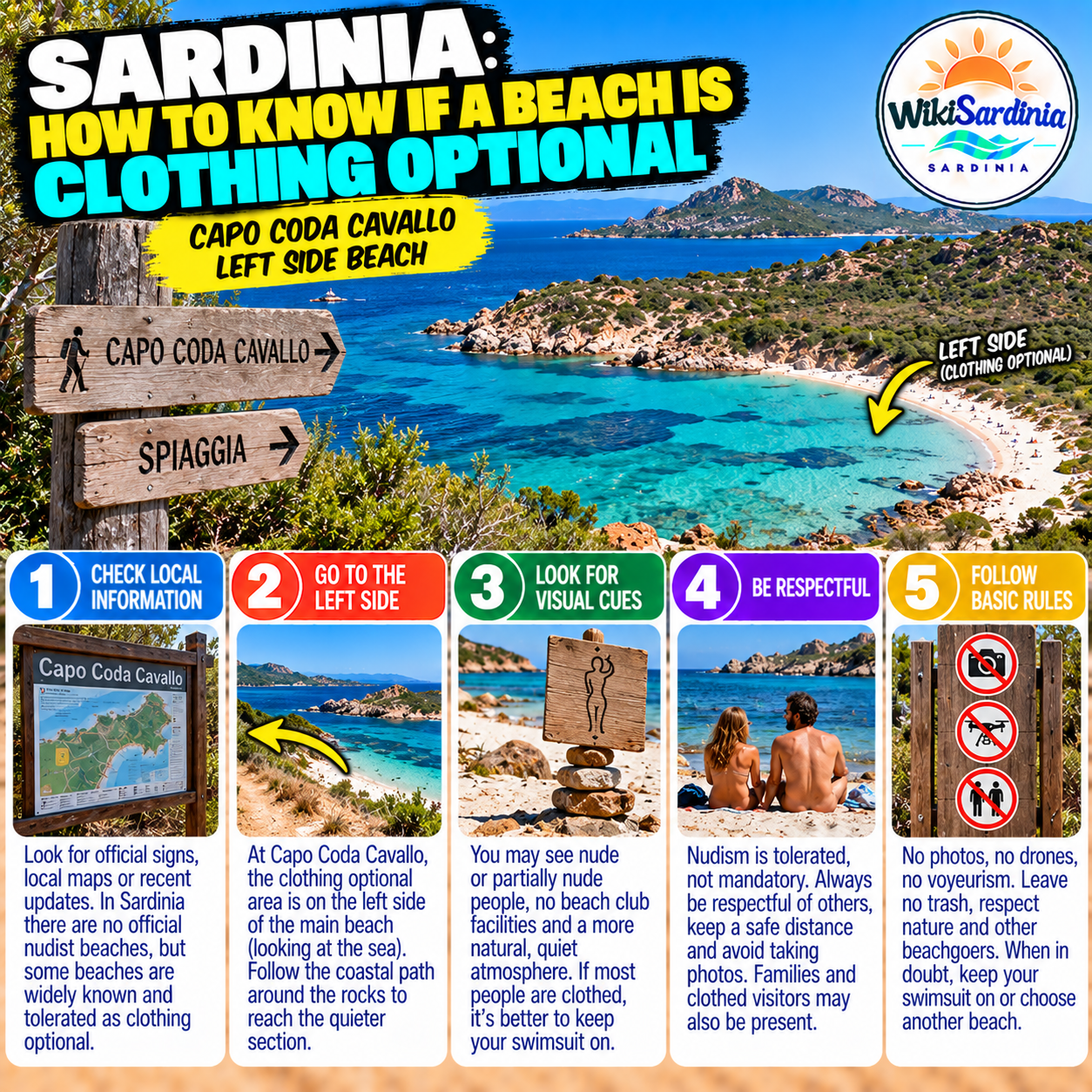
Capo Coda Cavallo, near San Teodoro in north-eastern Sardinia, is known for its beautiful coves and protected marine environment. However, the official regional tourism guide does not identify the left side of its main beach as an officially designated naturist area. Treat local tips about a “clothing-optional” section as unverified unless current information from the municipality or another reliable local source confirms it. The official overview is available from SardegnaTurismo’s Capo Coda Cavallo guide.
1. Check local information before you go
Search the municipality’s current beach information and any posted regulations. If you are visiting Capo Coda Cavallo, check San Teodoro’s official notices and the rules of the Tavolara–Punta Coda Cavallo Marine Protected Area. The protected area publishes its regulations and current documents on its official regulations page.
Do not assume that a beach is officially clothing-optional because a travel forum, old review or social-media post says so. Conditions and local rules can change, and an informal custom is not the same as formal designation.
2. Look for clear signs and reliable cues
At the access point, look for official signs or notices specifically referring to naturism. If there are no signs, ask a local authority, lifeguard or reliable local information service rather than guessing. The presence of a few nude or topless bathers does not automatically establish that the whole beach—or even that particular section—is clothing-optional.
3. What about the left side of Capo Coda Cavallo?
Some visitors may describe a quieter section on the left side as suitable for naturism, but we could not verify that description as an official designation. The coastline includes coves and rocky areas, and the precise location people mean by “left side” may be ambiguous depending on the access route and the direction you face.
If you decide to visit, check current local guidance before undressing. When the rules are unclear, keep your swimsuit on or choose a beach explicitly identified as naturist by a reliable source. A secluded spot is not, by itself, proof that nudity is permitted.
4. Respect everyone’s comfort and privacy
- Never photograph or film other beachgoers without their explicit permission.
- Keep a respectful distance and avoid staring, approaching people or making comments about their bodies.
- Do not assume that children, families or other visitors expect nudity simply because some people are nude.
- Follow any instructions from lifeguards, local authorities or posted signs.
- Take all rubbish with you and avoid damaging dunes, vegetation or the protected marine environment.
5. Clothing-optional does not mean rules-free
Beach access, environmental protection and conduct rules still apply. Capo Coda Cavallo lies within a protected marine area, so visitors should check the current rules on access and activities as well as any local guidance about naturism. See the Tavolara–Punta Coda Cavallo Marine Protected Area regulations before planning your visit.
The safest way to avoid an awkward surprise
Before choosing a clothing-optional beach in Sardinia, look for current, trustworthy local information rather than relying on a vague description such as “the left side.” At Capo Coda Cavallo, the scenery is spectacular, but we could not confirm an official naturist designation for that section. Check the rules, respect other visitors and, if in doubt, keep your swimsuit on.