
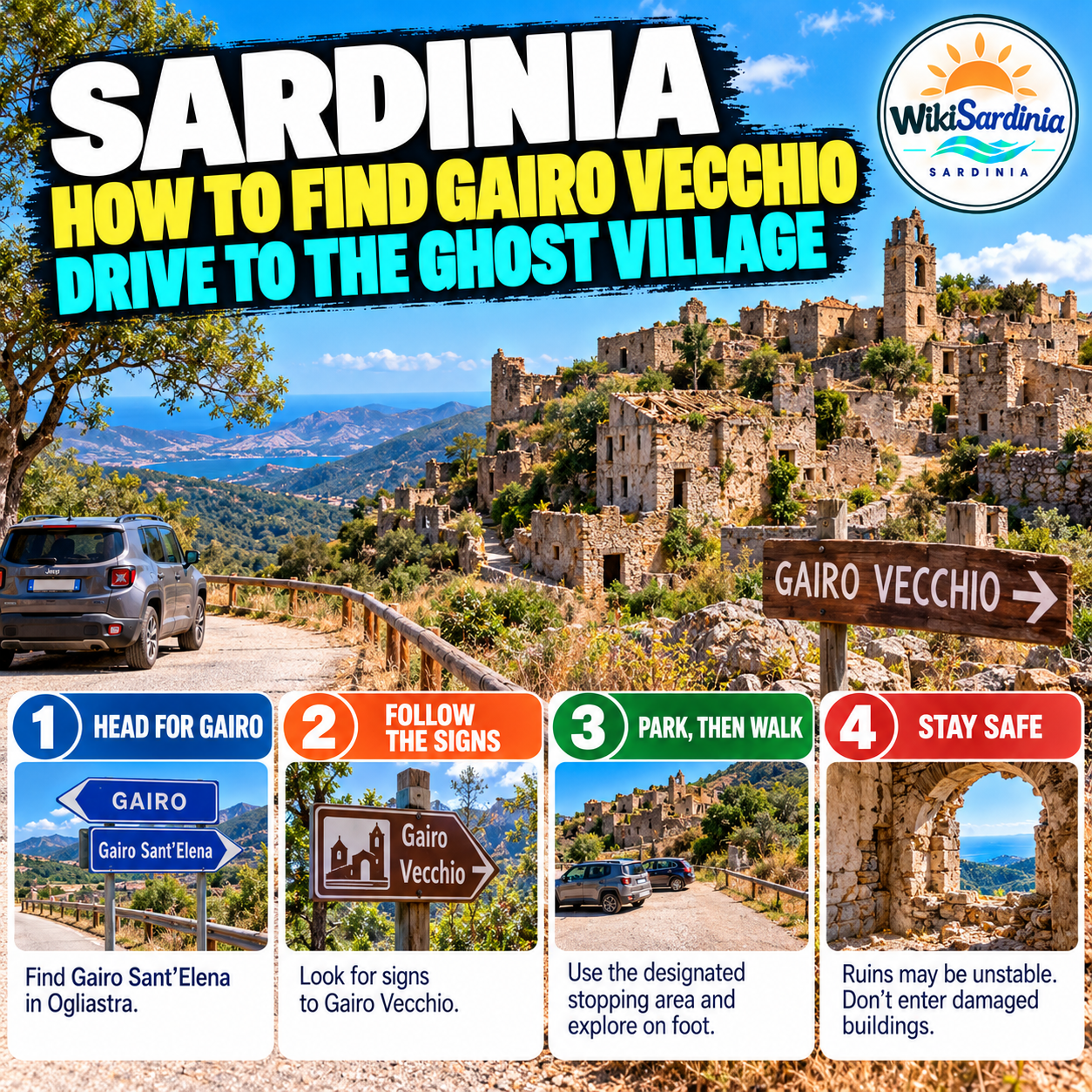
Want to discover one of Sardinia’s most atmospheric abandoned villages without committing to a long hike? Put Gairo Vecchio on your road-trip list. Hidden in the hills of Ogliastra in eastern Sardinia, this former village is a striking place of empty streets, weathered stone walls and buildings slowly being reclaimed by nature.
You can approach the area by car, then leave the vehicle in a safe, permitted spot and continue on foot. The final approach and road conditions can vary, so check your navigation before setting off and follow local signs rather than assuming every stretch is suitable for every vehicle.
Where is Gairo Vecchio?
Gairo Vecchio lies on the slopes of Monte Trunconi above the Rio Pardu valley, in the Ogliastra area of eastern Sardinia. It is close to the present-day town of Gairo Sant’Elena and the old village of Osini. The official Sardinia tourism website describes it as one of the island’s best-known ghost villages.
For a reliable starting point, open the official SardegnaTurismo guide to Gairo Vecchio and set your navigation for the old village itself. If your route brings you through Gairo Sant’Elena, follow the local signs for Gairo Vecchio and pay attention as you approach the site.
How to get there by car
- Plan the route before leaving. Search for “Gairo Vecchio” in your preferred navigation app and review the final kilometres, not just the estimated arrival time.
- Use Gairo Sant’Elena as a nearby reference point. From the new town, follow signs towards the old village. If approaching from the Osini side, check the route carefully and follow the signed access.
- Take the final stretch slowly. Do not assume the road surface is suitable for every car. If the surface is rough, conditions are poor, or access is restricted, do not continue just because the navigation app suggests it.
- Park only where it is safe and permitted. Keep access routes clear and avoid blocking local traffic or entrances.
- Explore on foot. The old lanes are narrow, sloping and uneven; comfortable shoes with good grip are a much better choice than trying to drive through the village.
Why was the village abandoned?
Gairo Vecchio was progressively abandoned after decades of unstable ground, landslides and severe weather. The decisive disaster came in October 1951, when days of intense rain and flooding made the old settlement unsafe. Residents gradually moved away, with communities forming in places including present-day Gairo Sant’Elena, Gairo Taquisara and Cardedu.
Today, the ruins still reveal traces of ordinary life: stairways, old façades, windows and remnants of homes built on terraces along the hillside. The landscape is moving and beautiful, but it also tells a story of a community forced to leave because of the danger beneath its feet.
Important safety advice
Admire the ruins from safe, accessible areas. Old walls, floors, staircases and roofs may be unstable, even when they look solid. Do not enter abandoned buildings, climb walls or cross barriers. Respect any signs, closures and private property, and avoid the site during or after heavy rain when slopes and surfaces may be more hazardous.
Make it part of an Ogliastra road trip
Gairo Vecchio works well as a stop for travellers interested in history, rural Sardinia and unusual places away from the beach resorts. Combine it with time in Gairo Sant’Elena or explore other nearby landscapes and heritage sites, checking opening and access details before you go. Give yourself time to walk slowly, take photographs from safe viewpoints and appreciate the village without disturbing the fragile remains.
For more background, see Sardegna Abbandonata’s page on Gairo Vecchio and the Italian cultural heritage portal entry.


