
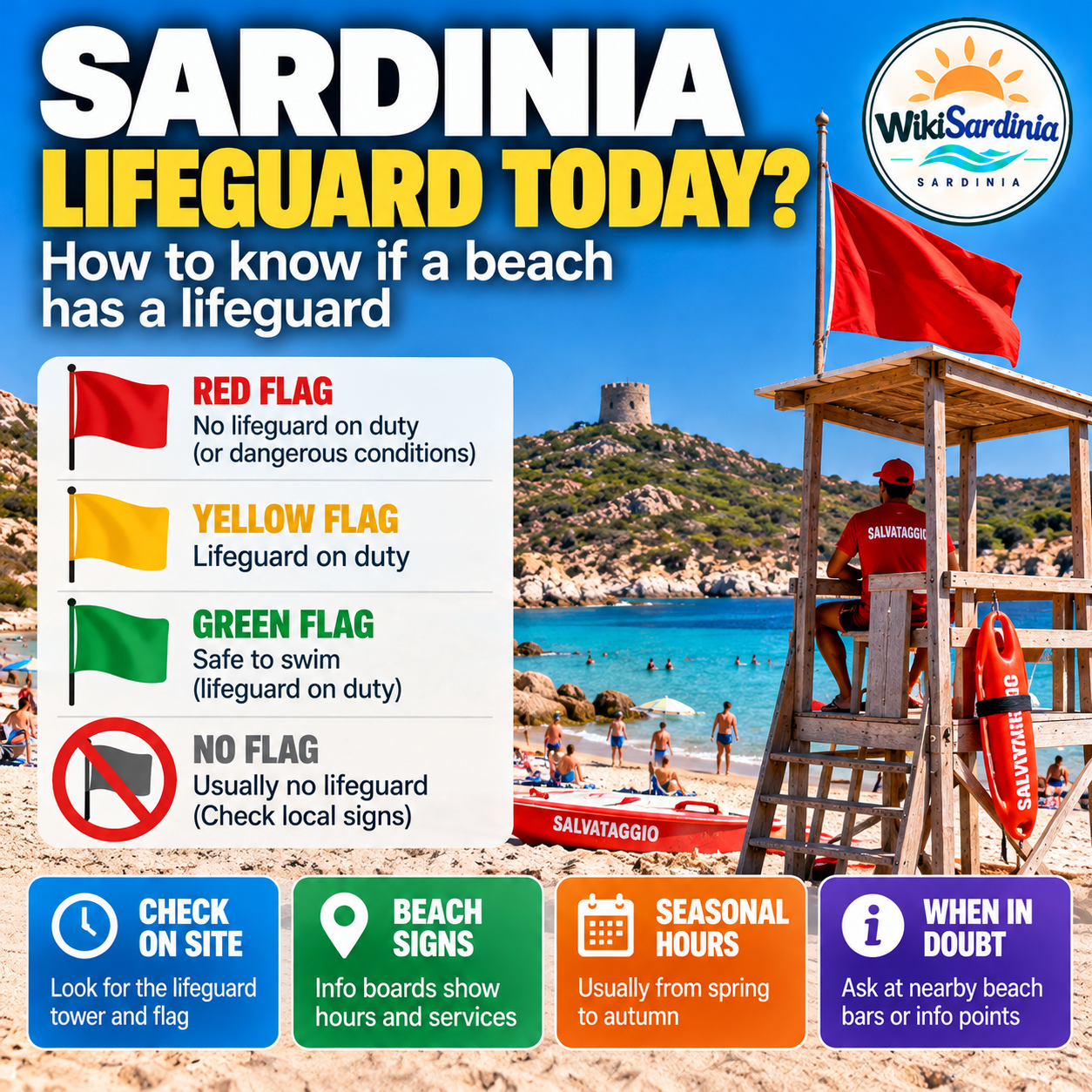
Want to know whether a Sardinian beach has a lifeguard on duty today? Check the beach’s safety noticeboard, look for an active lifeguard station, and confirm the service hours with the municipality or beach operator. Don’t rely on a flag alone: in Sardinia, a red flag means you must not enter the water, but it can indicate dangerous sea conditions as well as the absence of a rescue service.
Not every beach in Sardinia has lifeguard coverage, and services can operate only during specified seasons and hours. A beach that had a lifeguard yesterday may not have one today, so check the signs when you arrive.
1. Look for a lifeguard station and posted hours
Check for a lifeguard tower, rescue post, rescue equipment and a lifeguard on duty. Look nearby for a sign showing whether the rescue service is active, its operating hours and any restrictions. A tower or rescue chair by itself does not guarantee that someone is on duty.
2. Understand the beach flags
Flags communicate bathing conditions and safety information. Their precise use can depend on local rules, so read the sign explaining the flags at that beach.
- Red flag: in Sardinia, the official tourism guidance says that entering the water is prohibited when a red flag is displayed. It can indicate dangerous conditions or that the rescue service is absent. Do not swim.
- White flag: in some Italian local systems, this indicates that the rescue station is operating normally. Check the beach’s own sign for the local meaning.
- Yellow flag: its meaning can vary by local rules; it may indicate wind-related precautions. Read the posted explanation rather than assuming it confirms that swimming is safe.
- No flag: this does not prove that a lifeguard is absent—or that swimming is safe. Check the signs and assess the sea carefully.
3. Ask the beach operator or municipality
At a staffed beach establishment, ask the staff whether the lifeguard service is active today and when it ends. On a free public beach, check the municipal noticeboard or contact the local municipality or tourist information office. If the sign says bathing is unsafe because there is no rescue service, follow that warning.
4. Remember that services are seasonal
Lifeguard coverage can depend on the beach, municipality, season and time of day. Some beaches have organised rescue services during the main bathing season but limited or no coverage outside the published hours. Never assume that every beach is supervised throughout the day or throughout the year.
5. If you cannot confirm that a lifeguard is on duty
- Read the posted safety information before entering the water.
- Do not swim if a red flag is displayed or signs warn that bathing is unsafe.
- Choose a supervised beach if you are with children or are unsure about sea conditions.
- Never treat the presence of other swimmers as proof that conditions are safe.
- If conditions look rough or you are uncertain, stay out of the water.
The quick answer
To check whether a Sardinian beach has a lifeguard today, look for the active rescue post and its posted hours, then confirm with beach staff or the municipality. A red flag is a warning not to enter the water—not a reliable shortcut for checking staffing alone. If there is no flag or the information is unclear, do not assume the beach is supervised or safe for swimming.
Official source
SardegnaTurismo — Security at the beach: the official regional tourism guidance notes that not all beaches have a lifeguard service and that a red flag means you must not enter the water.


