Sardinia’s water can look crystal clear, but appearance alone cannot tell you whether it is safe to swim after heavy rain. Rainwater can wash contaminants from streets, fields and drains into streams and coastal water. In some places, intense rainfall can also overwhelm wastewater systems, causing short-term pollution. The safest choice is to check local bathing-water information and avoid swimming where runoff enters the sea or authorities have issued a warning.
Why can heavy rain affect sea water quality?
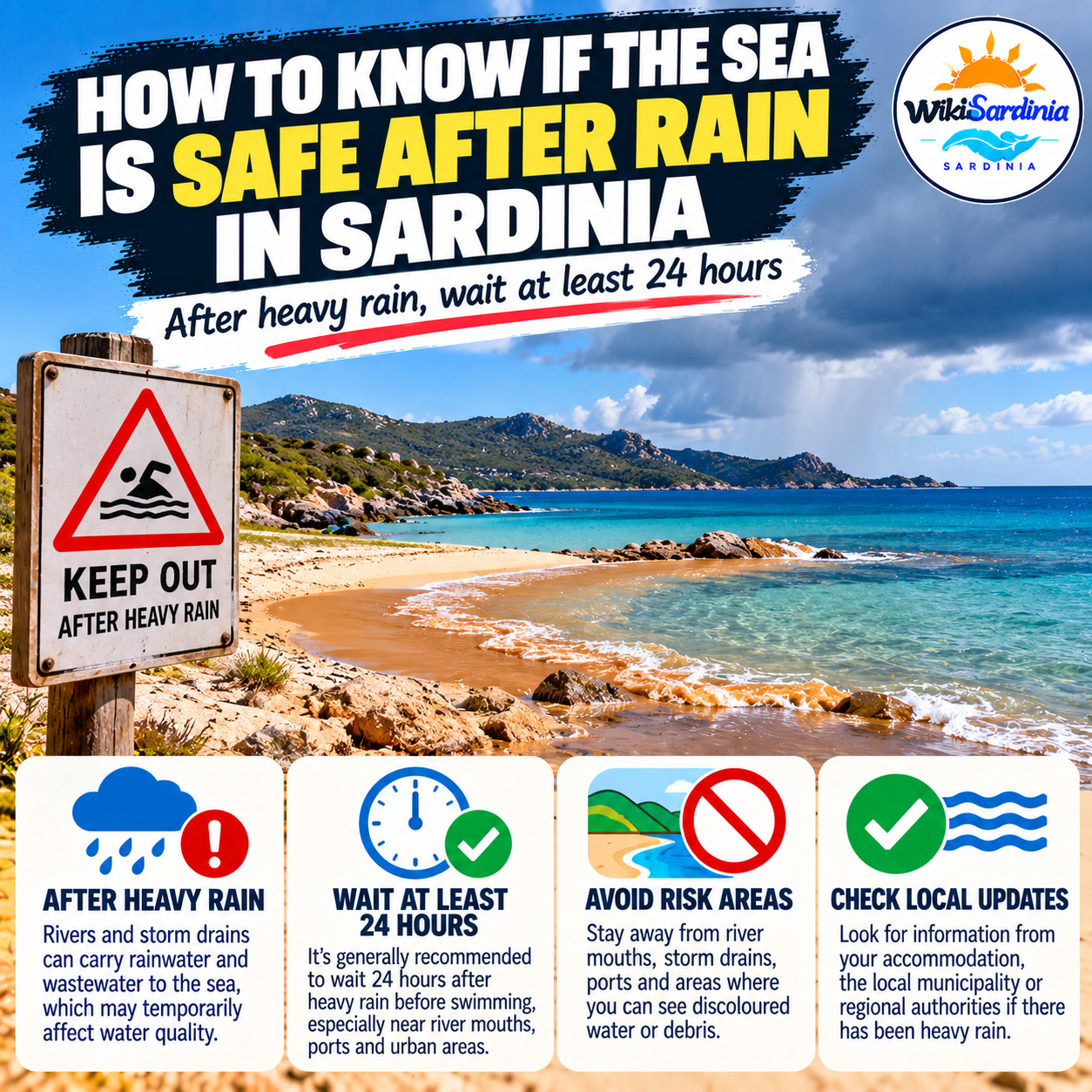
After a downpour, water flowing over the land can carry soil, rubbish, animal waste and other pollutants toward the coast. Where drainage or wastewater systems overflow, the water may also contain sewage-related microbes. These contaminants are not always visible, and clear-looking water is not proof that it is free of harmful bacteria.
Heavy rain can worsen bathing-water quality by washing microbiological and chemical pollutants from land into swimming areas. Short-term pollution can last for different periods depending on the source, currents, weather and whether contamination is continuing.
Should you wait 24 hours after rain?
You may hear a simple rule to wait 24 hours after rain, but 24 hours is not a universal guarantee that the sea is safe. Some pollution events clear relatively quickly; others can persist longer, particularly if wastewater continues to enter the water or local authorities identify a problem. The right decision depends on the beach and the specific conditions.
After heavy or prolonged rain, especially when drains or streams are flowing strongly, be cautious. Check official notices before swimming and follow any temporary bathing prohibition. If there is no reliable local information and the water looks affected by runoff, choose another activity or beach rather than guessing.
Where should you be especially cautious?
- Near stream mouths and runoff channels: these can carry water and contaminants from inland areas directly to the beach.
- Near storm drains, sewage outlets or harbour discharge points: keep away, especially after rainfall.
- Where the water is unusually cloudy, discoloured or covered in debris: these signs do not prove sewage contamination, but they are a good reason not to enter until you have checked local advice.
- At beaches with warning signs or a bathing ban: do not swim until the restriction is officially lifted.
How to check whether a Sardinian beach is safe
Before heading into the water, look for notices posted by the municipality or at the beach. You can also consult the Sardinia Region’s bathing-water portal, which publishes monitoring information and bathing restrictions, and the Italian Ministry of Health’s Portale Acque, which provides bathing-water quality information and reported prohibitions.
ARPAS monitors Sardinian bathing waters and analyses microbiological indicators including Escherichia coli and intestinal enterococci. However, routine monitoring results are not a live guarantee for every moment or every stretch of coastline. Check for the latest local notices as well as the monitoring data.
What if there is no warning sign?
The absence of a warning sign does not prove that no short-term pollution has occurred, especially immediately after a major storm. If you can see a stream of runoff reaching the beach, notice a sewage-like smell, or see an unusual discharge, avoid the affected water and contact the local municipality or relevant authorities for advice. Do not rely on smell or appearance alone to decide that water is safe.
A simple post-rain beach checklist
- Check the municipality’s latest bathing notices and official water-quality portal.
- Look for temporary signs or restrictions at the beach entrance.
- Avoid swimming near streams, drains and visible runoff after heavy rain.
- Do not treat a 24-hour wait as an automatic all-clear.
- If the water appears polluted or you cannot verify local conditions, choose a different activity or a beach with current reassuring information.
The short answer
You cannot tell whether the sea is safe after rain simply by looking at it or waiting a fixed number of hours. Heavy rainfall can carry pollutants into coastal water, and sewage-related contamination may persist for different lengths of time. In Sardinia, check official bathing-water updates and local signs, avoid runoff and discharge points, and always respect bathing bans. For current information, start with the regional bathing-water portal and the Ministry of Health’s Portale Acque.