
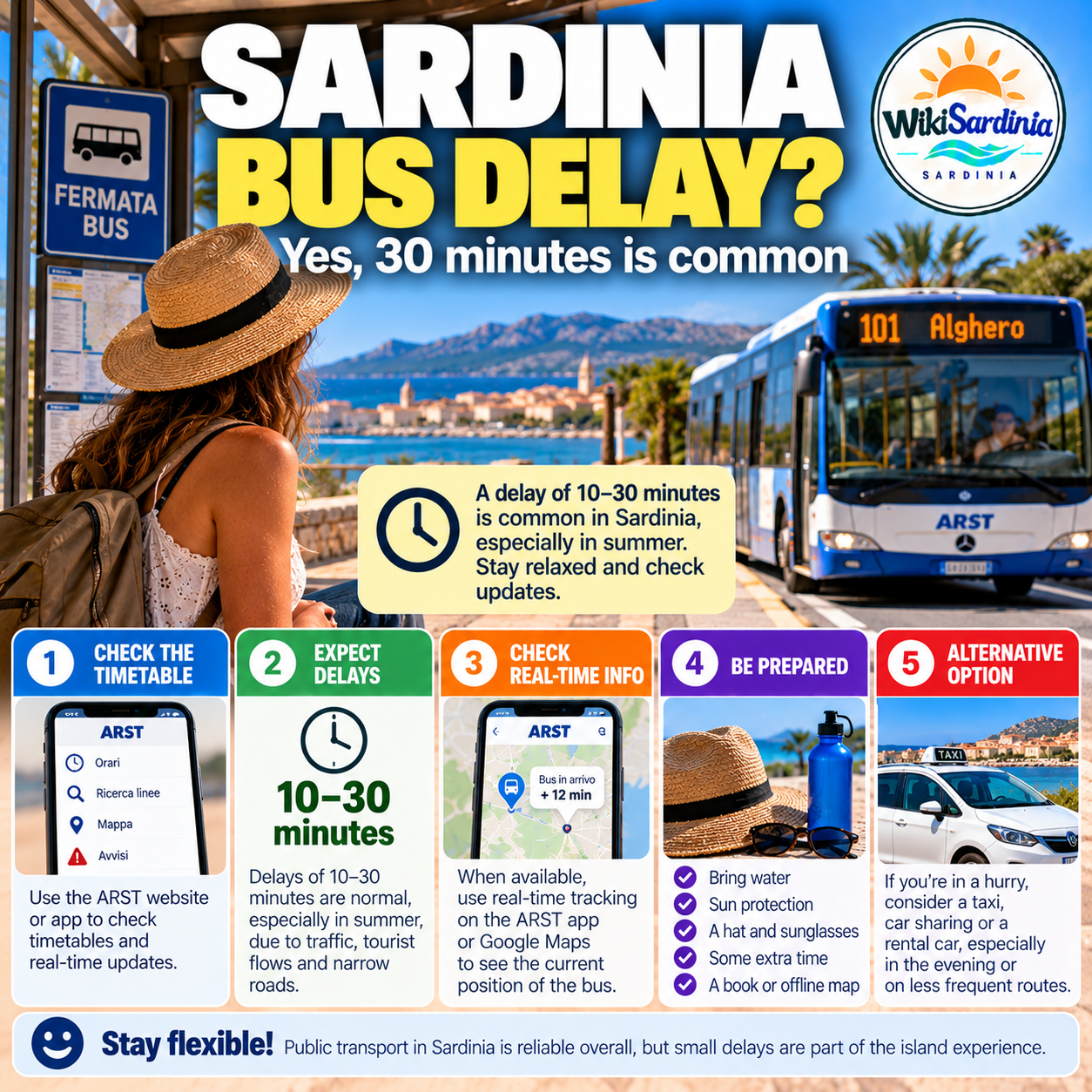
Waiting for a bus in Sardinia and wondering whether a 30-minute delay is normal? Delays can happen, particularly on busy routes, during the summer season or when traffic affects the timetable—but 30 minutes is not a guaranteed or island-wide “normal” delay. The best response is to check the operator’s latest notices, confirm the route and stop, and plan some flexibility into your journey.
Bus services in Sardinia connect cities, towns and many tourist areas, but frequency and journey times vary widely by route and season. A delay on a frequent urban service is different from a missed connection on a rural route with only a few departures a day.
1. Check the timetable and the operator’s notices
Before travelling, check the timetable for the exact route, date and stop. ARST operates many regional bus services across Sardinia; other operators run services in particular towns or on specific routes. Use the relevant operator’s official website, app or service notices rather than relying only on an old timetable screenshot.
Look for updates about service changes, diversions, strikes or disruptions. If the timetable gives only scheduled times and no live arrival information, remember that it may not reflect the bus’s current position.
2. Is a 30-minute delay normal?
It can happen, but there is no reliable rule that Sardinian buses are always—or usually—30 minutes late. Traffic, roadworks, weather, seasonal passenger numbers, a previous delayed journey and local operating conditions can all affect arrival times. Some buses may arrive close to schedule; others may be significantly delayed or cancelled.
On a route with infrequent service, do not assume another bus will arrive shortly. Check the next scheduled departure and any official disruption notice before deciding to wait or change plans.
3. Check for live tracking where available
If the operator provides real-time arrivals or vehicle tracking, use it to see whether the bus is approaching and whether the estimate changes. Some third-party map apps may show transit information, but coverage and accuracy can vary by route. Treat an estimated arrival as guidance, not a guarantee.
If there is no live tracking, ask at a staffed station or contact the operator through its official information channel when practical. At a small roadside stop, make sure you are waiting on the correct side of the road and at the correct stop for your direction.
4. Build extra time into important journeys
If you need to catch a ferry, train, flight or timed tour, avoid planning a connection that depends on the bus arriving exactly on schedule. Leave a generous buffer, and consider an earlier departure when missing the connection would be costly.
Rural routes may have fewer alternatives than services between larger towns. Check the return timetable too, especially if you are visiting a beach, archaeological site or village away from a main transport hub.
5. What to do while you wait
- Recheck the route: confirm the destination, stop name and direction.
- Look for official updates: check the operator’s service notices for disruptions.
- Keep essentials with you: carry water, sun protection and a charged phone, particularly in warm weather.
- Check alternatives: if the delay threatens an important connection, compare the next bus with a taxi or another available service.
- Keep your ticket: retain any ticket or booking information in case you need to ask the operator about the disruption.
6. If the bus does not arrive
First check whether the service has been cancelled, diverted or replaced. Verify the date and timetable version, as some routes have different schedules on weekdays, Sundays and public holidays. If you cannot find reliable information, contact the operator or ask staff at a nearby station.
For an urgent journey, consider another transport option only after checking its availability and cost. Taxis and car-hire options can be limited in smaller towns, so do not assume one will be immediately available.
The bottom line
A 30-minute bus delay can happen in Sardinia, but it is not a rule you should rely on. Check the operator’s current timetable and notices, use live tracking where available, and leave extra time for ferries, trains and other important connections. On less frequent routes, planning ahead matters more than guessing how late the bus might be.
Useful starting point
ARST — official website for regional bus information, timetables and service notices. If your journey is operated by another company, check that operator’s official information as well.


