
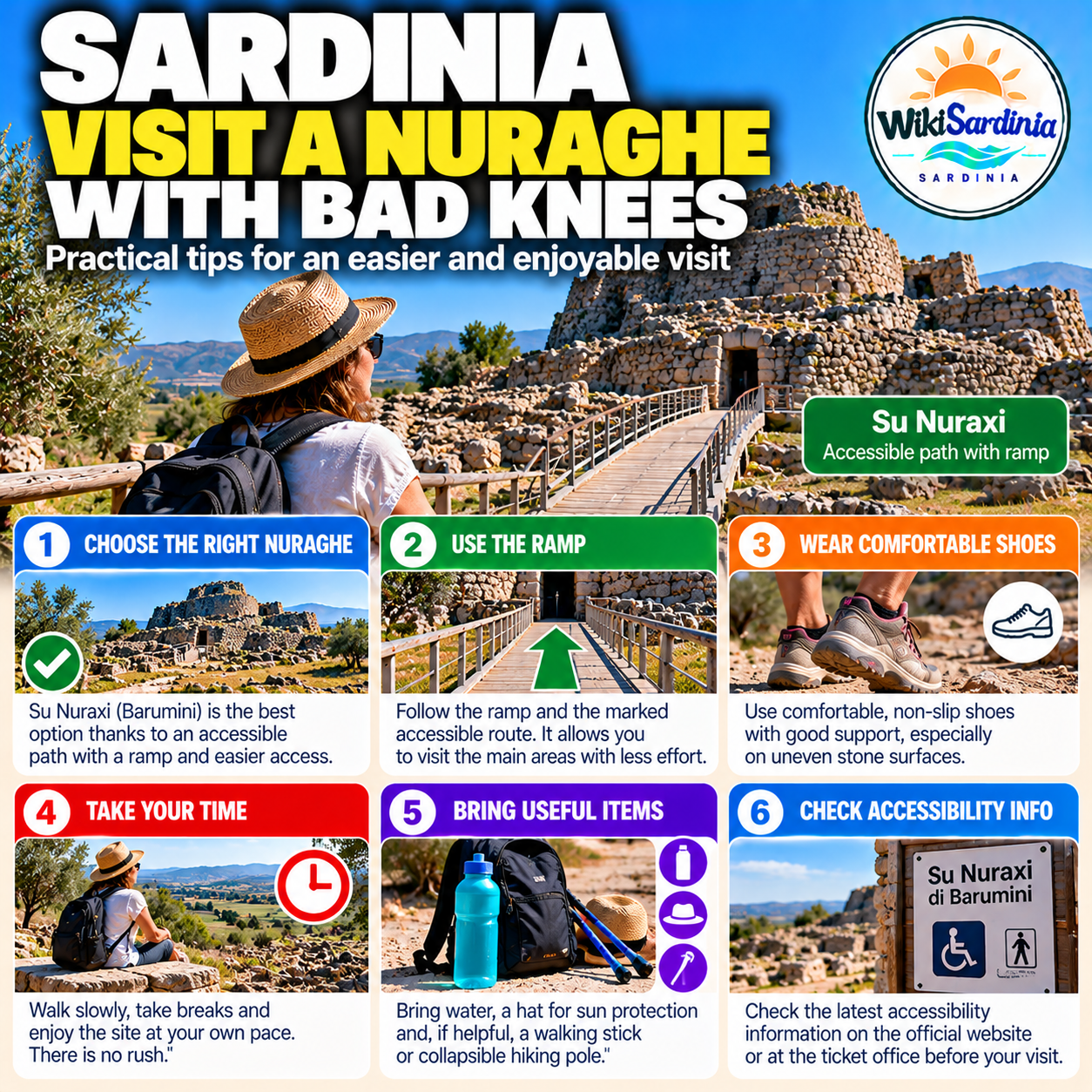
Want to visit a nuraghe in Sardinia but have painful knees? Plan a shorter, slower visit, check the terrain and accessibility before you go, and don’t assume every ancient stone passage is easy to manage. Nuraghi are prehistoric stone structures, often with uneven ground, steps and narrow spaces. The right site and route can make a big difference to how comfortable your visit feels.
Su Nuraxi di Barumini is one of Sardinia’s best-known nuragic sites. If you are considering it because you have knee pain or reduced mobility, contact the site before travelling and ask specifically which areas can be reached without steep steps, how uneven the route is, and whether any ramps or accessible paths are open on your visit date. Accessibility can vary by area and operational conditions; do not rely on a photo or general description alone.
1. Check accessibility before choosing a site
Before setting off, visit the official site or contact the ticket office. Explain that you have painful knees and ask about steps, slopes, walking distances, resting places, toilets and the surface of the route. Ask whether you can visit the main areas without entering narrow or steep interior passages.
Su Nuraxi may be worth investigating, but no archaeological site should be assumed fully accessible just because part of the visitor route has a ramp. Confirm the current arrangements directly with the site.
2. Choose the easiest route and don’t rush
Follow the staff’s recommended visitor route and skip sections that involve steep steps, tight spaces or difficult footing. Give yourself plenty of time, take breaks when you need them and turn back if the route becomes uncomfortable. You do not have to explore every chamber to appreciate the scale and history of a nuraghe.
3. Wear supportive shoes
Choose comfortable walking shoes with good grip. Ancient stone, gravel and uneven ground can be slippery or awkward underfoot, especially after rain. Avoid smooth-soled sandals or footwear that makes you feel unstable.
4. Bring water, sun protection and any walking aid you use
Many archaeological sites have limited shade. Carry water, wear a hat and use sunscreen when appropriate. If you normally use a walking stick or another mobility aid, bring it if it is suitable for the terrain, and check with the site whether it can be used throughout the visitor route.
5. Consider timing and temperature
In warm weather, an early or later visit may be more comfortable than walking in the hottest part of the day. Check opening times and ticket arrangements before travelling, and allow extra time for parking and reaching the entrance. Do not choose a visit time based only on avoiding crowds if heat or fatigue is a concern.
6. Make a backup plan
If the route is not suitable for your knees, you can still learn about Sardinia’s nuragic civilisation through a visitor centre, museum or an archaeological site with a more manageable layout. Ask local tourist information staff for alternatives and confirm accessibility before making the journey.
Quick checklist for visiting a nuraghe with knee pain
- Contact the site and ask about current accessible routes, ramps, steps and slopes.
- Check how much walking is involved and whether there are places to rest.
- Wear supportive, non-slip shoes.
- Bring water, sun protection and your usual mobility aid if appropriate.
- Take your time and skip any section that feels unsafe or too painful.
- Have an alternative plan if the route is not suitable.
The bottom line
You can plan a more comfortable nuraghe visit with painful knees by checking accessibility in advance, choosing the easiest permitted route, wearing grippy shoes and taking breaks. Su Nuraxi di Barumini is an important site to consider, but confirm the current ramp and route details with the site before relying on them. Ancient stone structures can remain uneven and challenging even where some access improvements are available.
Useful starting point
For current visitor information, tickets and accessibility questions, start with the official Fondazione Barumini website and contact the site directly before travelling.


