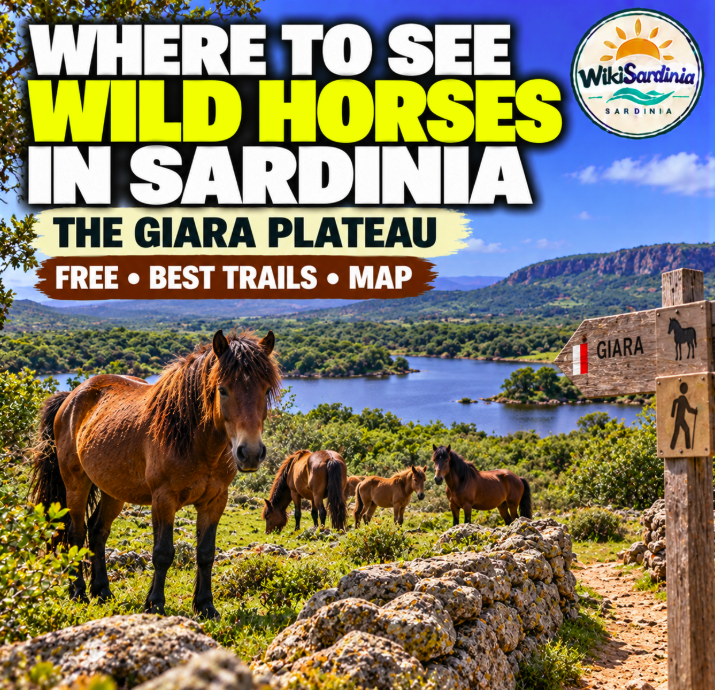
Where can you see Sardinia’s famous free-roaming little horses without joining a guided tour? The best-known destination is the Giara di Gesturi, a high basalt plateau in central-southern Sardinia. Its cavallini della Giara live in a semi-wild, free-ranging state among cork oaks, Mediterranean scrub and seasonal shallow pools known locally as paulis.
You can explore designated parts of the Giara independently when access is permitted. But free-roaming horses are not guaranteed sightings, and “without a guide” does not mean “without rules.” Before setting off, check the current entrance arrangements, permitted trails and any fees with local authorities or visitor services. This guide explains where to start, how to navigate without inventing a GPS route and how to watch the horses responsibly.
What are the Giara horses?
The Giara horses are small, hardy horses adapted to the plateau’s environment. They are often called wild horses in travel writing, although free-roaming or semi-wild is a more precise description than claiming they are an untouched wild species. They are an iconic part of Sardinia’s natural and cultural landscape.
The horses may graze in open areas, move through woodland or gather near seasonal water sources. Their locations change with weather, grazing conditions and disturbance.
Where is the Giara di Gesturi?
The Giara is an elevated plateau spanning territory associated with several municipalities, including Gesturi, Tuili, Setzu and Genoni. It is not a single fenced tourist attraction with horses waiting at one viewpoint. The plateau is extensive, and different access points lead into different sections.
For first-time visitors, the Gesturi-side access, often associated with the Madonnina entrance, is a practical place to investigate. The Tuili-side entrance at Scala Corte Brocci is another known approach. Confirm which entrance is operating, whether independent access is allowed on your date and whether a visitor map is available before traveling.
Can you see the Giara horses without a guide?
Often, yes, independent walks are possible on permitted routes, subject to current local access rules. A guide is valuable for natural history and navigation but should not be presented as universally compulsory without checking current regulations.
Do not assume every gate, private track or ecological area is open. Follow official signs and directions from staff. If access is restricted because of weather, conservation work or other reasons, respect the restriction.
Is visiting the Giara free?
There is a difference between seeing free-roaming horses and visiting at zero cost. Access fees, parking charges, guided services and seasonal arrangements can change. We cannot verify a universal free-entry policy for every Giara entrance in October 2026. Ask the relevant local visitor service before departure and do not interpret the word “free” in the horses’ description as a promise of free admission.
Self-guided walk: a practical route plan
Rather than offering made-up coordinates or a trail that might cross restricted ground, use this flexible plan:
- Choose an official entrance: contact Gesturi or Tuili visitor services and confirm the currently permitted pedestrian entry point.
- Collect or download an official trail map: ask which marked route reaches open grazing areas or seasonal pools.
- Begin early: quieter morning conditions can be pleasant for wildlife observation, though sightings are never guaranteed.
- Follow the marked trail: stay on authorized paths and avoid shortcutting through vegetation or across wet ground.
- Observe from a distance: if horses are present, stop well away and allow them to choose whether to move closer or away.
- Return along the authorized route: allow enough time to exit before closing or darkness.
Map starting points: search for “Giara di Gesturi – ingresso Madonnina” and “Giara di Tuili – Scala Corte Brocci” in your preferred mapping app, then cross-check with official visitor information. These are access-area names, not verified turn-by-turn GPS tracks. Mobile signal and digital maps can be unreliable on rural plateaus.
Where are you most likely to see horses?
Open grassy areas and the edges of seasonal pools can offer good opportunities, depending on recent rainfall and where the horses are grazing. The paulis are a distinctive part of the Giara landscape, especially after wetter weather.
However, it is unsafe to promise horses at a particular pond or hour. During dry periods, pools may shrink or disappear. Horses may also remain in wooded sections out of sight.
Best time of year to see the Giara horses
Spring is particularly attractive for greenery, flowers and seasonal pools. Autumn, including October, can be rewarding after rain, with cooler walking conditions than midsummer. Winter may bring wet or muddy trails, while summer can be hot and dry.
The best season for the landscape is not necessarily the best moment for a guaranteed sighting. Wildlife moves according to its own needs, and there is no fixed daily performance.
What time of day should you go?
Early morning or later in the afternoon can offer softer light and more comfortable walking temperatures. Check entrance hours before planning a dawn or sunset visit: a beautiful photography window is irrelevant if access is closed.
Avoid walking unfamiliar plateau paths after dark. Bring water, sun protection and an extra layer for changeable weather.
How close can you get to the horses?
Do not approach, touch, feed, chase or attempt to ride them. These are free-roaming animals, not petting-zoo ponies. Keep a generous distance, especially around foals, and move away if an animal changes its behavior because of your presence.
Never stand between a mare and foal or block a group’s route. Keep children close and speak quietly. A long camera lens is better than stepping closer for a selfie.
Can you feed the Giara horses?
No. Do not offer bread, fruit, carrots or other food. Feeding can alter natural behavior, attract horses toward people and create health or safety problems. Let them graze undisturbed.
Are dogs allowed?
Check the current rules for the exact entrance and protected area before bringing a dog. Even a friendly dog can frighten horses or disturb other wildlife. Where dogs are permitted, follow leash and access rules; do not allow a dog to chase or approach the animals.
Can you visit with children?
Yes, a suitable, short, well-planned walk can be a memorable family experience. Choose an authorized route appropriate for your children’s stamina, bring water and snacks, and keep them within reach around horses. Uneven ground, mud and exposed sun may make some paths unsuitable for strollers.
Can you drive across the plateau?
Do not assume private vehicles can use every track. Vehicle access may be limited to designated routes or subject to specific restrictions. Confirm parking and vehicle rules with the entrance operator. Walking on approved trails is usually the better way to experience the landscape quietly.
Photography tips for the Giara horses
- Bring a telephoto lens or use your camera’s optical zoom.
- Photograph the horses in the context of the oak woodland and open plateau.
- Keep a respectful distance and never bait animals with food.
- Avoid flash and sudden movements near horses.
- Check local drone restrictions before even considering aerial photography; drone use may disturb wildlife and require authorizations.
- Do not step into seasonal pools or damage sensitive vegetation for a photograph.
What else can you see on the Giara?
The plateau is an interesting habitat in its own right, with cork oaks, Mediterranean vegetation, seasonal wetlands, birds and changing landscapes. Take time to appreciate these features rather than treating the walk as a search for one photograph.
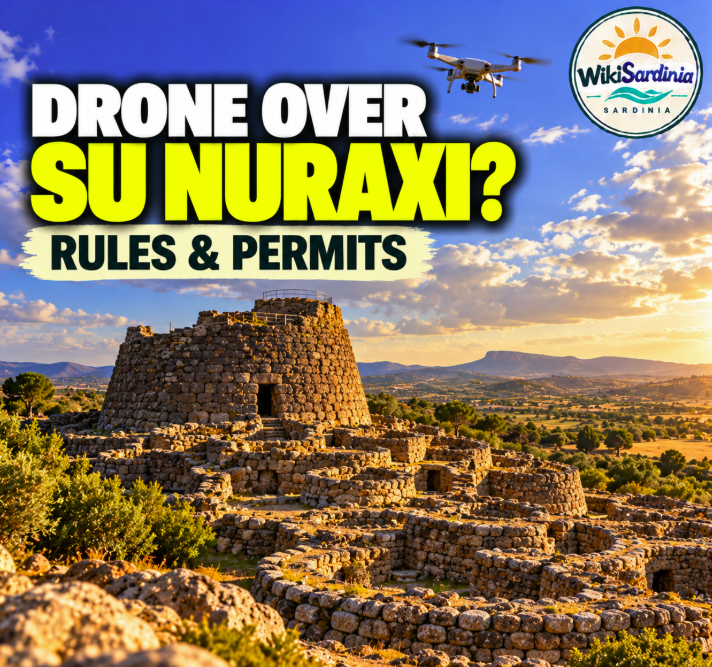
The nearby area also offers archaeological and village attractions. If you are traveling through the region, Su Nuraxi at Barumini is a major UNESCO-listed archaeological site worth considering as a separate visit, subject to its own opening and ticket arrangements.
What to bring for a self-guided walk
- Comfortable walking shoes with grip.
- Water and a snack.
- Sun protection and a light rain layer.
- A charged phone and an offline map from a reliable source.
- Binoculars or a camera with zoom.
- A small bag to carry all litter home.
- Official trail information and a note of the entrance closing time.
Frequently asked questions
Where is the best place to see wild horses in Sardinia?
The Giara di Gesturi plateau is Sardinia’s best-known destination for free-roaming Giara horses.
Can I see the Giara horses without a guide?
Independent visits may be possible on authorized trails. Confirm the rules for your chosen entrance before arriving.
Is the Giara free to enter?
Do not assume so. Fees and access arrangements may differ by entrance and date; check locally.
Where should I start my walk?
Investigate the official Gesturi-side Madonnina access or the Tuili-side Scala Corte Brocci access, and obtain a current trail map.
Are horses always visible near the ponds?
No. They move freely, and seasonal pools depend on rainfall. Sightings are never guaranteed.
Is October a good month to visit?
It can be, especially after rain, with comfortable walking temperatures. Check trail conditions and opening arrangements.
Can I touch or feed the horses?
No. Observe quietly from a respectful distance.
Can I bring a dog?
Check current local rules. Never let a dog approach or chase the horses.
Is the walk suitable for young children?
Some short authorized routes may be suitable, but terrain and weather vary. Keep children close to you.
Is there a guaranteed horse-viewing trail?
No. The animals are free-roaming, so no responsible guide can guarantee a sighting.
The bottom line
The Giara di Gesturi is the place to go if you want to see Sardinia’s famous little horses roaming freely. You may be able to explore without a guide, but always use a current official trail map, verify entrance arrangements and respect wildlife. Treat seeing horses as a privilege rather than a guarantee—and enjoy the extraordinary plateau whether or not they appear.
Planning resources
SardegnaTurismo — Official regional tourism portal; Map search: Gesturi-side entrance; Map search: Tuili-side entrance. Map searches are orientation aids, not certified walking routes. Obtain current marked-trail information locally.