
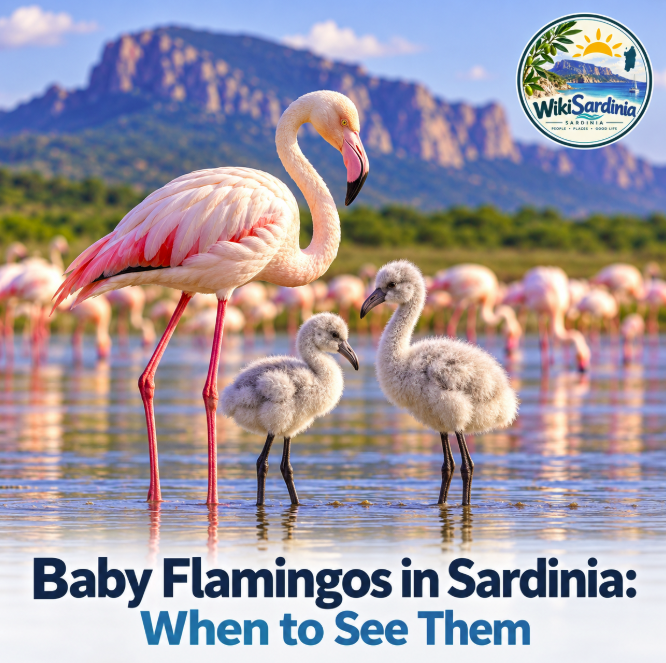
Baby flamingos at Molentargius are a seasonal wildlife story, not something a newly posted photograph can date on its own. For Sardinia’s 2026 breeding season, young chicks were already being observed in early June. By late September, reporting had moved to the season’s breeding results. A photograph circulating in October could show an earlier stage, and we have not verified the specific image described as viral today.
If your aim is to see chicks near Cagliari, plan around the birds’ breeding cycle and the park’s current observation advice. If you simply want to see flamingos, that is a broader visit with different expectations.
When is baby flamingo season?
Italia.it recommends spring at Molentargius for flamingo nesting, while also highlighting autumn for visiting the wetland and its passing birds. Nesting, hatching and the presence of older juveniles are different stages; there is no single date that guarantees the same scene every year.
A useful recent reference is RAI Sardegna’s report of 7 June 2026. It described a park-coordinated observation day held the previous day, using equipment to watch chicks born a few weeks earlier. That documents a real early-summer opportunity without promising unrestricted access to the colony.
For a future trip, ask the park whether supervised observation is being offered and what can currently be seen from visitor areas. Booking a spring holiday is not the same as booking a guaranteed view of newly hatched birds.
Why the babies are not pink
The phrase “pink flamingo babies” can create the wrong visual expectation. The San Diego Zoo’s flamingo guide describes chicks hatching with grey down and a straight bill. Young birds do not begin as tiny copies of the pink adults beside them.
The zoo also describes chicks gathering in groups called crèches, with parents continuing to feed their own young. Observing a group therefore tells a different story from seeing a chick on a nest. From a visitor viewpoint, binoculars or a spotting scope can make those distinctions easier to appreciate without approaching.
Use colour cautiously when interpreting photographs. Grey plumage can help you recognise a young bird, but it cannot establish the exact age, the date of the photograph or whether the image was taken at Molentargius.
What the 2026 figures actually describe
On 30 September, L’Unione Sarda reported monitoring figures supplied by the park: 3,710 chicks reached fledging from 6,562 breeding pairs, a reproductive success rate of about 57%. The report described this as the strongest rate of the previous decade.
These are end-of-season results, not a count of tiny chicks available to photograph today. “Fledged” refers to reaching the flying stage. The figures also do not guarantee where individual juveniles will be when you arrive.
When reading an autumn headline about “babies”, check whether it concerns newly hatched birds, older juveniles or a retrospective breeding report. That small distinction can prevent a disappointing trip built around the wrong season.
Visit the wetland without pursuing the colony
Cagliari’s municipal tourism site describes Molentargius-Saline as a protected wetland important for waterbirds’ nesting, wintering and stopovers. It is a wildlife habitat within an urban setting, rather than a place where visitors can choose their distance from every bird.
The Sardinian Forest Corps’ nesting guidance stresses the need to prevent human curiosity becoming disturbance. Stay on authorised visitor routes, respect barriers and follow staff instructions. A close photograph is not a reason to move toward nests or young birds.
Before leaving, check current routes, opening information and guided opportunities with the park. Bring binoculars, allow time for quiet observation and be prepared to enjoy other wetland birds if chicks are not visible. For families, recognising the difference between a grey youngster and a pink adult can be more rewarding than chasing a particular social-media image.


