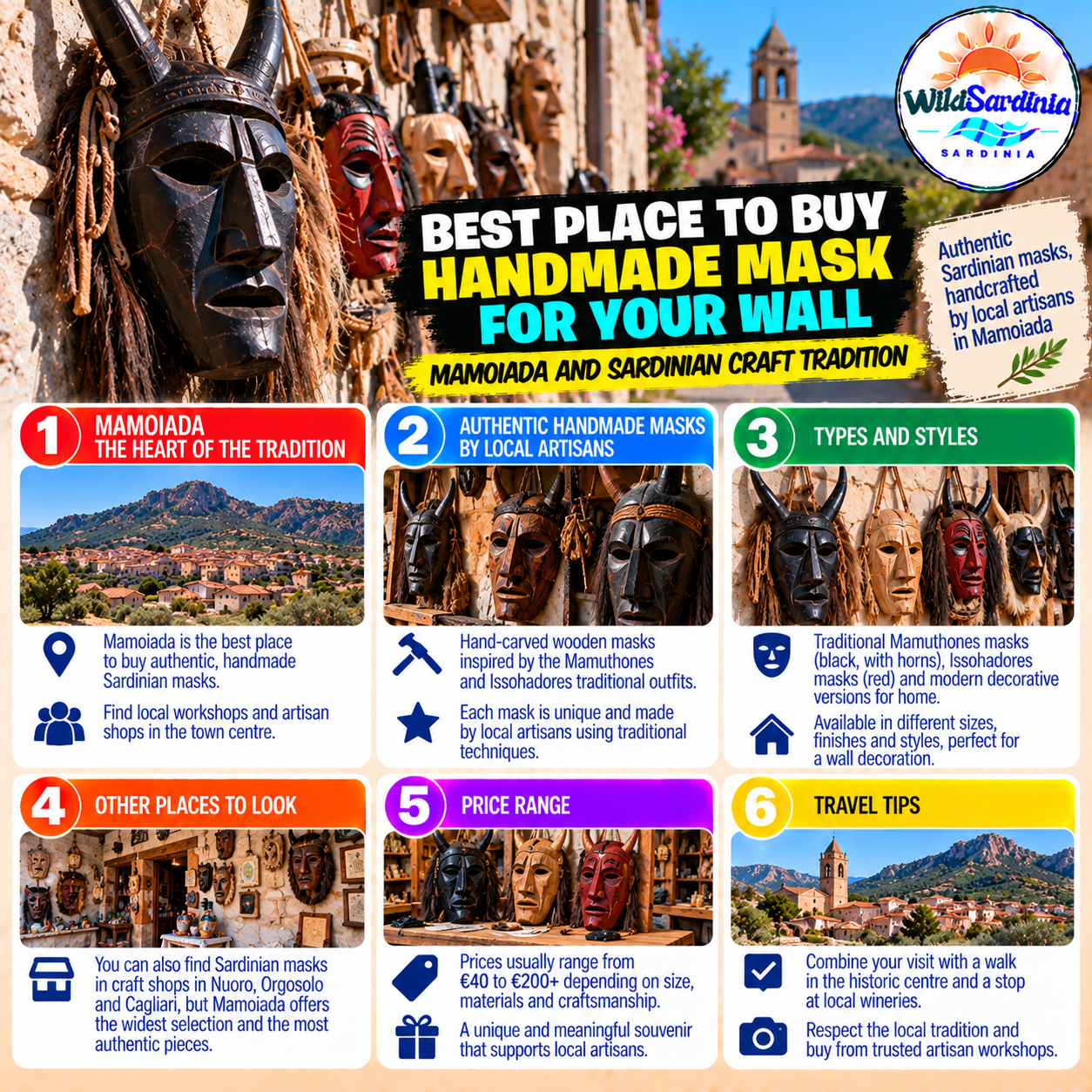
If you want a handmade mask to decorate a wall, Mamoiada, in central Sardinia, is a natural place to begin. The village is closely associated with the traditional Mamuthones and Issohadores figures seen during local carnival celebrations. Artisans create masks inspired by these distinctive forms, making Mamoiada a rewarding stop for anyone interested in Sardinian folk art.
Why choose Mamoiada?
Mamoiada is known for its mask-making tradition and its strong connection with the Mamuthones and Issohadores. The traditional Mamuthones mask is typically dark and austere, while the Issohadores outfit has a different visual character. Contemporary decorative masks may interpret these traditions in varied ways, so ask the maker whether a piece is intended as a faithful traditional form or a modern artistic interpretation.
Where to look for a handmade mask
- Local artisan workshops: ask whether the masks are made on site and whether you can meet the craftsperson.
- Craft and souvenir shops in the village: compare sizes, finishes and styles, and ask which pieces are handmade locally.
- Museums and cultural centres: these can provide context about the tradition and may point visitors towards local artisans; check current visitor information before travelling.
- Other Sardinian craft destinations: shops in nearby towns may sell masks too, but Mamoiada is especially relevant if you want to explore the tradition at its source.
Opening hours and stock vary, particularly outside festival periods. If you want a specific size or style, contact a workshop before making a special trip.
How to choose a mask for your wall
Think about the wall space, weight and how you plan to display the mask. Some pieces are designed primarily for ceremonial or performance use, while others are made specifically as decorative objects. Ask whether the back has a secure hanging point and whether the mask is suitable for indoor display.
- Materials: ask what kind of wood or other material was used and how the surface was finished.
- Maker: find out who made it and whether the workshop can provide a receipt or maker information.
- Finish: inspect carving, paint, straps and edges for damage or rough workmanship.
- Size and weight: check measurements and how it should be mounted safely.
- Meaning: ask whether the design represents a traditional Mamuthones form or is a contemporary interpretation.
How much do handmade Sardinian masks cost?
Prices depend on size, materials, carving detail, finish and the individual maker. Rather than relying on a general online price range, ask the artisan for the current price and what is included. A more elaborate or individually commissioned piece may cost more than a small decorative mask.
Useful Italian phrases
- “Queste maschere sono fatte a mano?” — Are these masks handmade?
- “Chi ha realizzato questa maschera?” — Who made this mask?
- “È una maschera tradizionale dei Mamuthones?” — Is this a traditional Mamuthones mask?
- “Quanto pesa e come si appende al muro?” — How much does it weigh and how do you hang it on the wall?
- “Spedite anche all’estero?” — Do you also ship internationally?
Taking your mask home
Ask the seller to wrap the mask securely, especially if it has delicate carving, horns or other protruding elements. For air travel, check your airline’s baggage dimensions and weight limits. If the piece is made from a material subject to wildlife or customs restrictions, confirm the rules before purchasing it for international transport.
A meaningful piece of Sardinian heritage
For a handmade mask with a strong connection to Sardinian tradition, start in Mamoiada and take time to speak with local artisans. Check who made the piece, what it is made from and how it should be displayed. That way, your wall decoration can be more than a souvenir: it can also be a reminder of the people and traditions behind it.