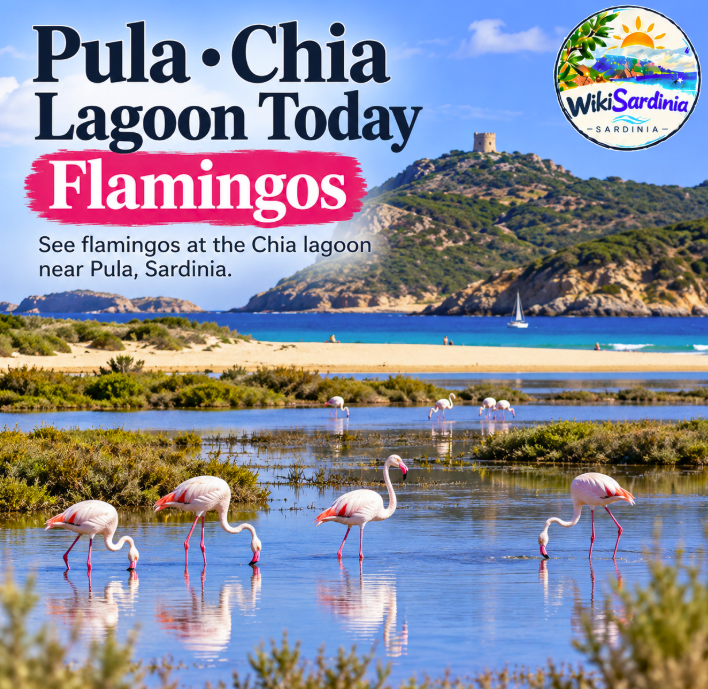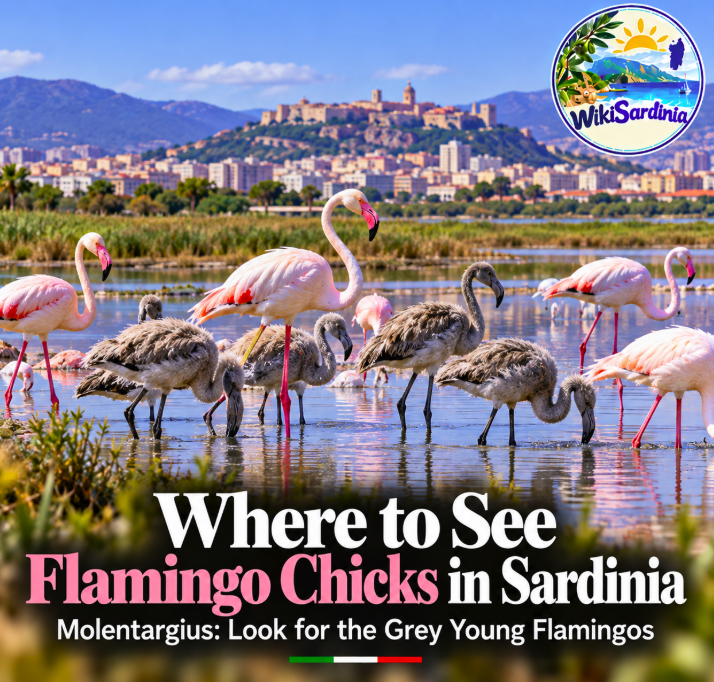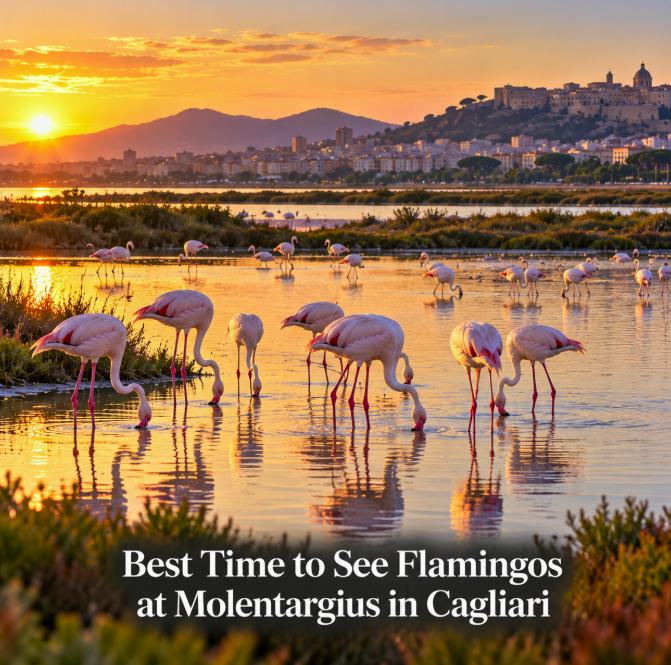
Early morning is one of the best times to look for flamingos at Molentargius-Saline Regional Nature Park in Cagliari. Visitors arriving soon after the park opens get cooler temperatures, softer light across the lagoons and a good opportunity to watch birds feeding and moving through the shallow water before the brighter middle of the day. In late September, the park’s published seasonal access hours begin at 06:30, making an early visit particularly practical.
Molentargius is not a zoo, so no exact hour can guarantee flamingos in a particular pond or at a particular distance. The birds move freely through a large wetland system between Cagliari and Quartu Sant’Elena. That unpredictability is part of the experience, and binoculars are much more useful than trying to approach the birds for a close photograph.
Why early morning works so well
For birdwatching, the first hours of the day combine several advantages. Temperatures are lower, particularly important during Sardinia’s warmer months, and the light is less harsh than around midday. Birds are often actively feeding or moving between wetland areas, while walking and cycling routes tend to feel quieter.
Regional tourism information identifies Molentargius as one of Sardinia’s principal flamingo nesting areas and recommends its observation points, free walking and cycling routes and guided excursions for birdwatching. Independent visitor guidance also consistently favors dawn and early morning for wildlife activity and photography.
A useful target is roughly the first two or three hours after the park opens. In the warmer season that can mean arriving between about 06:30 and 09:30 rather than waiting until late morning. Visitors do not need to arrive at the exact minute of sunrise to have a worthwhile experience.
Molentargius is more than a flamingo stop
The wetland lies remarkably close to urban Cagliari and Poetto beach, yet supports a rich range of birdlife. Flamingos are the symbol of the park, but visitors can also encounter herons, little egrets, black-winged stilts, avocets, cormorants, ducks and other resident or migratory species depending on the season.
The landscape itself explains the biodiversity. Molentargius combines freshwater areas, reed beds and highly saline basins associated with the former saltworks. Different habitats attract different species, so a short walk focused only on finding the nearest flamingos reveals only part of the park.
Where to look
The park can be entered from several sides. The Municipality of Cagliari lists entrances from Via La Palma and Viale Lungomare Poetto on the Cagliari side, as well as Via Don Giordi and Viale Colombo from Quartu Sant’Elena. Parking is available near several entrances.
Official Sardinia tourism information highlights birdwatching around Bellarosa Maggiore, where observation facilities allow visitors to look toward areas used by flamingos and other birds. The free routes can be explored on foot or by bicycle, while guided options provide access to interpretation and selected observation areas.
Do not choose a route solely by trying to get physically closer to the flock. Flamingos may feed far across the water, and remaining on established paths protects both visitors and wildlife. A pair of binoculars or a camera with a telephoto lens is the better solution.
Spring and autumn are especially interesting
Flamingos can be associated with Molentargius throughout the year, but the character of the wetland changes seasonally. Touring Club Italiano and Italia.it recommend spring, when flamingo nesting is an important feature, and autumn, when migratory birds gather in the park’s different ponds.
For a September visit, that makes early morning particularly appealing: the heat is usually less intense than in high summer, autumn bird movement is beginning and the park still operates on its longer seasonal schedule. The Municipality of Cagliari currently lists opening from 06:30 to 21:00 between March 1 and October 15, and from 07:00 to 18:00 from October 16 through February.
Operating hours and visitor services can change, so anyone planning a special early visit should recheck the park’s current information before setting out.
Sunset is the alternative
If waking early does not fit the itinerary, the final hours before sunset can also offer attractive birdwatching and excellent photographic light. The low sun can create reflections across the salt ponds and turn flying flamingos into dramatic silhouettes.
Morning nevertheless has an advantage for travelers combining Molentargius with a day in Cagliari: visit the wetlands first, then continue to Poetto, the historic center or another activity after breakfast. It also avoids spending the hottest hours walking exposed paths during summer.
Bring binoculars and keep your distance
The regional tourism authority specifically recommends binoculars so visitors can observe birdlife without disturbing it. This is especially relevant during nesting periods. Stay on designated paths, respect barriers and avoid loud behavior intended to make resting birds move or fly for photographs.
Comfortable walking shoes, drinking water and sun protection are useful even for a relatively short visit. The terrain is generally suitable for walking and cycling, but the park covers a substantial area, so visitors interested in serious birdwatching should allow more time than a quick roadside photo stop.
For most travelers, the simplest plan is also the best: arrive at Molentargius early, walk quietly toward the observation areas, bring binoculars and allow the birds to determine the encounter. Flamingos are wild animals, not a scheduled attraction, but an early morning in Cagliari’s wetlands gives you an excellent setting in which to look for them.