Yes, Sardinians traditionally eat sea urchin roe raw — but there is a big difference between eating legally handled ricci di mare from a restaurant or authorised seller and opening a sea urchin you have picked up yourself.
In Sardinia in 2026, recreational collection of the edible sea urchin Paracentrotus lividus is prohibited. And because raw seafood is eaten without a cooking step, hygiene, refrigeration and traceability matter.
What part of the sea urchin do you eat?
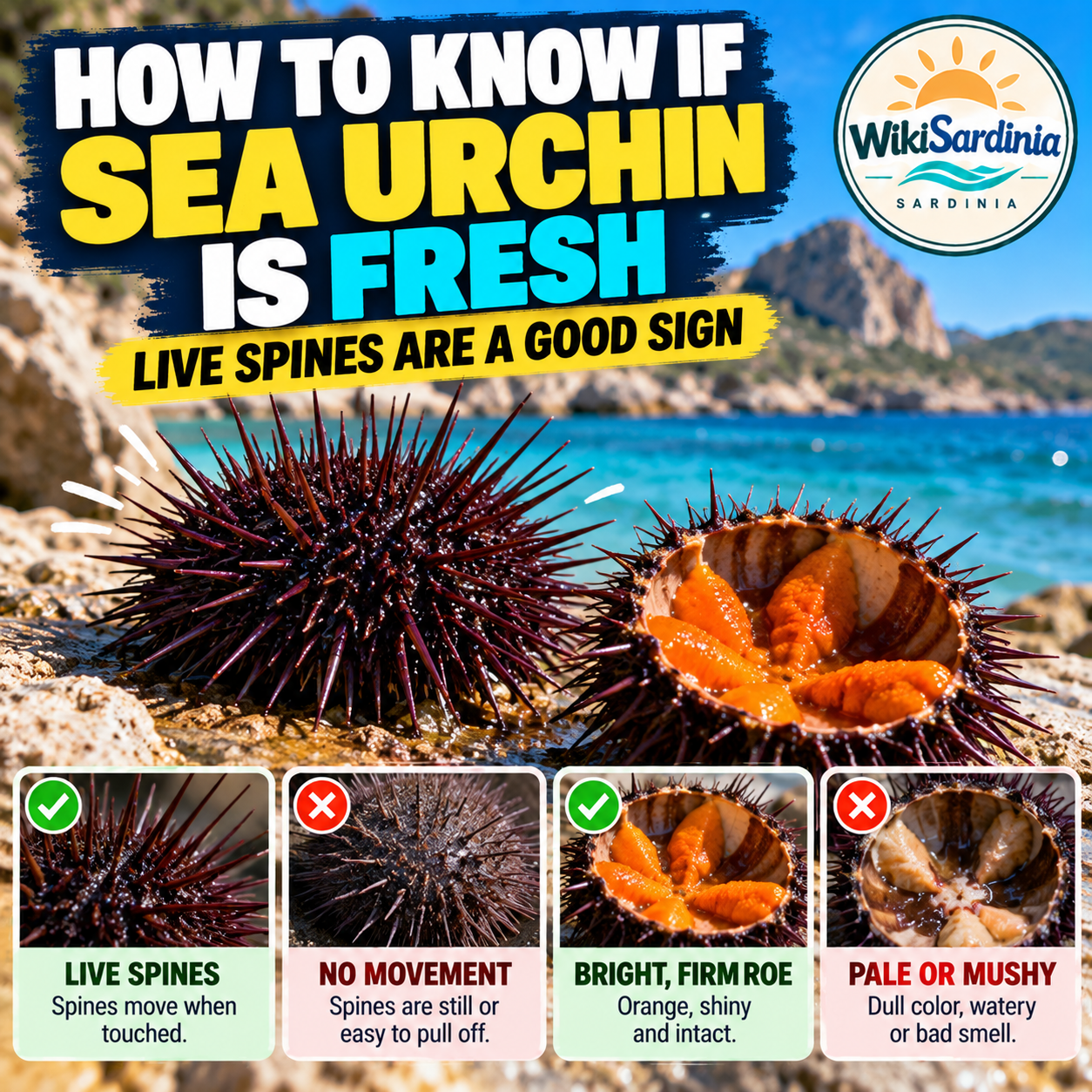
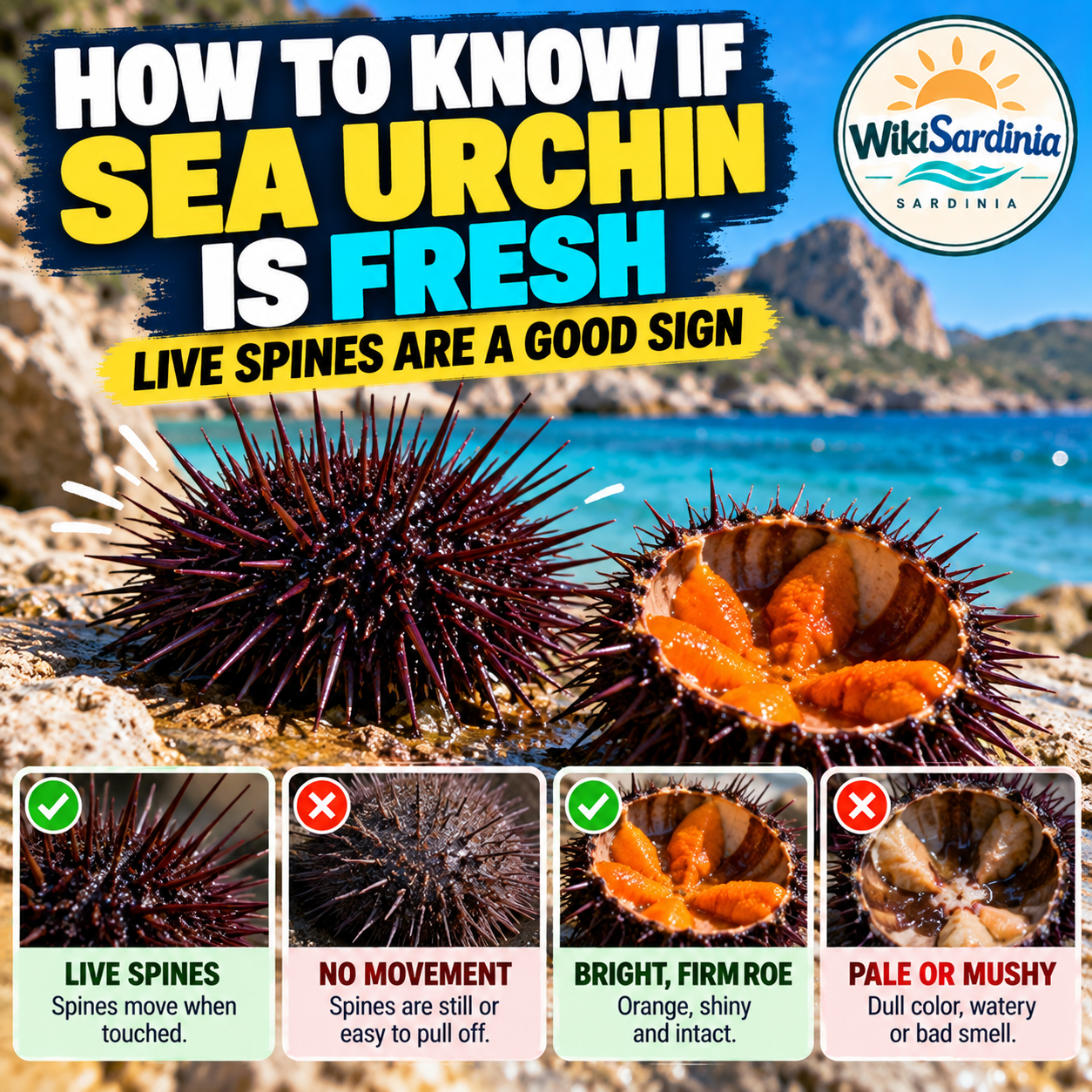
The prized orange or yellow sections inside the shell are commonly called sea urchin “roe.” More precisely, they are the animal's gonads.
They have a creamy texture and an intense marine flavour: salty, sweet, iodine-rich and unmistakably of the sea.
You do not eat the spines, shell or digestive material.
How Sardinians eat ricci raw
The simplest traditional experience is also the best way to understand the flavour.
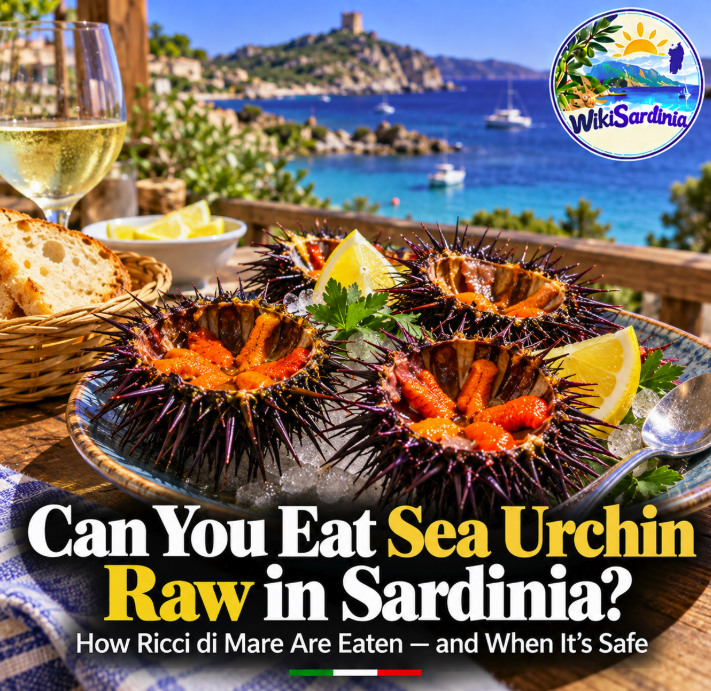
The sea urchin is opened, the edible orange sections are exposed and they are eaten fresh, often with a small spoon and bread.
Some people add a little lemon, although purists often prefer to taste the riccio without masking it.
The other classic preparation is pasta ai ricci, where the delicate sea urchin pulp is added to pasta with minimal cooking so its flavour is not destroyed.
Can tourists collect their own?
No — not in Sardinia in 2026.
The regional decree governing the 2026 season explicitly prohibits sea-urchin collection by recreational and sport fishers. Collection is reserved to authorised professional operators under specific rules.
So even if you see sea urchins in shallow water, leave them there.
The 2026 season is already closed
The original 2026 professional fishing season ran from January 2 to May 2. Because severe winter weather reduced workable fishing days, Sardinia later extended the season to May 16, 2026.
That extension has now expired.
For travellers visiting in October, this matters: you should not expect freshly harvested local Sardinian sea urchins from an active October fishery.
If a restaurant offers a sea-urchin product now, ask where it comes from rather than automatically assuming it was harvested locally that morning.
What makes restaurant sea urchin different?
The regional rules require professional operators to follow food-hygiene and traceability requirements when products enter the market.
The 2026 decree specifically states that sea urchins placed on the market must pass through authorised dispatch centres, and it prohibits the marketing of sea-urchin pulp packaged in violation of applicable EU hygiene requirements.
That controlled chain is one reason buying from a legitimate food business is fundamentally different from eating something collected casually from the shore.
Is raw sea urchin completely safe?
No raw seafood is completely risk-free.
Cooking can destroy many pathogens; eating seafood raw removes that protection. Safe handling, temperature control, clean preparation and a legal traceable source therefore become especially important.
If the sea urchin smells unpleasant, appears badly handled or has been sitting unrefrigerated, do not eat it.
People who are pregnant, immunocompromised, elderly or otherwise at increased risk from foodborne illness should be especially cautious with raw seafood and follow medical food-safety advice appropriate to their circumstances.
Fresh does not mean “just taken from the sea”
This is an important misconception.
A sea urchin taken straight from coastal water is not automatically safer because it is fresh. Water quality, contamination, harvesting legality and subsequent handling all matter.
For a traveller, the sensible definition of “fresh” is a product supplied through a legitimate food chain and handled correctly — not something removed from a rock five minutes ago.
How to order ricci in Sardinia
At a restaurant, ask “Avete ricci di mare?”
If they are serving them, you can also ask about origin: “Da dove vengono?” — “Where do they come from?”
That question is particularly useful outside Sardinia's legal harvesting season.
A responsible restaurant should be able to tell you what it is serving rather than relying on the romantic idea that every sea urchin on the island is locally harvested.
How to eat one
If whole opened sea urchins are served at the table, use the spoon provided to lift out the edible orange sections.
Take a small amount first. The flavour is much more concentrated than most shellfish.
A piece of bread between tastes works beautifully. If lemon is provided, try the first spoonful without it and decide whether you actually need it.
Why Sardinia protects the riccio
The restrictions are not arbitrary.
The regional government says scientific monitoring has shown the sea-urchin resource to be under significant pressure in many areas of Sardinian territorial waters.
For 2026 it therefore limited the season, harvesting days, quantities, fishing methods and eligible operators, while maintaining the complete ban on recreational collection.
Leaving wild ricci in the sea is part of protecting a food tradition rather than losing it.
WikiSardinia verdict
For “Sardinia is it safe to eat sea urchin raw?”, the answer is: raw ricci are traditionally eaten and can be served raw, but choose a legitimate, traceable food source and accept that raw seafood is never zero-risk.
Do not collect them yourself. Recreational harvesting is prohibited in Sardinia in 2026, and the professional local season ended on May 16.
If you find ricci on a restaurant menu in October, ask where they came from, then enjoy them the Sardinian way: a small spoon, good bread and very little else.