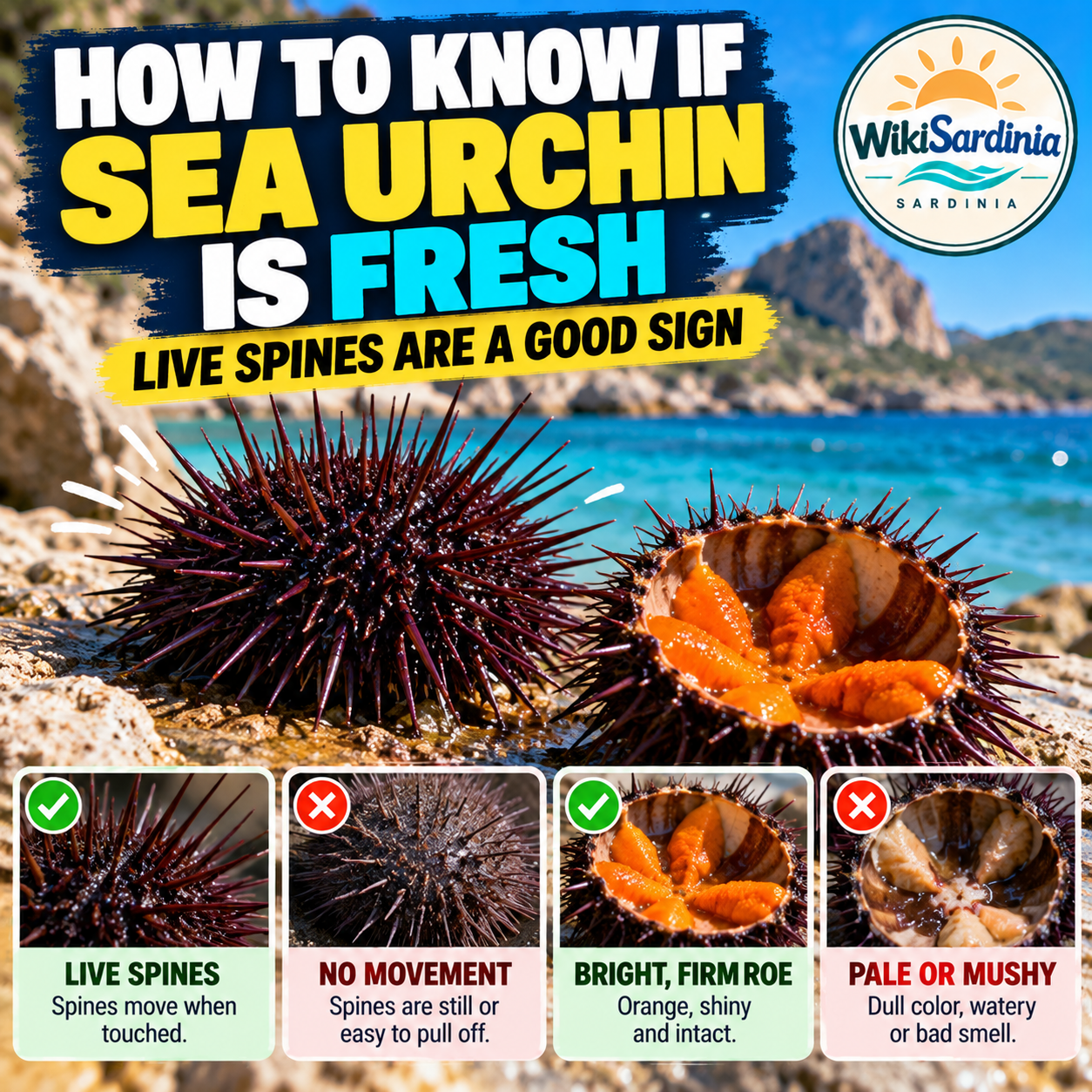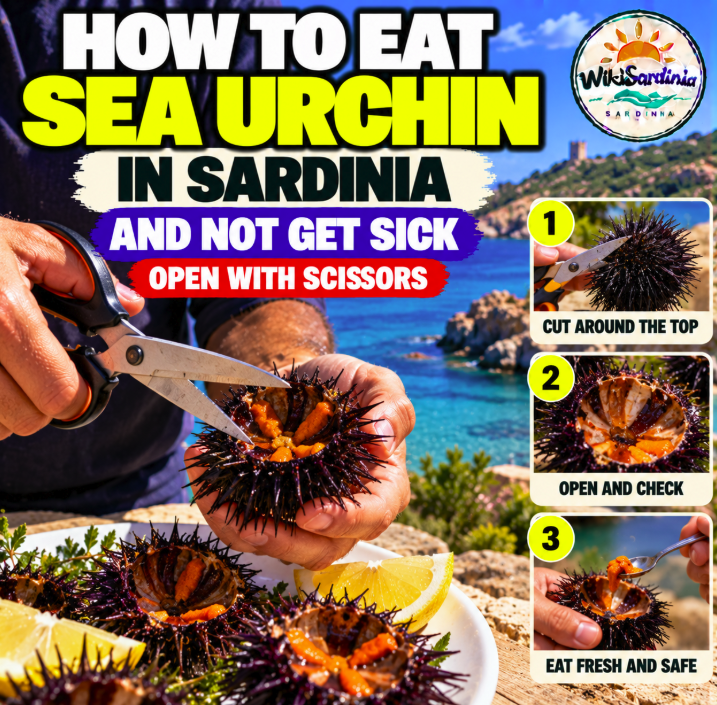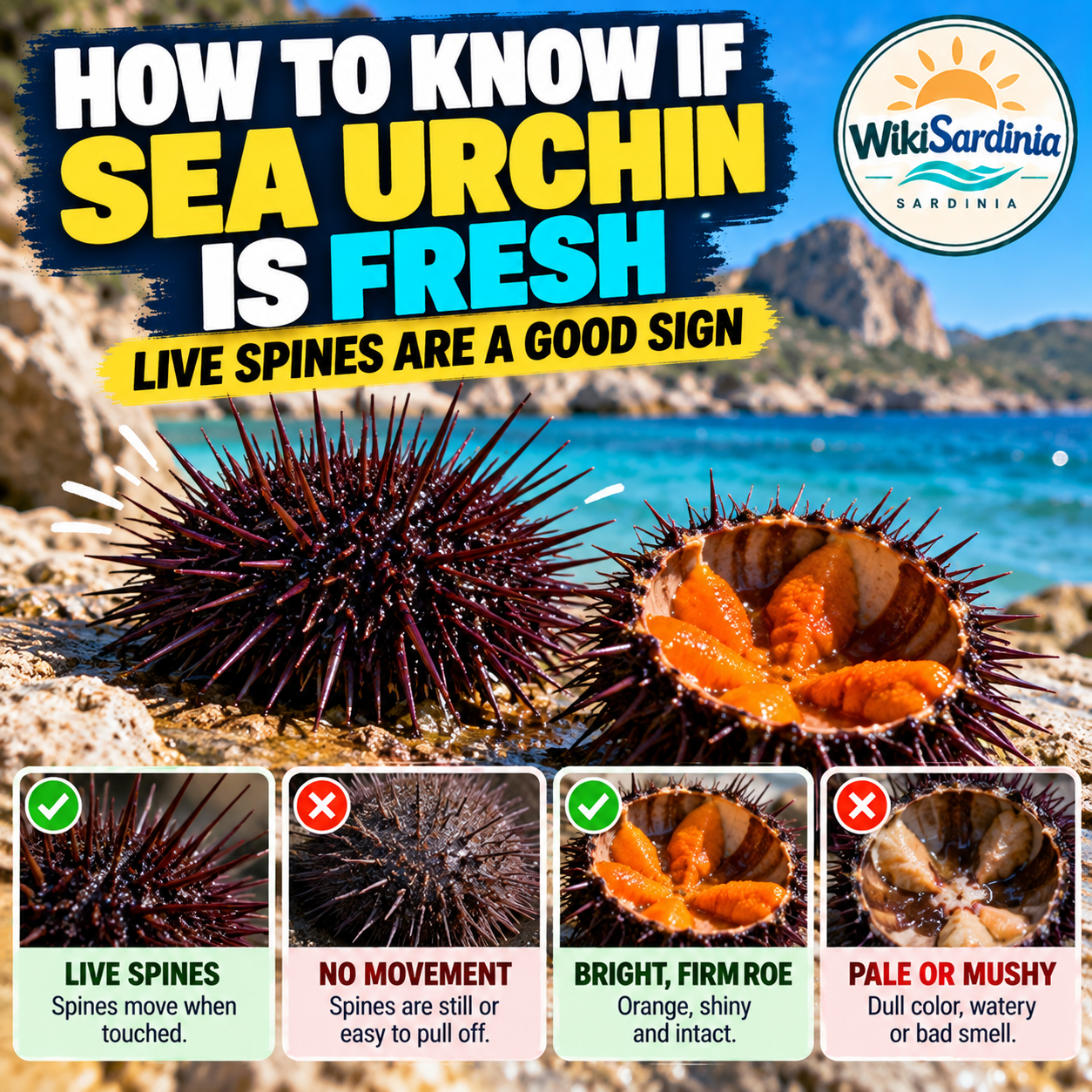
Live sea urchins may move their spines when gently disturbed, but spine movement alone cannot prove that an urchin is safe to eat. If you're buying sea urchins in Sardinia, check that they are alive, handled hygienically and kept properly chilled, and purchase them from a reputable fishmonger or licensed seller. Avoid specimens with damaged shells, an unpleasant smell or roe that looks deteriorated.
1. Check for signs of life
In a live sea urchin, the spines may move slowly when touched, and tiny tube feet may also react. This can be a useful sign that the animal is alive, but don't handle wild sea urchins with bare hands: their spines can puncture skin and break off. Ask the seller to demonstrate safely if you are unsure.
Spines that do not move are not, by themselves, a reliable test of food safety. Temperature, handling, species and the time since harvesting all matter. When in doubt, do not buy or eat it.
2. Look at the shell and the roe
Choose sea urchins with an intact shell and no obvious signs of damage or deterioration. Once opened by a knowledgeable seller, the edible roe (often called “coral” in Italian) should look reasonably firm and intact for that species, not extensively broken down or watery.
Roe colour varies naturally by species, diet and reproductive stage. Orange or yellow roe can be normal, but colour alone does not establish freshness or safety. Avoid roe that looks markedly deteriorated or has an abnormal appearance, and ask the seller if you are uncertain.
3. Smell should be fresh, not strongly unpleasant
Fresh sea urchin should have a clean marine smell. A strong sour, rancid or otherwise unpleasant odour is a warning sign. Do not taste a small piece to “test” it, and remember that harmful microorganisms or toxins may be present even when seafood looks and smells normal.
4. Ask how it was harvested and stored
- Buy from a reputable source. Prefer a licensed fishmonger or seller who can explain the origin and handling.
- Ask when it was harvested and how it has been kept. Sea urchins intended for food need appropriate handling and temperature control.
- Keep them chilled. Follow the seller's storage advice and don't leave seafood in a hot car or on the beach.
- Eat them promptly. Follow local food-safety guidance, especially if they are to be eaten raw.
- Don't rely on appearance alone. Visual checks cannot rule out every food-safety hazard.
Can you collect sea urchins yourself in Sardinia?
Don't assume that collecting sea urchins is allowed wherever you see them. Sardinia has rules and restrictions governing sea-urchin harvesting, which can include seasonal closures, limits and specific conditions. These rules can change, so check the current notices from the Sardinian regional authorities or local maritime authorities before collecting any.
Never collect sea urchins from a protected area or where harvesting is prohibited. If you are visiting, buying from a reputable seller is the simplest way to avoid uncertainty about both legality and handling.
Why “moving spines” is not enough
The idea that moving spines mean “fresh” is only a partial observation: movement can indicate that an animal is alive, but it cannot confirm that it was handled safely or is suitable to eat. Likewise, a lack of visible movement does not provide a complete assessment on its own.
For food safety, consider the whole chain: source, handling, temperature, condition and time. If any part is uncertain, don't eat the sea urchin.
Frequently asked questions
Do sea urchin spines move when the animal is alive?
They can move in response to touch or other stimuli. This is a useful observation, but it is not a complete freshness or food-safety test.
What colour should fresh sea urchin roe be?
Roe is often yellow to orange, but colour varies naturally. Firmness, overall condition, handling and storage matter too; colour alone cannot establish safety.
Can I eat sea urchin raw on a Sardinian beach?
Only if it has been obtained legally and handled and stored safely. Raw seafood carries risks, and normal appearance or smell cannot rule out all hazards. Buy from a reputable source and follow food-safety guidance.
Can I pick sea urchins from the rocks?
Check current Sardinian and local maritime rules first. Harvesting can be restricted by season, area and limits; don't collect in protected or closed areas.
What if a sea urchin smells bad but its spines move?
Don't eat it. Spine movement does not override warning signs such as an unpleasant odour or poor condition.
The takeaway
Moving spines can suggest that a sea urchin is alive, but they do not guarantee that it is fresh or safe to eat. In Sardinia, buy from a reputable seller, check condition and storage, and never rely on colour, smell or movement alone to rule out food-safety risks. If you plan to harvest your own, confirm the current local rules first.