How can you eat sea urchin in Sardinia without getting sick? The safest approach is to eat properly sourced, safely handled and thoroughly cooked seafood. Eating raw sea urchin is never risk-free, and cutting open a sea urchin with scissors does not kill bacteria or remove marine toxins. If you choose to eat sea urchin, buy it from a legitimate traceable supplier and keep it properly refrigerated. People at increased risk of serious foodborne illness should avoid raw seafood.
First: Sardinia's sea urchin fishing rules in 2026
The Sardinian regional decree for 2026 prohibits recreational and sport harvesting of the purple sea urchin (Paracentrotus lividus). The authorized professional season began on 2 January 2026 and was extended to 16 May 2026, excluding Sundays and specified holidays. As of October 2026, that season is closed. You cannot legally collect a few urchins from the beach or a boat for your own dinner under these rules.
The decree also regulates authorized professional fishing, minimum sizes, harvesting areas, commercial handling and other conditions. For any product offered later in the year, ask about its legal provenance, species, harvest location, preservation and traceability; do not assume it was freshly caught locally.
Sources: Sardinia Decree 51/2025 for the 2026 season and Decree 19/2026 extending professional fishing to 16 May.
Can sea urchin make you sick?
Yes. Raw seafood may carry harmful microorganisms or other hazards, and sea urchin roe is often eaten without cooking. Illness risks depend on the species, harvesting waters, handling, storage and the health of the person eating it. There is no visual test that guarantees a raw urchin is safe.
The US Centers for Disease Control and Prevention recommends avoiding raw or undercooked seafood to reduce the risk of Vibrio infection. Although CDC guidance particularly emphasizes raw oysters and shellfish, the general precaution about raw seafood is relevant when deciding whether to eat uncooked marine products.
Source: CDC — Preventing Vibrio Infection.
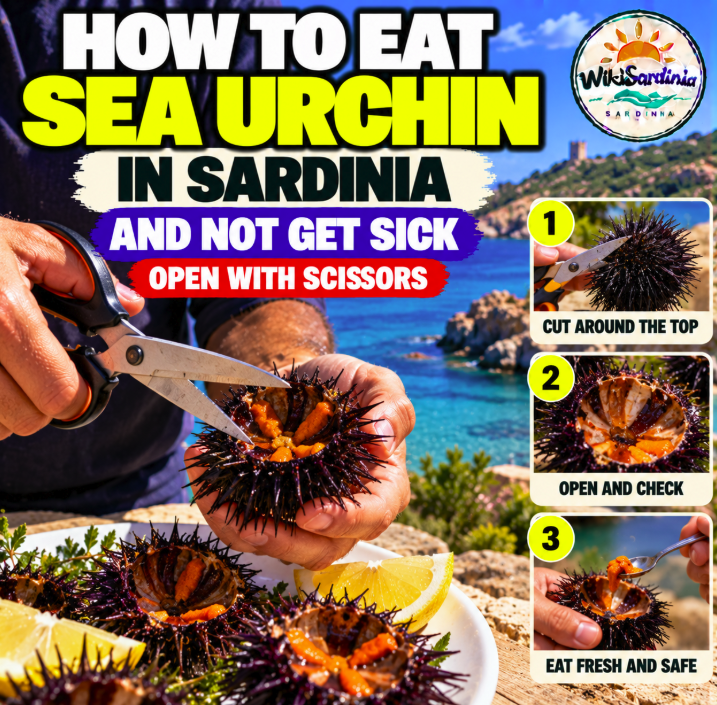
Does opening a sea urchin with scissors make it safe?
No. Scissors are sometimes used by trained seafood preparers to cut through the shell, but opening a sea urchin is a mechanical preparation step, not a food-safety treatment. It does not sterilize the roe or neutralize toxins.
Sea urchin shells and spines can also puncture skin. If you have a legally sourced product and choose to prepare it, use appropriate protective gloves, clean food-contact equipment and a stable work surface. Avoid forceful cutting, keep hands clear of sharp edges and discard the product if shell fragments contaminate the edible portion.
For inexperienced visitors, the better option is to have a reputable seafood professional prepare it.
Which part of a sea urchin is eaten?
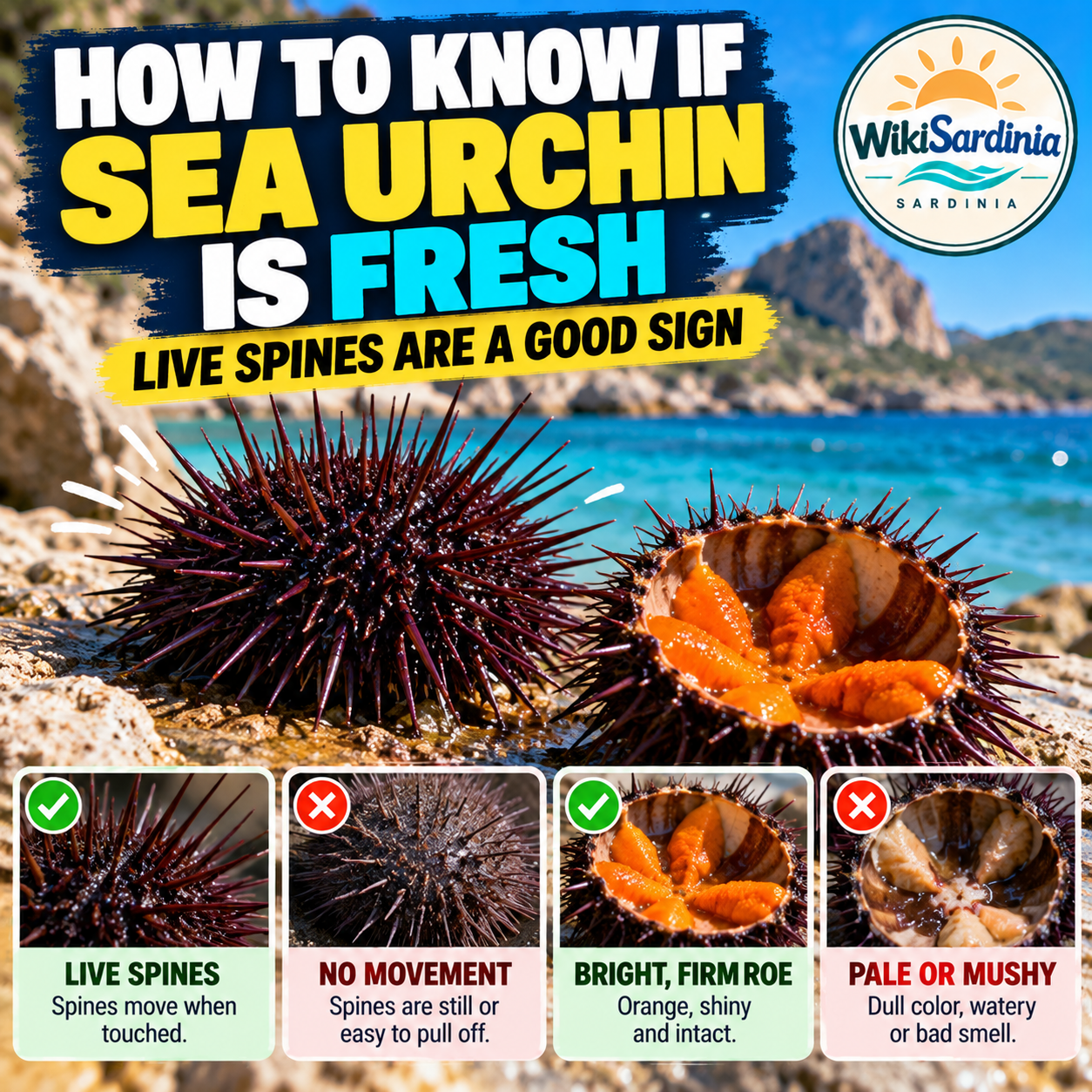
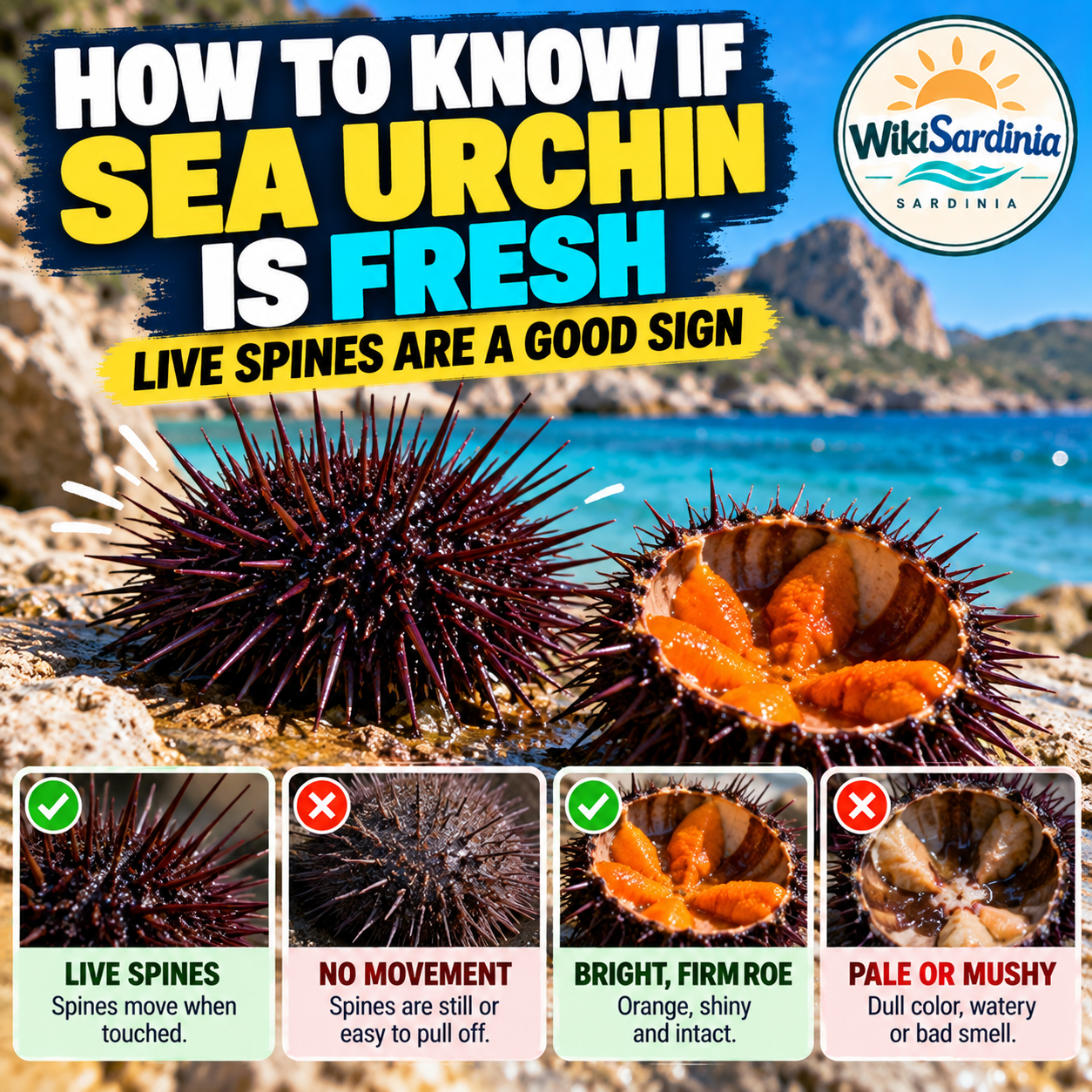
The orange or yellow lobes commonly called sea urchin “roe” or uni are actually the animal's gonads. The spines, shell and internal waste material are not the delicacy being served.
Color and appearance can vary naturally. Bright orange color alone does not prove freshness, safety, species or legal origin.
How to choose a safer source
Choose a licensed seafood retailer or restaurant able to explain where the sea urchin product came from and how it was stored. Ask whether the product is fresh, chilled, frozen, pasteurized or otherwise processed, and whether it is intended for raw consumption.
A restaurant menu saying “Sardinian sea urchin” is not, by itself, proof of local harvest, legality or safe handling. Ask for clarification if the season is closed.
Avoid buying unrefrigerated sea urchin from an informal roadside seller or someone who says they collected it recreationally.
Cold-chain safety matters
Seafood is perishable. Buy it last during shopping, transport it promptly in suitable cold conditions and follow the supplier's storage instructions and use-by date. Do not leave raw seafood in a hot car, on a sunny terrace or in an unchilled beach bag.
Do not rely on a universal “safe for X hours” rule: actual safety depends on product condition, temperature and handling history. When in doubt about refrigeration or provenance, do not eat it.
Does lemon juice disinfect sea urchin?
No. Lemon juice can add flavor but does not reliably eliminate foodborne pathogens. Neither a splash of vinegar nor serving sea urchin with pasta makes a raw product safe if it was contaminated or mishandled.
Likewise, the smell, color and taste of seafood cannot reliably rule out every pathogen or toxin.
Is cooked sea urchin safer than raw?
Thorough cooking generally reduces the risk from many infectious microorganisms, although it cannot reverse spoilage or eliminate every possible marine toxin. The exact cooking process must be appropriate for the product. Briefly warming raw roe on top of pasta is not the same as thoroughly cooking it.
If you are unsure about safe preparation, choose a professionally prepared cooked seafood dish instead of attempting to make raw sea urchin safe at home.
Who should avoid raw sea urchin?
People who are pregnant, older adults, young children, people with weakened immune systems and people with certain underlying medical conditions—particularly liver disease—should take special care and generally avoid raw or undercooked seafood. Ask a healthcare professional for advice specific to your circumstances.
The CDC highlights the risk of severe Vibrio infections in people with liver disease and other conditions that increase susceptibility.
Can you eat sea urchin straight from the sea?
Do not do so in Sardinia. Recreational harvesting of the regulated purple sea urchin is prohibited under the 2026 decree, and seawater that looks clean does not guarantee the animal is safe to eat raw.
Even if a sea urchin is alive, that does not establish that it is free from pathogens or contaminants.
How is sea urchin traditionally eaten in Sardinia?
Sea urchin has a place in Sardinian coastal food culture. The edible gonads may be served on bread or used in spaghetti ai ricci di mare. Some preparations are raw or only lightly warmed, which means the normal food-safety concerns for raw seafood still apply.
When ordering in a restaurant, ask whether the sea urchin is raw, cooked or preserved and where it came from. If you prefer to avoid raw seafood, say so clearly.
Can you eat sea urchin in October 2026?
The authorized Sardinian professional harvest season ended on 16 May 2026. That does not automatically mean every legally marketed sea urchin product everywhere is prohibited in October: origin, product form and applicable food laws matter. However, a claim of freshly harvested local Sardinian sea urchin in October should prompt careful questions.
Do not infer that a restaurant is acting unlawfully merely because it lists a sea urchin dish; request product details rather than making accusations.
What if you accidentally swallow a spine or shell fragment?
Stop eating. If you have choking, breathing difficulty, severe pain or difficulty swallowing, seek urgent medical attention. Do not try to push a sharp fragment down with bread or another food.
If you get a puncture wound from a spine, clean it with running water and seek medical assessment for deep wounds, retained fragments or signs of infection. Avoid contact between open wounds and raw seafood or seawater.
What are the symptoms of seafood food poisoning?
Possible symptoms include nausea, vomiting, abdominal cramps and diarrhea. Some illnesses can cause fever, dehydration or more serious symptoms. The onset and severity vary, and symptoms cannot reliably identify the organism or source without medical assessment.
If symptoms are severe, persistent or accompanied by bloody diarrhea, dehydration, high fever or other concerning signs, seek medical care promptly. People with underlying risk factors should seek advice early.
When should you call 112 in Sardinia?
Call 112, Italy's emergency number, for serious emergencies such as breathing difficulties, collapse, severe allergic reaction or other immediately life-threatening symptoms. For less urgent illness, contact a local medical service or healthcare professional.
Tell clinicians what seafood you ate, where and when, and whether it was raw. Save receipts or packaging if available.
Useful Italian phrases at a seafood restaurant
- I ricci sono crudi o cotti? — Are the sea urchins raw or cooked?
- Da dove provengono i ricci? — Where do the sea urchins come from?
- Sono stati conservati in frigorifero? — Have they been kept refrigerated?
- Preferisco evitare pesce crudo. — I prefer to avoid raw seafood.
- Ho un'allergia ai frutti di mare. — I have a seafood allergy.
- Mi sento male dopo aver mangiato ricci di mare. — I feel ill after eating sea urchin.
Frequently asked questions
How do you eat sea urchin in Sardinia without getting sick?
There is no zero-risk method for eating raw sea urchin. Choose a legally sourced, traceable product, ensure proper refrigeration and prefer thoroughly cooked seafood when reducing infection risk is the priority.
Can you open sea urchins with scissors?
Scissors may be used as a preparation tool, but they do not make the food safe. Sharp shells and spines create injury risks; inexperienced people should leave preparation to professionals.
Can lemon kill bacteria in raw sea urchin?
No. Lemon is a condiment, not a reliable disinfection method.
Is raw sea urchin safe if it smells fresh?
Not necessarily. Smell and appearance cannot detect all foodborne hazards.
Can tourists collect sea urchins in Sardinia?
No. Recreational and sport harvesting of Paracentrotus lividus is prohibited by Sardinia's 2026 rules.
When was Sardinia's sea urchin season in 2026?
Authorized professional fishing ran from 2 January through 16 May 2026, subject to the decree's other restrictions.
Can you buy sea urchin in October?
Product legality and availability depend on its origin, processing, storage and applicable rules. Do not assume a product is freshly caught locally outside the season.
Are orange sea urchin gonads always safe?
No. Color does not establish safety or freshness.
Is sea urchin pasta safe?
It depends on the product and preparation. Some recipes use raw or barely warmed sea urchin, which retains raw-seafood risks.
What should I do if I become sick after eating sea urchin?
Seek medical advice, especially if symptoms are severe or you are in a higher-risk group. Call 112 for a life-threatening emergency.
The bottom line
Opening sea urchins with scissors is not a way to prevent food poisoning. In Sardinia, do not collect sea urchins recreationally, buy only from legitimate traceable suppliers, protect the cold chain and understand that raw seafood carries risk. The safest option for minimizing infectious risk is properly cooked seafood, not a viral opening technique.
Sources
Sardinia official 2026 sea urchin decree; Sardinia official extension to 16 May 2026; CDC — Preventing Vibrio Infection. Information checked for October 2026; verify subsequent regional decrees before publication.