Travelers already staying in Pula do not need to drive across Sardinia to learn how to make culurgiones. Current experiences in Pula and nearby Chia offer hands-on introductions to Sardinian stuffed pasta, including a particularly local workshop in Pula’s historic center and a resort cooking experience using Sardinian ingredients. Nearby agriturismi are excellent places to eat traditional food, but it is important not to confuse a farm restaurant with a cooking class unless the property specifically advertises one.
A culurgiones workshop in the historic center of Pula
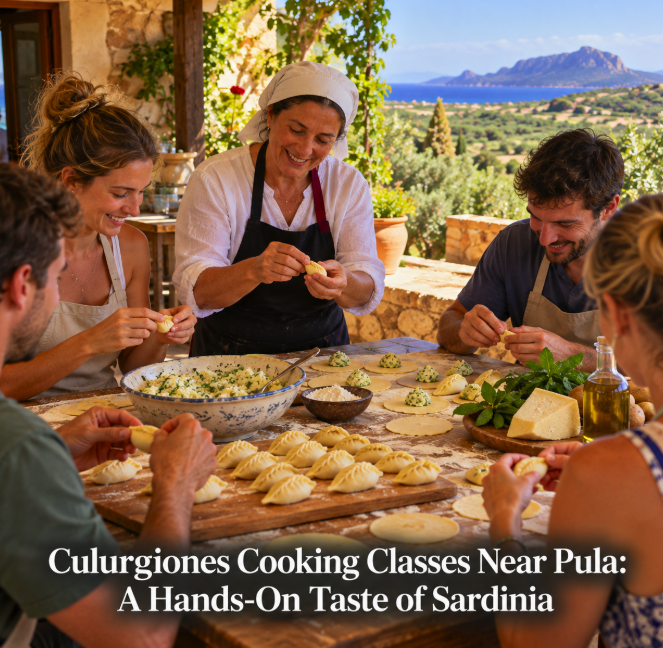
One of the most directly relevant options is a cooking workshop advertised by B&B 1987 Pula. The class takes place in a traditional Campidanese house in Pula’s historic center and focuses on preparing Sardinian ravioli, including culurgionis filled with potato and mint.
Guests participate rather than simply watch. The experience includes making fresh pasta, learning how to close the filled parcels and then cooking and tasting what the group has prepared. The current description lists a duration of about four hours, a 10:00 start, a minimum of two participants and availability by reservation. English-speaking contacts are also listed, which is useful for American visitors who want detailed instruction rather than relying on demonstrations alone.
The experience is especially convenient for travelers already based in Pula because it avoids the need for a long transfer. It also places the lesson in a domestic setting rather than a conventional restaurant kitchen, emphasizing the family tradition behind the dish.
What makes culurgiones different?
Culurgiones are among Sardinia’s most recognizable handmade pastas, particularly associated with Ogliastra on the island’s eastern side. The classic version combines a thin pasta shell with a potato-based filling that can include pecorino and mint, although recipes and traditions vary across Sardinia.
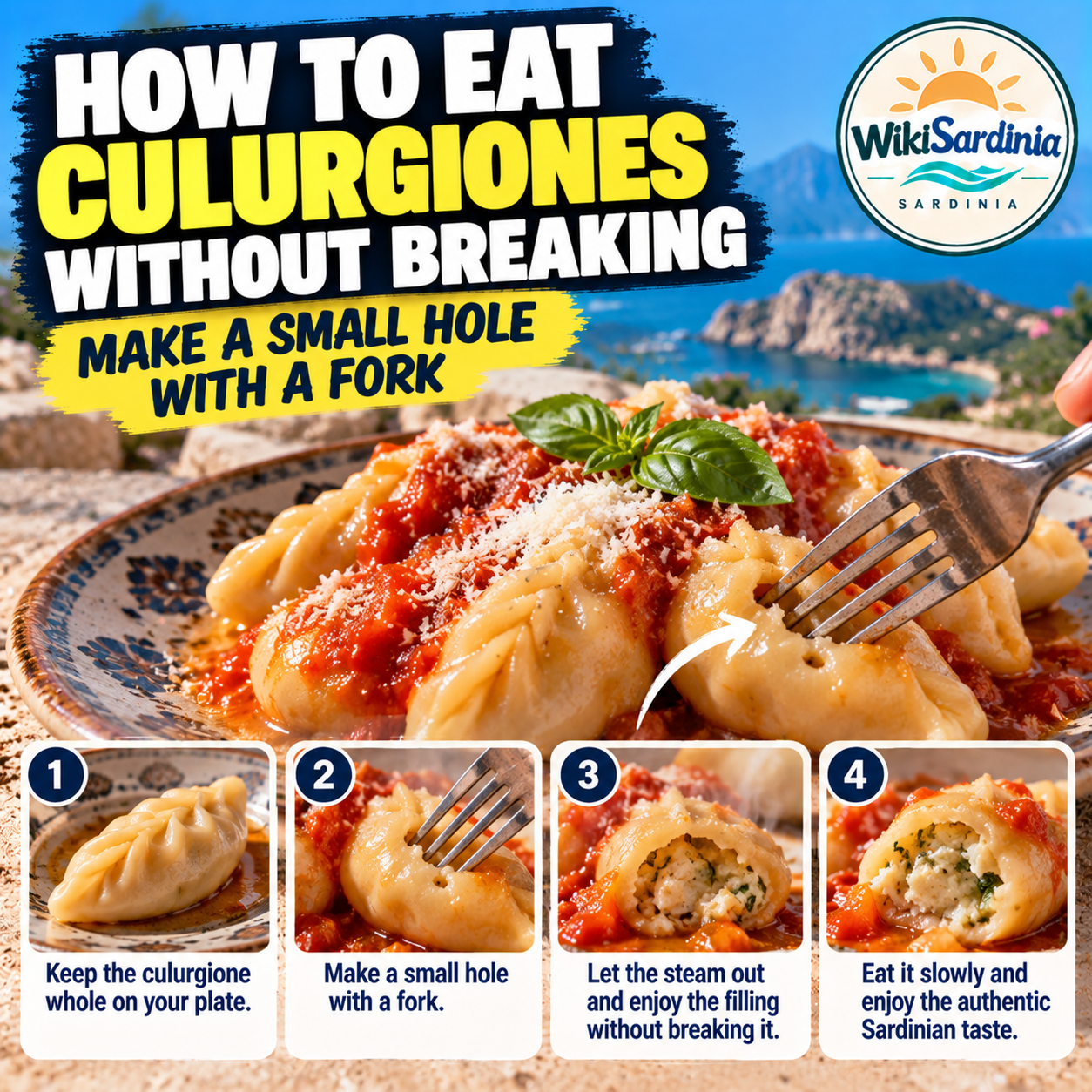
The signature skill is the closure. The edges are pinched into a braided, wheat-ear pattern known for its decorative appearance. Watching an experienced cook do it can make the technique look effortless; reproducing it yourself is usually the memorable part of the class.
For visitors, that makes culurgiones a good cooking lesson because the experience is about more than following a recipe. It teaches a manual technique connected to Sardinian food culture, and the result is something travelers can attempt again at home.
A polished alternative in nearby Chia
Chia Laguna Resort currently offers Nonna’s Table – Taste of Sardinia, a hands-on cooking experience near Pula. Its official description says participants mix dough, learn the traditional hand-seal for stuffed pasta and prepare a warm pastry with honey. Ingredients include local flour, garden herbs, fresh cheeses and the resort’s own honey.
The class is designed for couples, families and groups of friends at all experience levels. Chef instruction, ingredients, a seated tasting and recipe cards are included. Vegetarian options are available, while allergies and intolerances should be communicated when booking.
This is a useful choice for travelers staying around Chia, Santa Margherita di Pula or the coastal resorts west of Pula. It is more structured than a family-home workshop but still centers on practical participation rather than a chef demonstration.
What about an agriturismo near Pula?
Pula has genuine agriturismi with strong Sardinian food traditions. Piccolo Ranch, about two kilometers from central Pula, is a family-run agriturismo with a Sardinian farm restaurant, local wines and zero-kilometer cuisine. Agriturismo Schirru, near Pula and Nora, also emphasizes traditional Sardinian dinners, local wine, seadas and homemade mirto.
These are relevant choices for travelers searching for an agriturismo food experience, but their current official information does not advertise a regular culurgiones cooking class. They should therefore be considered places to experience farm-style Sardinian dining rather than assumed substitutes for a bookable pasta workshop.
If staying at an agriturismo, it can still be worth asking whether a private cooking activity can be arranged. Small rural properties sometimes organize experiences for groups that are not listed as a fixed daily product, but travelers should confirm this directly rather than arriving expecting a lesson.
Another option: a class brought to Pula or Chia
Our Cooking Journey currently states that it operates cooking classes across South Sardinia, specifically including Pula and Chia. Its classes require at least two adults and generally need to be booked at least 48 hours in advance. Children over eight can participate with an accompanying adult, subject to advance notice, and the company asks guests to communicate dietary requirements before booking.
This can be useful for a group that wants a class arranged around its accommodation rather than traveling to a fixed venue. As with any mobile or private experience, confirm the exact location, menu, language and transport arrangements before paying.
How to choose the right class
If the main goal is specifically learning culurgiones while already in Pula, the historic-center workshop is the most direct match because the current description explicitly names the pasta and gives practical booking details. For travelers staying toward Chia who prefer a resort environment, Nonna’s Table offers another verified hands-on introduction to Sardinian stuffed pasta.
Before reserving, ask whether the class is taught in English on your chosen date, exactly which dishes will be prepared, whether you will make the pasta individually or as a group, and whether the final meal or tasting is included. Seasonal menus can change, so the word “cooking class” does not guarantee culurgiones every day unless the operator confirms them.
For American travelers, this kind of experience can also provide useful context that a restaurant meal cannot. Instead of simply ordering a plate of Sardinian pasta, you learn why the dough feels a certain way, how the filling is balanced and why the distinctive closure takes practice. In Pula, that can fit comfortably into a morning before an afternoon at Nora or the beaches toward Chia.