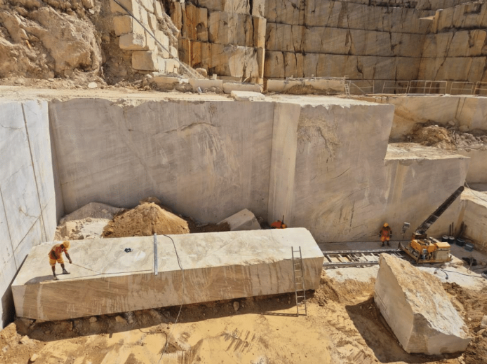
Daino Reale is often described as the ‘white gold’ of Sardinian ornamental stone. Also known as Breccia Sarda or Orosei marble, it is quarried in the Nuoro area and has become an internationally appreciated material for architecture and interior design.
Its appearance is defined by warm beige tones, lighter veins and natural variations created by ancient limestone and dolomitic layers. Fossils of shells, corals and other organisms can sometimes be seen in the stone, giving each slab a distinctive texture and history.
From Sardinian quarries to architecture
The stone is extracted in the Orosei quarry district, where pale cuts in the mountains reveal large blocks of material formed over millions of years. Traditional knowledge and modern extraction techniques work together to turn this natural resource into architectural elements.
Daino Reale is valued not only for its appearance but also for its resistance and versatility. It can be used for indoor and outdoor flooring, stairs, window sills, kitchen surfaces, bathroom elements and pool surrounds.
Finishes and varieties
Polished finishes emphasize its color and veining, while brushed surfaces give the material a more tactile, textured character. Two familiar varieties are Daino Nuvolato, with cloud-like lighter areas, and Daino Venato, marked by more directional veins.
The material works in both classic and contemporary settings. Its warm neutral palette can soften modern interiors while still feeling appropriate in traditional architecture.
Stone, art and Sardinian identity
Sardinian stone is also closely connected with the island’s artistic tradition. The work of sculptor Pinuccio Sciola, famous for transforming basalt and limestone into ‘sound stones’, is an important reminder of the cultural relationship between Sardinia, landscape and material.
Daino Reale therefore represents more than a decorative surface: it carries geology, craftsmanship and a strong connection to the island where it is quarried.