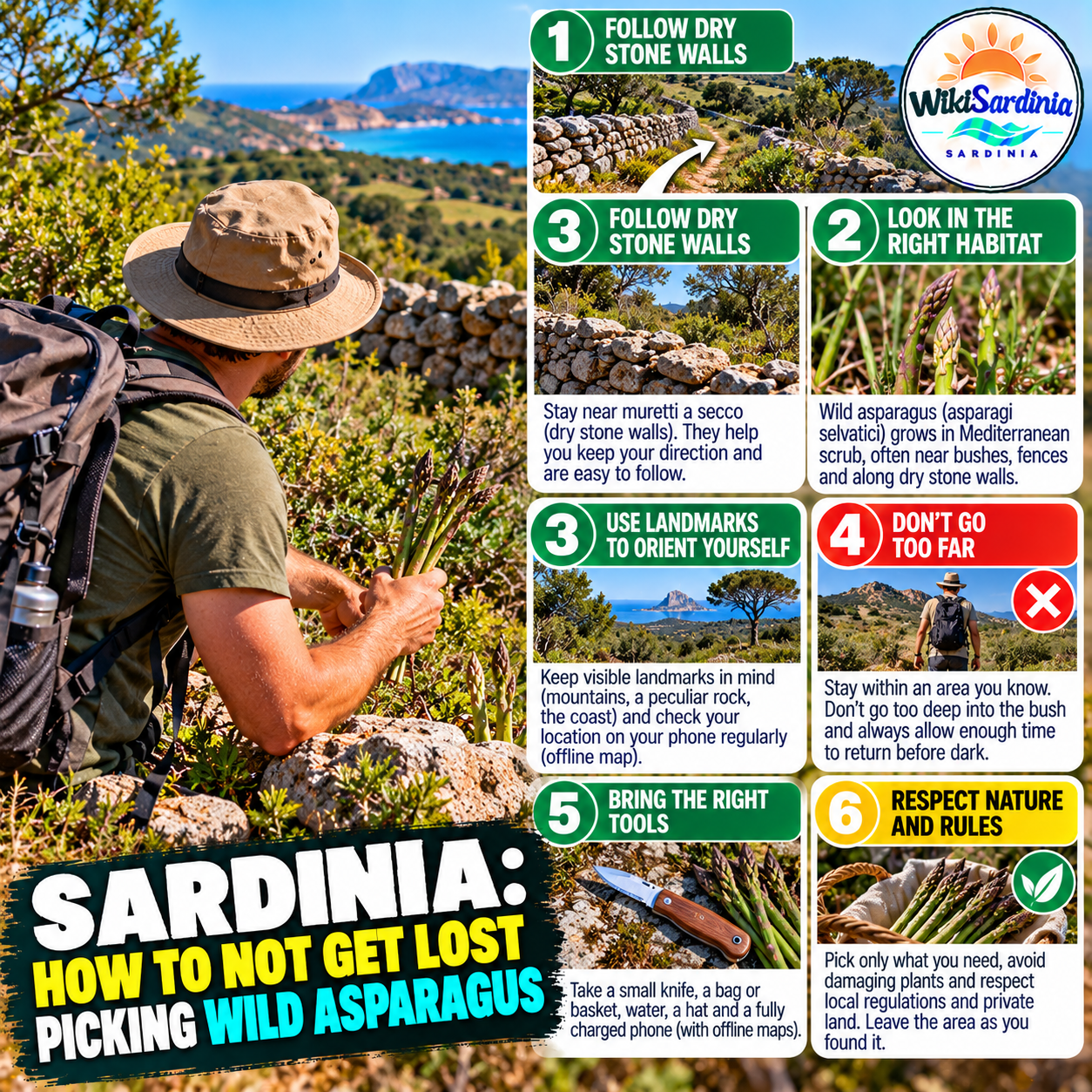
Wild asparagus picking is a lovely way to experience Sardinia’s countryside in season. You may spot the slender shoots among Mediterranean scrub, near field edges and around old dry-stone walls (muretti a secco). Those walls can help you recognise the landscape—but they are not a guaranteed path, and following them blindly can take you onto private land or farther from your starting point.
The safest trick is to plan a small route before you start, keep track of where you are and decide in advance when to turn back. Finding asparagus is fun; getting home easily matters more.
1. Save your route before leaving
Download an offline map of the area and mark your parking place or starting point. Mobile reception can be patchy in rural parts of Sardinia, so do not rely on a live map loading when you need it. Check that your phone has enough battery and carry a small power bank if you have one.
If you are unfamiliar with the area, choose a short walk on known public paths rather than exploring dense scrub or unfamiliar tracks.
2. Use dry-stone walls as landmarks—not as your only guide
Old dry-stone walls are common across Sardinia and can help you recognise fields, boundaries and familiar landscape features. If you use one as a visual reference, keep checking your offline map and your direction of travel. Walls can end abruptly, branch off, or border private property; they may not lead to a road or a safe exit.
Do not climb over walls or enter enclosed land without permission. If you are unsure whether a track is public, turn back and use a known route.
3. Set a clear limit before you start picking
Choose a turnaround time or distance before leaving. It is easy to keep following one more promising patch of asparagus and lose track of how far you have walked. Check your position regularly and make sure you can retrace your route without rushing.
Start heading back well before sunset, especially if the terrain is uneven or you are walking through scrub. Avoid exploring unfamiliar ground alone if you can arrange to go with someone who knows the area.
4. Tell someone where you are going
Before setting off, tell a friend, family member or your accommodation host which area you plan to visit and when you expect to return. Agree to check in when you are back. If your plans change significantly, let them know when you have signal.
5. Bring a few basic essentials
- A fully charged phone with an offline map.
- Water and a small snack.
- Closed shoes with good grip, long trousers and a hat.
- A small first-aid kit and any personal essentials.
- A basket or breathable bag for the asparagus, plus suitable cutting tools used carefully.
Watch for thorny plants, uneven ground, ticks and changing weather. Do not reach blindly into dense bushes, and do not use a knife while walking or when you cannot see where your hands are going.
6. Know the area and respect local rules
Before collecting anything, check whether foraging is permitted in that location. Rules can differ in protected areas, private land and places with local restrictions. Never enter fenced or cultivated land without permission, and avoid damaging plants or taking more than you need.
Only collect wild asparagus if you can identify it confidently. Do not eat plants you cannot positively identify, and remember that picking rights and access rules are separate questions: being able to reach a plant does not automatically mean you may harvest it.
7. What if you lose your bearings?
Stop before going farther. Check your offline map and look for the last landmark you recognise. If you can safely retrace your steps, return to the known route rather than taking a shortcut through scrub or across walls. Avoid wandering in several directions, which can make it harder to relocate your starting point.
If you cannot establish your position, daylight is fading, or you are injured, contact emergency services while you still have battery and signal. Share your last known location and remain somewhere safe and visible rather than continuing deeper into unfamiliar terrain.
The simple rule for asparagus season in Sardinia
Dry-stone walls can help you recognise the countryside, but they are not a substitute for navigation. Save an offline map, mark your starting point, set a turnaround time, tell someone your plan and stay on land you are allowed to access. With a little preparation, you can enjoy the search for wild asparagus without turning a countryside walk into a rescue situation.