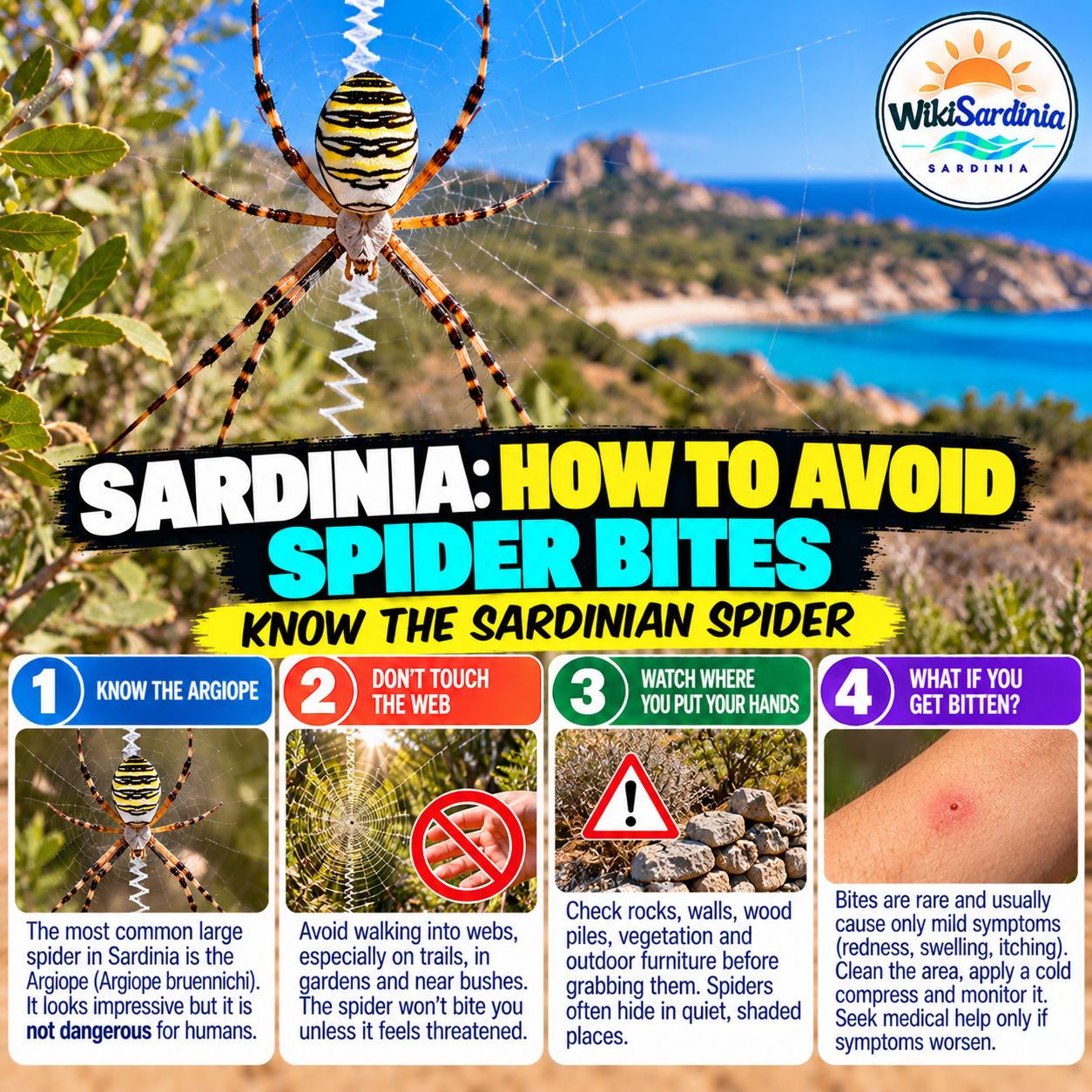
Spotting a large, brightly striped spider in a garden or among the bushes can be startling, especially if you are visiting Sardinia for the first time. One species you may encounter is the wasp spider, Argiope bruennichi, known for its yellow-and-black markings and the zigzag pattern often visible in the centre of its web.
The reassuring news is that this spider is generally not considered dangerous to people. Like other spiders, it is best left alone: bites are uncommon and are most likely if the animal is grabbed, squeezed or otherwise threatened. A few simple habits can help you avoid accidental contact while enjoying Sardinia’s outdoors.
How to recognise an Argiope
The female wasp spider is relatively large and has striking yellow, black and pale bands across its abdomen. It often builds a circular web in sunny grassland, gardens, scrub and other vegetation. A distinctive zigzag strip of silk may run through the web.
Do not identify a spider by colour alone, and remember that many species live around homes and paths. You do not need to approach or handle a spider to work out what it is.
1. Do not touch the spider or its web
If you see an Argiope web, give it space and walk around it. Do not poke the spider, shake the web, or try to move it with your fingers. The spider is not looking to attack people; leaving it undisturbed is the easiest way to avoid a defensive bite.
If a web crosses a frequently used path, choose another route where possible. If it needs to be moved for safety, ask the property owner or a suitably informed person rather than handling the spider yourself.
2. Watch where you put your hands
When walking in rural areas, gardening or exploring old stone walls, look before reaching into dense vegetation, wood piles, gaps between rocks or shaded storage areas. Shake out shoes or clothing that have been left outside, and use gloves when moving garden debris. These are sensible precautions around many small animals, not a reason to fear Sardinia’s wildlife.
3. Keep children and pets curious but careful
Show children how to observe spiders from a distance without touching them or throwing things at their webs. Keep pets from pawing at or trying to eat unfamiliar wildlife. Spiders are part of the local ecosystem and help control insect populations, so there is usually no need to kill them.
What if a spider bites you?
If you suspect a bite, move away from the spider and gently wash the area with soap and water. A cool compress wrapped in cloth may help ease local pain or swelling. Do not cut the skin, try to suck out venom or apply harsh chemicals. If possible, note what the spider looked like from a safe distance, but do not try to catch it.
Seek medical advice if pain, redness or swelling is significant, persists or worsens. Call emergency services if you develop severe symptoms such as difficulty breathing, faintness or swelling of the face or throat. A suspected bite can have other causes, so do not assume that a spider was responsible without assessment.
Are Argiope spiders dangerous in Sardinia?
Argiope bruennichi is not generally regarded as medically dangerous to humans. A defensive bite, if one occurs, may cause temporary local pain or irritation, but individual reactions can vary. The practical advice remains the same: do not handle the spider, and get medical help if symptoms are severe or getting worse.
Enjoy Sardinia’s nature without disturbing it
From coastal scrub to countryside gardens, Sardinia is home to a wide range of wildlife. A striped spider in its web can be an interesting sight rather than a threat. Look carefully before putting your hands into hidden spaces, give webs a wide berth and leave the spider where it is.
The simple rule: admire the Argiope, do not touch the web, and avoid reaching blindly into vegetation or stone gaps. A little awareness is usually all you need to share the outdoors safely.