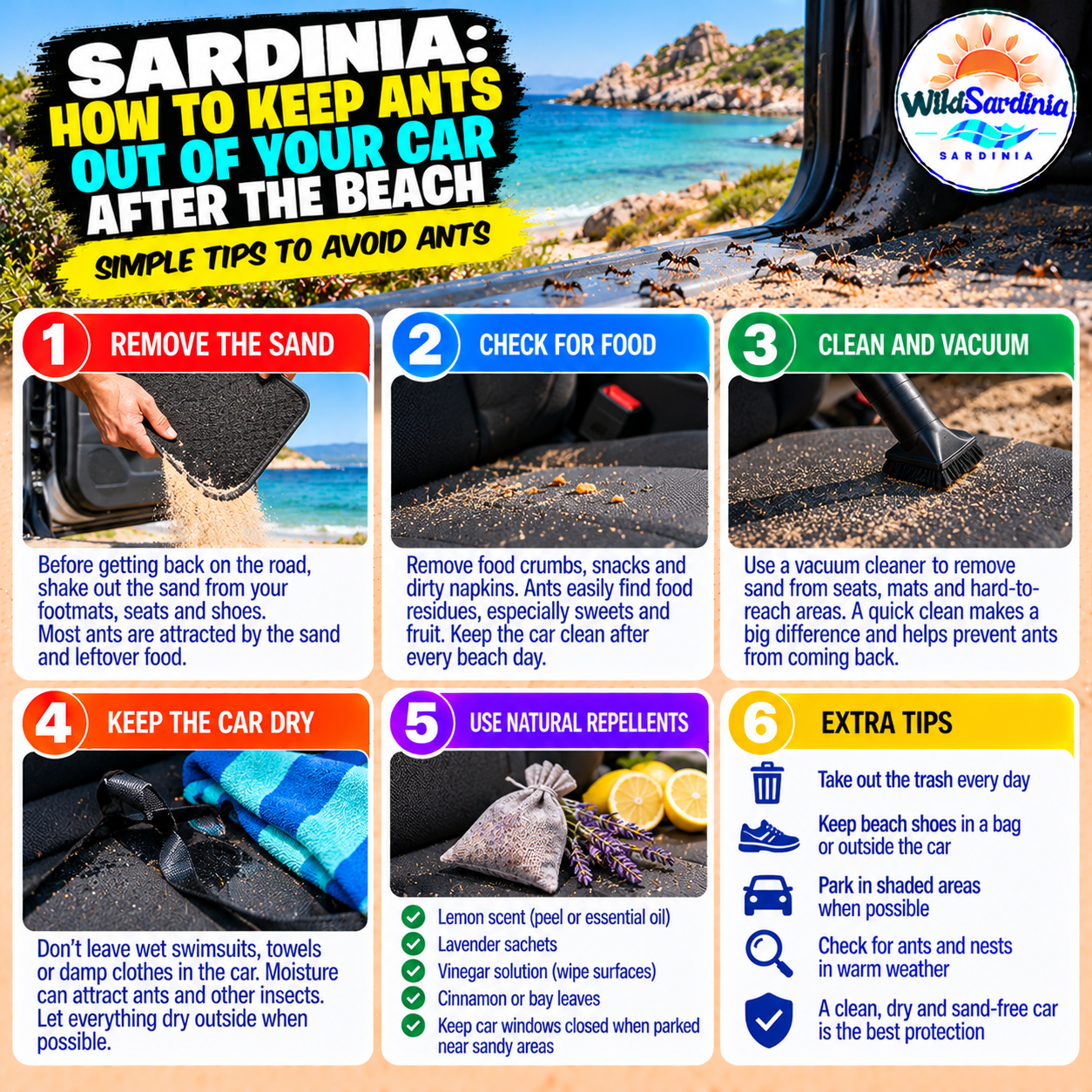
After a day at the beach in Sardinia, sand is not the only thing that can end up in your car. A few crumbs, a sweet drink spill or a bag of snacks can attract ants, especially when the vehicle is parked near vegetation or sandy ground. The easiest first step is exactly the practical one many travellers forget: shake the sand out of the floor mats and remove food residue before driving away.
1. Shake out the sand
Take out removable floor mats and shake them outside the car. Brush sand from shoes before getting in, and check the boot if you carried beach bags, towels or picnic supplies. Sand itself is not usually what attracts ants, but clearing it helps you spot crumbs and makes the interior easier to clean.
2. Remove food and drink residue
Check under the seats, around cup holders, in door pockets and inside the boot. Remove fruit pieces, biscuit crumbs, sweet wrappers and rubbish. Wipe sticky spills with a suitable interior cleaner and a cloth, following the vehicle manufacturer's care guidance. Empty the rubbish bag rather than leaving it in the car overnight.
3. Vacuum the interior
A quick vacuum can remove crumbs and debris from carpet, seat seams and the edges of floor mats. Pay attention to places where children may have eaten snacks or where a picnic bag was stored. If ants are already present, follow their trail carefully to find the likely food source or entry point.
4. Check bags and beach equipment
Before putting everything back, inspect reusable shopping bags, towels, cool bags and beach chairs. Keep food in sealed containers and do not leave sweet drinks or open snacks in the vehicle. Let damp towels and swimsuits dry outside the car when practical, and avoid leaving rubbish or food waste in a parked vehicle.
5. Avoid unreliable or risky repellents
Lemon peel, lavender, cinnamon and other household remedies are not reliable ways to eliminate an ant problem. Essential oils and vinegar can also damage some interior finishes or leave strong smells. Do not spray insecticide, bleach or other chemicals into the passenger cabin, air vents or onto seats. If the ants keep returning, use a pest-control product only as directed and away from children, pets and food—or ask a professional for advice.
6. Reduce the chance of ants returning
- Park where permitted, away from visible ant trails or nests when possible.
- Keep food sealed and remove rubbish at the end of the day.
- Brush sand and soil from shoes before getting into the car.
- Clean spills promptly and vacuum regularly during a longer trip.
- Do not block access roads or park on protected dunes or vegetation to avoid insects.
What if ants are already inside?
Move the car to a safe, permitted place away from the visible trail if possible, then remove food sources and vacuum thoroughly. Check whether ants are coming from a bag or item of beach equipment. If there are many ants, they repeatedly return or you suspect a nest inside the vehicle, seek professional pest-control advice rather than spraying the cabin indiscriminately.
The quick Sardinian beach-car routine
Before leaving the beach, shake out the mats, brush sand from shoes, check for snacks and wrappers, and vacuum when you can. Sand removal is a good habit, but food crumbs and sticky spills are the main things to focus on when trying to stop ants from exploring your car. A clean interior is the simplest place to start.