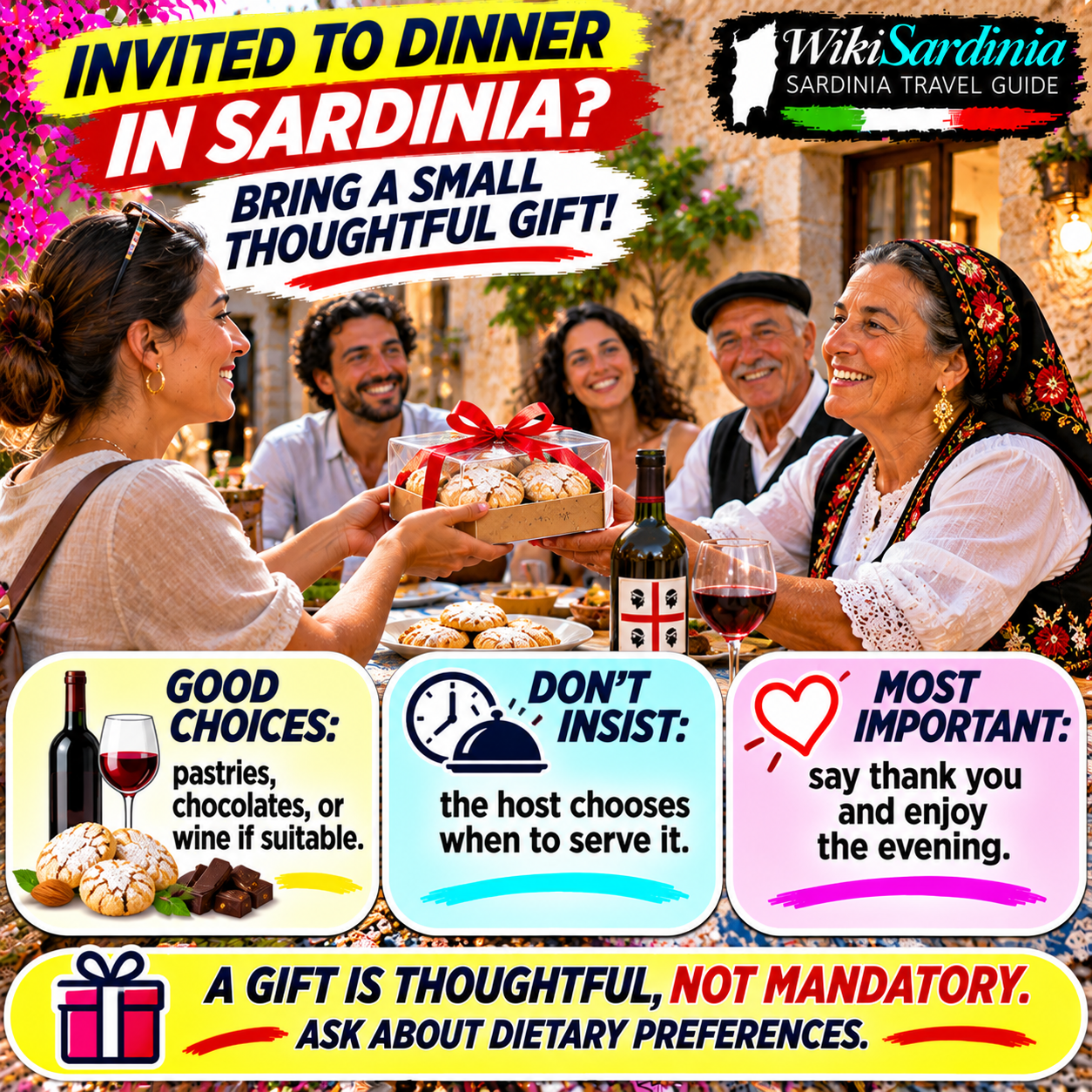
Yes. If a Sardinian family invites you to dinner, bringing a small, thoughtful host gift is generally a lovely gesture—but it is not a strict obligation. A box of pastries, artisanal chocolates or a suitable bottle of wine can show appreciation without turning a friendly invitation into a formal exchange. The most important things are to thank your hosts, respect their plans and enjoy the time together.
What should you bring to a Sardinian family's home?
For an informal dinner, a small selection of pastries from a local pasticceria is a particularly easy choice. Sardinian sweets such as amaretti or gueffus can be thoughtful when appropriate, though hosts may already have prepared dessert. Good chocolates, a small specialty from your hometown, or flowers can also work. A bottle of wine is common in Italian guest etiquette, but check whether the hosts drink alcohol; don't assume they do.
Wine or pastries: which is better?
Neither is universally correct. In a 2023 interview with Sardinian newspaper L'Unione Sarda, etiquette specialist Samuele Briatore recommended a sparkling wine or small sweets to share at coffee time for informal invitations, while cautioning against bringing wine or a large cake that might disrupt the host's carefully planned menu. Other Italian etiquette guides list wine, desserts and flowers as familiar host gifts. This is advice, not a rigid Sardinian rule: consider your relationship and the host's preferences.
Do you need to spend a lot?
No. An expensive present may make an informal family dinner feel unnecessarily formal. A modest, good-quality gift is usually more comfortable than something extravagant. A local specialty or a little something from your home country can be more personal than a costly bottle.
Should the hosts serve your gift immediately?
Not necessarily. If you bring pastries, the family may already have dessert ready; if you bring wine, they may have chosen a different bottle to accompany dinner. Hand over the gift with a simple thank-you and let the hosts decide when—or whether—to serve it. Don't insist that they open the wine or put the sweets on the table that evening.
Are flowers a good idea?
They can be, especially when you know the recipient likes flowers. A small bouquet or potted plant may be suitable, but avoid arrangements that require the hosts to stop preparing dinner and search for a vase. Traditional Italian etiquette often advises avoiding chrysanthemums, which are associated with remembrance of the dead. The Sardinian etiquette interview also notes that formal invitations may call for a different approach, such as sending flowers before or after the occasion.
What if the hosts say “Non portare niente”?
That means “Don't bring anything.” Take the invitation at face value rather than assuming the family is secretly demanding a gift. If you still want to express thanks, a small, unobtrusive present can be acceptable in an informal setting, but respect any clear preference, particularly about alcohol, sweets or dietary restrictions. A warm thank-you message afterward is always a considerate alternative.
How should you behave at dinner?
Greet everyone, follow the family's lead on seating and when to begin eating, and be genuinely interested in the food and conversation. Compliment dishes you enjoy without exaggeration. If you have allergies or dietary requirements, tell the host ahead of time rather than surprising them at the table. Offer to help clear up once if appropriate, but accept a polite refusal. Family customs differ; there is no single Sardinian dinner script.
Is it rude to refuse more food?
No, you do not have to eat beyond your comfort or ignore dietary needs. A gracious response is “Era tutto buonissimo, grazie, ma sono pieno/piena” (“Everything was delicious, thank you, but I'm full”). Hosts may encourage guests to try more, but a friendly, clear refusal is fine.
What if you're invited by someone you just met?
A spontaneous invitation can be a generous gesture, but use ordinary travel judgment and make sure you're comfortable with the arrangements. Ask what time to arrive and whether you should bring anything. Don't assume every Sardinian family follows the same customs or that an invitation automatically involves a large traditional feast.
Useful Italian phrases
- “Grazie mille per l'invito!” — Thank you so much for inviting me!
- “Posso portare qualcosa?” — Can I bring something?
- “Ho portato un piccolo pensiero.” — I brought a little something.
- “Spero vi faccia piacere.” — I hope you like it.
- “È tutto buonissimo!” — Everything is delicious!
- “Grazie per la bellissima serata.” — Thank you for the wonderful evening.
Frequently asked questions
Is a host gift mandatory in Sardinia?
No. It is a thoughtful gesture rather than a universal obligation.
Can I bring Cannonau or Vermentino wine?
Yes, if your hosts enjoy wine. But they may already have chosen drinks, so don't expect your bottle to be opened immediately.
Are Sardinian pastries a good choice?
Yes, a modest box of local sweets is often practical, especially for an informal dinner. Check dietary preferences and let the hosts decide when to serve them.
Should I bring a homemade dessert?
Ask first if it is intended to be part of the meal; the family may already have planned dessert.
Is it acceptable to bring nothing?
Yes, especially if your hosts have explicitly asked you not to bring anything. A sincere thank-you is still important.
Should I send a thank-you message afterward?
It's a lovely idea, especially after a first invitation.
The bottom line
Bring a small host gift if it feels natural, not because you think Sardinian hospitality requires repayment. Pastries, chocolates, flowers or suitable wine can all be good choices. Respect the hosts' preferences, don't insist that your gift be served, and remember that your gratitude and company matter more than the price of the present.