
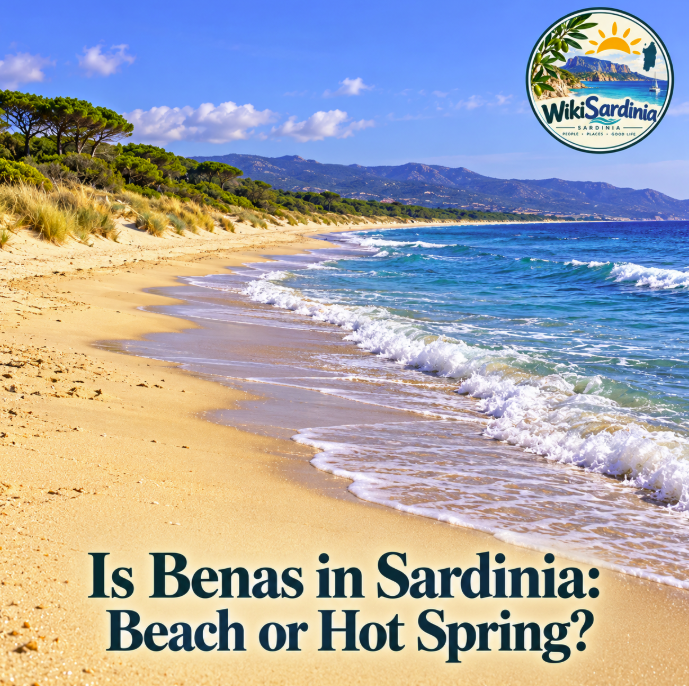
Searching for a Sardinian beach with naturally hot water may bring up the name Is Benas, but the thermal claim needs correcting. Institutional sources checked for this guide describe Is Benas as a coastal wetland associated with the Is Arenas shoreline in western Sardinia. They do not establish it as a hot spring or a geothermally heated bathing beach. Plan a visit for the coast and landscape, rather than a promised warm-water soak.
If naturally heated water is the main reason for your trip, look instead at a documented thermal destination such as Fordongianus. That is an inland visit, with different booking and access questions from a day at the sea.
What Is Benas actually refers to
The Comune di San Vero Milis environmental guide identifies Is Benas among the area’s bird-rich wetlands. It describes a wider landscape of dunes, pine woodland, lagoons and coast. A wetland name is not evidence of a thermal source, and water that feels pleasant on a particular day does not establish geothermal heating.
The regional tourism authority’s Is Arenas guide places a canal linking the sea to the Is Benas pond at the southern end of the long beach. The shoreline extends across the territories of Narbolia, San Vero Milis and Cuglieri. This geography helps explain why search results can mix the names of the pond, nearby beach stretches and local businesses.
Before following a map pin, ask which exact beach access it identifies. The Is Benas name alone does not confirm parking, a maintained walking route, showers or services at your intended entry point. Nor should a lagoon or canal be treated as a swimming spot simply because it appears beside the beach.
A coastal visit without the hot-water promise
Is Arenas offers a broad sandy coastal setting backed by dunes and pine woodland. The regional guide also notes exposure to the northwesterly mistral and advises against entering the water in those conditions. This is an important distinction for anyone imagining a sheltered, spa-like pool: an exposed shore is governed by sea conditions.
For an autumn visit, check the local marine forecast and conditions on arrival. A sunny photograph cannot tell you the day’s water temperature, wave conditions or whether seasonal facilities are operating. Choose swimming according to the actual conditions and local instructions, rather than an online description of “warm natural water”.
A walk along a permitted coastal route can still make the trip worthwhile when swimming is unsuitable. Confirm the return route and access arrangements before heading out, use established paths through the dunes and avoid disturbing wetland birds. Keep the coast and the lagoon as distinct environments when planning your visit.
Where to research a real thermal outing
For visitors staying in the Oristano area, Fordongianus is a documented thermal destination in the interior. SardegnaTurismo describes naturally hot spring water emerging at 56°C, a modern thermal establishment and the Roman baths beside the Tirso valley. That is the temperature of the source described by the authority, not a recommended temperature for bathing.
Separate an archaeological visit from a spa booking. Seeing the Roman bath complex does not establish permission to bathe there, and the existence of hot springs does not confirm a free public pool. Contact the relevant operator for current opening hours, available bathing facilities, admission conditions and reservations before travelling.
If you are exploring northern Sardinia instead, Casteldoria is another place to investigate: the regional tourism description connects the Coghinas valley with its historic thermal setting. It is a separate destination, and this guide does not confirm current spa operations or unrestricted bathing access there.
Choose your itinerary around the experience you actually want. For dunes, sea and wetland scenery, research the Is Benas–Is Arenas coast. For naturally heated bathing water, confirm an operating thermal facility and book the service it offers. Keeping those two plans separate avoids a long drive to a beach expecting a hot spring that the available official evidence does not support.


