Search for Sardinia online and you may see superyachts, designer boutiques, luxury hotels and glamorous beach clubs. Many of those images come from the Costa Smeralda, one of the Mediterranean's best-known upscale holiday destinations. But is that what the whole island is really like?
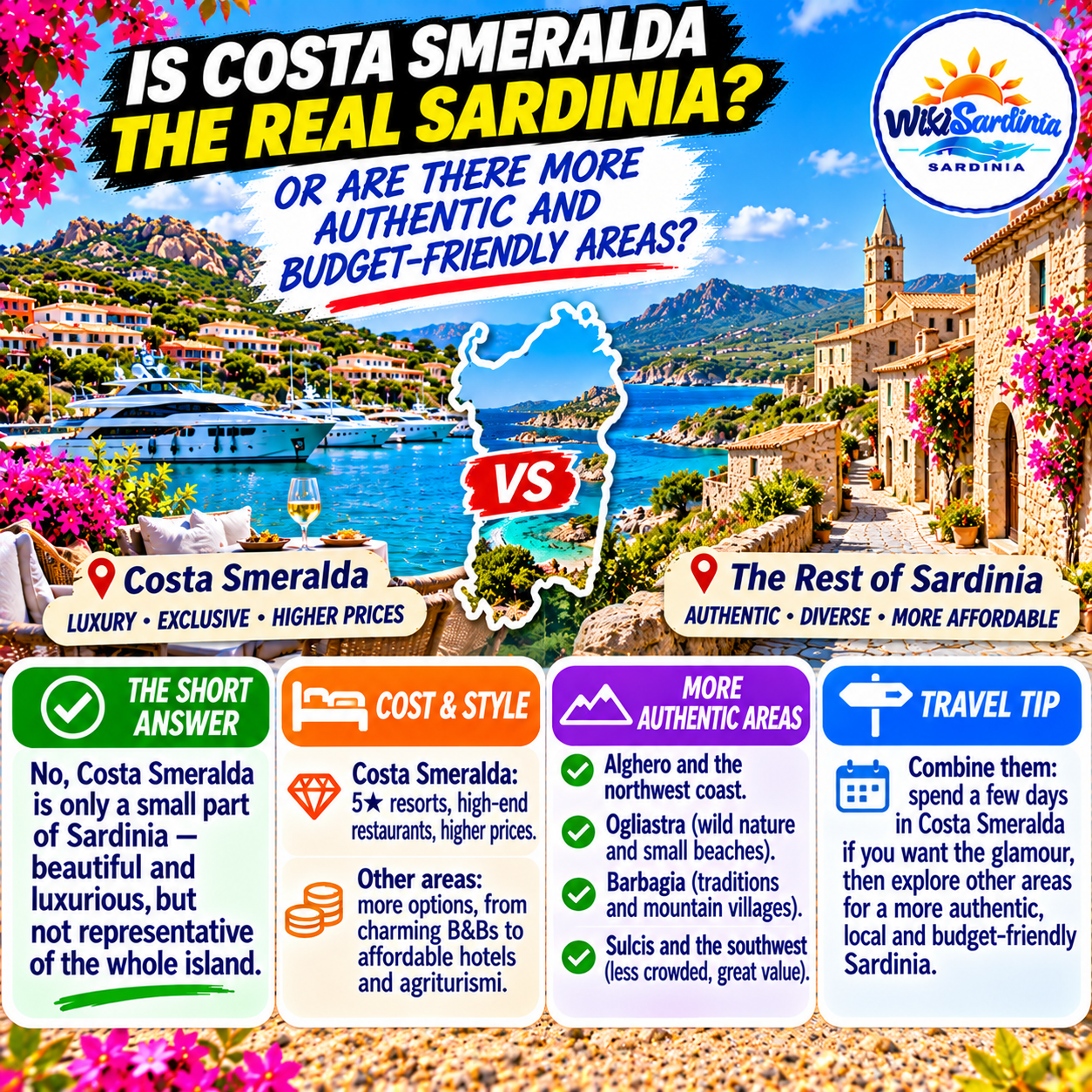
No. Costa Smeralda is one distinctive part of Sardinia, not a representative portrait of the entire island. Sardinia also has working towns, fishing communities, mountain villages, archaeological landscapes, family-run guesthouses, traditional festivals and wild coastlines. Many of these places offer a very different experience—and sometimes a more affordable one.
What exactly is Costa Smeralda?
Costa Smeralda is a celebrated stretch of northeastern Sardinian coastline associated with the resort development that began in the 1960s. Porto Cervo became its best-known centre, and the area developed an international reputation for luxury tourism, marinas, exclusive properties and high-end hospitality.
The coastline is genuinely beautiful, with rocky headlands and clear water. Its luxury identity is also part of modern Sardinia's history. It would be misleading to call it 'fake Sardinia' simply because it is glamorous: real people live and work there, and its development has had a substantial economic and cultural impact.
But it would be equally misleading to assume that the entire island resembles Porto Cervo or that all Sardinian holidays require a luxury budget.
Is Costa Smeralda more expensive than the rest of Sardinia?
Many of its most prominent resorts, restaurants, beach clubs and marina services target an affluent clientele. As a result, spending in the best-known luxury venues can be far higher than in ordinary Sardinian towns. However, the area also contains different accommodation and dining options, and not every visitor needs to book a five-star hotel.
Price comparisons depend on season, location and type of service. A sea-view hotel in another popular resort can also be expensive in August. Meanwhile, a village guesthouse or apartment away from the most sought-after coastal hotspots may offer better value. 'More authentic' does not automatically mean 'cheaper', and 'luxury' does not automatically mean 'inauthentic'.
Alghero and northwest Sardinia: history, beaches and everyday life
Alghero is an excellent starting point for travellers who want a lively town with historic character as well as beaches. Its old town, seafront bastions and Catalan-influenced heritage give it a distinctive identity. Restaurants, markets and neighbourhood cafés coexist with visitor-oriented businesses.
Compared with staying in the most exclusive parts of Costa Smeralda, Alghero can offer a broader selection of accommodation styles and price points, though prices rise in the busy summer months. The surrounding northwest also provides excursions toward Bosa, countryside villages and coastal landscapes.
Alghero is popular and tourist-facing, not a secret untouched village. That is precisely why it can be a practical base: visitors can experience local culture while retaining useful services and transport connections.
Barbagia: mountain communities and living traditions
For a very different side of Sardinia, look inland toward Barbagia. The region is associated with mountainous landscapes, pastoral heritage, traditional food, crafts and village celebrations. Places such as Orgosolo, Mamoiada and Fonni offer cultural experiences that contrast strongly with the marina-focused image of Costa Smeralda.
Barbagia is not a theme park preserved for visitors. These are living communities with their own rhythms and challenges. Travellers should approach local traditions respectfully, check opening times for museums or workshops, and avoid treating residents as photo opportunities.
Accommodation can sometimes be good value, but reaching villages and rural attractions often requires a car or careful transport planning.
Ogliastra: dramatic scenery and a quieter pace
Ogliastra, on the eastern side of the island, is known for rugged mountains, striking coastlines and smaller communities. The region appeals to travellers interested in walking, outdoor landscapes and a less resort-centred holiday.
Some beaches are reached by boat or challenging trails rather than a simple drive. Visitors should research access, weather and fitness requirements before setting off. In high summer, well-known coves can still be crowded, and prices near popular coastal gateways can rise. Ogliastra is not universally cheap or empty, but it offers a different balance of nature and tourism.
Sulcis and southwest Sardinia: heritage beyond the glamour
Southwestern Sardinia includes the Sulcis area, with industrial and mining history, archaeological sites, coastal scenery and communities whose identity extends far beyond tourism. Destinations around Carbonia, Sant'Antioco and the surrounding territory offer opportunities to explore museums, local food and distinctive landscapes.
Some accommodation may be more affordable than in the island's premium resort zones, particularly outside peak season. Yet travellers should compare actual prices and account for transport: a cheaper room far from your chosen activities can become less economical once daily driving is included.
Oristano and the west coast: another side of the island
The Oristano area offers an appealing combination of town life, archaeological heritage and access to western coastal landscapes. It can be a useful base for travellers who want something different from the northeast resort circuit.
As elsewhere, conditions vary by season and location. Famous beaches and special events can attract crowds, while smaller towns may have limited accommodation options. Exploring the area with curiosity rather than fixed assumptions is part of the reward.
Is there such a thing as the 'real Sardinia'?
It is tempting to divide the island into a 'real' Sardinia and a 'tourist' Sardinia. But that contrast oversimplifies a complex place. Porto Cervo, Alghero, Cagliari, Nuoro, Orgosolo and coastal fishing towns are all part of contemporary Sardinia. Their histories, economies and lifestyles differ, and none can stand in for everyone else.
A better question is: what kind of Sardinian experience are you looking for? A traveller who loves fine dining and sailing may enjoy Costa Smeralda enormously. Someone interested in traditional food, hiking, archaeology or village life may prefer other regions. Many visitors can appreciate both.
How to experience Sardinia on a smaller budget
Choose travel dates carefully: late spring and September often provide more flexibility than the busiest August weeks. Compare guesthouses, apartments, small hotels and agriturismi rather than looking only at beachfront resorts. Stay in a town with restaurants and shops within walking distance if you want to reduce car use.
Enjoy public beaches where access is permitted, buy food at local markets and bakeries, and include casual restaurants alongside special meals. Remember that remote accommodation can create extra transport costs, so calculate the entire trip budget rather than the room price alone.
Most importantly, leave enough time to explore. Spending every day driving between famous Instagram locations can be more expensive and less rewarding than discovering one region properly.
Should you skip Costa Smeralda entirely?
Not necessarily. If you are curious about its famous scenery, marinas and resort atmosphere, visiting for a day or a short stay can be worthwhile. You can appreciate its beaches and landscape without committing to a luxury holiday, although parking, access arrangements and optional services should be checked in advance.
For a longer trip, consider pairing a visit to the northeast with a different region, rather than treating Costa Smeralda as the definitive version of Sardinia.
Frequently asked questions
Is all of Sardinia as expensive as Porto Cervo?
No. Accommodation, dining and activities vary widely across the island. Porto Cervo's luxury market is not a reliable benchmark for Sardinia as a whole.
Where can I find traditional Sardinian village culture?
Inland areas such as Barbagia offer opportunities to learn about village life, crafts, food and festivals. Respect local communities and check the dates and opening times of specific activities.
Is Alghero cheaper than Costa Smeralda?
It can offer more mid-range and budget options than the best-known luxury areas, but prices depend on season and the accommodation chosen.
Is Ogliastra less crowded?
Some areas are quieter, especially away from peak season, but famous coves can still be busy in summer.
Can I visit Sardinia without a luxury budget?
Yes. Choosing less exclusive bases, travelling outside peak August and planning transport carefully can make a major difference.
Are inland villages always cheaper?
No. Some have limited accommodation, seasonal demand or transport costs. Compare the total trip cost rather than relying on labels.
The real Sardinia is bigger than any single coastline
Costa Smeralda is beautiful and internationally famous, but it is only one chapter in Sardinia's story. To understand the island more fully, explore beyond its luxury marinas: spend an evening in Alghero, visit a mountain village, learn about Nuragic heritage, walk a quieter coastline or try a traditional meal in a family-run restaurant. You do not have to reject Costa Smeralda to discover the rest of Sardinia—and you certainly do not need to spend like a millionaire to enjoy the island.