
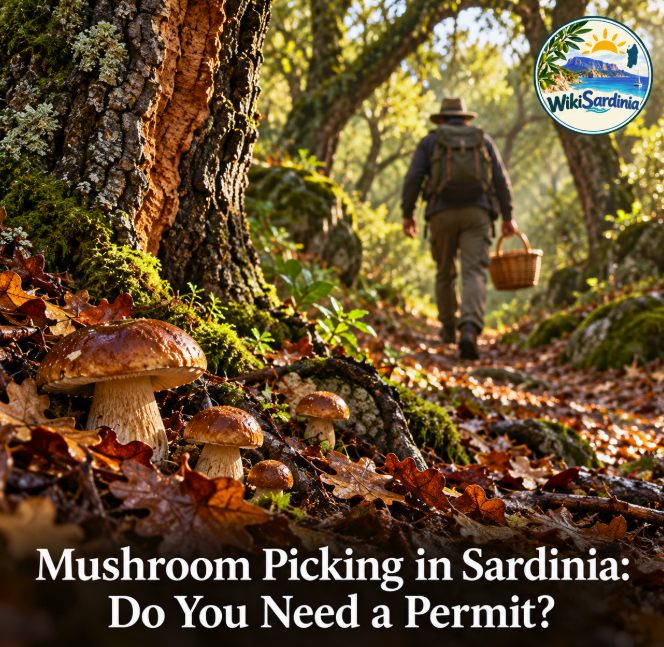
October is a good time to ask about mushroom picking in Sardinia, but the month does not give you permission to collect wherever you find a promising woodland. For visitors, the useful answer is local: check the municipality, the landowner and any protected-area rules before you take a basket into the forest.
There is a particularly clear example in Gallura. Calangianus publishes a municipal mushroom-picking regulation that includes an authorisation system and restrictions on collection days. A general internet answer saying that no permit is ever needed in Sardinia would therefore miss an important exception.
Regional rules and old proposals are different things
An ISPRA summary for Sardinia, updated in April 2021, states that above-ground wild mushroom collecting was not governed by a specific regional law and refers to Italy’s framework law, Law 352/1993. That dated summary is useful background; it is not sufficient by itself to certify every rule applicable in October 2026.
Searches also bring up Sardinian parliamentary proposals describing regional cards, tourist permits and fees. A proposed law or committee text is not evidence that its provisions entered into force. Do not pay a supposed island-wide fee, or rely on an exemption, simply because you found those words in an official-looking legislative document.
For an actual outing, ask the municipality covering your intended collecting area whether a current local authorisation is required. Give the location rather than just saying “near Sassari” or “in Gallura”: the relevant boundary may be less obvious than the name used to describe your holiday base.
Calangianus: a concrete permit exception
The Comune di Calangianus identifies its territory as an area of controlled mushroom collection. Its published regulation requires municipal authorisation for collectors who do not fall within the listed exemptions. These include specified Alta Gallura residents and natives, and certain people with rights over the land; being a tourist elsewhere on the island is not itself an exemption.
The posted document lists €15 for a monthly authorisation and €50 for an annual one. It allows collection from dawn to sunset, sets a three-kilogram daily limit with a specified exception, and prohibits collecting on Mondays and Thursdays. Confirm the current procedure, fees and any later amendments directly with the municipality before paying or travelling.
For a trip planned on 5 October 2026, the weekday matters: that date is a Monday. Under the posted Calangianus regulation, it is a prohibited collection day. A permit would not turn that day into an allowed one. This is a local example, not an island-wide Monday ban.
What to check before leaving your accommodation
Ask three separate questions: may you enter the land, may you collect mushrooms there, and what conditions apply to you? A woodland path open to walkers does not automatically answer all three. For private land, obtain the owner’s agreement; for a park, reserve or managed forest, ask the responsible manager about the exact area.
A useful Italian message is: “Per raccogliere funghi in questa zona serve un’autorizzazione? Ci sono giorni vietati, limiti o divieti locali?” It asks whether authorisation is needed and whether there are prohibited days, limits or local bans. Include your intended date and whether you are a non-resident collecting only for personal use.
The Italian Ministry of Health describes a national three-kilogram collection limit, which regions may modify, and prohibits tools such as rakes that damage the fungal growing environment. Use that as a starting point, then check the rules for your chosen location. Carry an airy, rigid basket and leave mushrooms you are not collecting undamaged.
Plan the inspection before the meal
Permission to collect is separate from knowing whether a mushroom is safe to eat. Do not use a photograph, an identification app or this article to decide that an unfamiliar specimen is edible. Arrange a check through the local ASL’s mycological inspectorate before consuming your collection.
ASL Cagliari’s published service notice describes free edibility checks and an annual seasonal service from 15 September to 30 April. Check the current location and appointment arrangements before going; the service notice is not a guarantee of a walk-in appointment today.
Regional inspection guidance asks collectors to present the whole collection, fresh and intact, in rigid ventilated containers, rather than bringing one representative mushroom and leaving the rest at home. That makes the inspectorate a practical part of the outing, not an afterthought once dinner is cooking. If the local collecting rules or the inspection arrangements remain unclear, enjoy the woodland as a walk and leave the basket empty.


