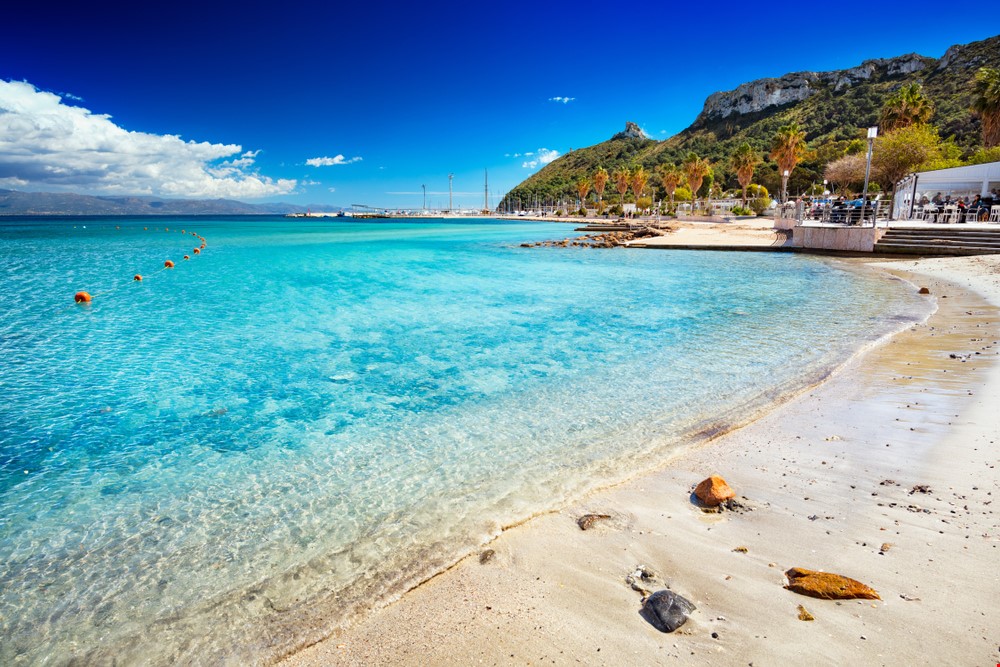
Poetto is Cagliari’s great city beach and one of the most recognizable urban shorelines in the Mediterranean. Stretching for roughly eight kilometres from the Sella del Diavolo toward Quartu Sant’Elena, it is where the capital meets the sea: a place for swimming, running, cycling, eating, meeting friends and watching the city slow down at sunset.
The beach has light sand, shallow water and wide open views. The limestone profile of the Sella del Diavolo marks one end of the bay, while the Molentargius-Saline wetlands behind the coast add one of Cagliari’s most distinctive natural landscapes.
Beach life and services
Much of Poetto remains free-access beach, alongside organized beach clubs with sunbeds, umbrellas, showers, restaurants and bars. The famous kiosks, or baretti, are central to local summer life and become popular meeting places for aperitifs and evening events.
The redeveloped seafront is used by runners, cyclists, skaters and walkers. On the water, windsurfing, kitesurfing, stand-up paddleboarding, sailing and kayaking are common, with clubs and schools offering lessons.
Flamingos and Molentargius
Just behind the beach, Molentargius-Saline Regional Natural Park is home to pink flamingos, herons, stilts and many other bird species. It can be explored on foot or by bicycle, making it easy to combine a beach day with a nature visit.
Poetto is also known for food and nightlife. Beachfront restaurants serve seafood and Sardinian dishes such as fregola, bottarga pasta, grilled fish and local desserts, while summer evenings often bring live music, DJ sets and cultural events.
Getting there
Poetto is about ten minutes from central Cagliari and can be reached by car, public bus, bicycle or scooter. The long seafront has several access points and parking areas. Many sections include walkways and facilities designed for people with reduced mobility.
Sunrise, sunset at the Sella del Diavolo and the sight of flamingos across the salt ponds are among the classic experiences. For Cagliari residents, Poetto is not simply a tourist attraction: it is part of everyday city life.