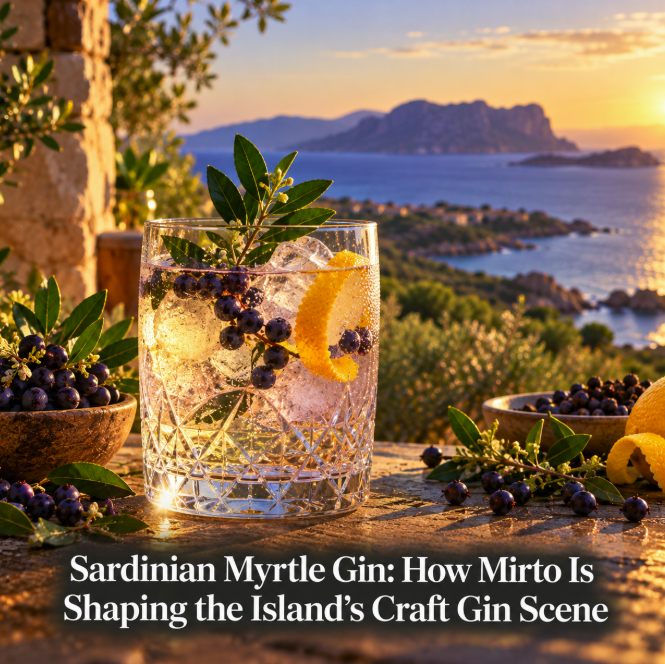
Myrtle is best known in Sardinia as the aromatic heart of mirto, the island’s traditional after-dinner liqueur. But the same Mediterranean shrub is also appearing in a newer generation of Sardinian craft gins, where it joins juniper, citrus, thyme, fennel and other botanicals associated with the island’s macchia mediterranea. For travelers who already know Cannonau and mirto rosso, a myrtle-led gin offers a different way to taste Sardinia’s landscape.
The important distinction is that “gin al mirto” is not simply traditional mirto liqueur with gin added. Gin remains a juniper-based spirit, while Sardinian producers can use myrtle as one of the botanicals that shapes its aroma and flavor. The result is usually drier and more suited to tonic water and cocktails than the sweet digestivo visitors may associate with the word mirto.
Silvio Carta and the revival of Sardinian gin
One of the clearest examples comes from Silvio Carta, the family distillery based near Oristano. The company began in the early 1950s with Vernaccia di Oristano and later expanded into mirto, gin and other spirits. Its own history links modern Sardinian gin to an older island distilling tradition: after the Second World War, local producers distilled wine, pomace and juniper, with a juniper spirit known as giniu, a name connected to the Sardinian word for the juniper plant.
Silvio Carta says it returned seriously to discontinuous distillation in 2013, developing a family of Sardinian gins including Giniu, Pigskin, Boigin and Grifu. The common idea is not simply to make gin in Sardinia, but to use botanicals that communicate the island’s aromatic landscape.
Pigskin 44 puts juniper and myrtle together
Pigskin 44 is particularly relevant for anyone looking specifically for a Sardinian myrtle gin. The producer identifies Sardinian juniper and myrtle as its dominant botanicals, supported by aromatic herbs and citrus peel. At 44% alcohol by volume, it is a clear, structured gin with citrus freshness, Mediterranean herbal aromas and balsamic notes.
The original Pigskin also uses a broader group of local botanicals. Silvio Carta’s technical material lists juniper, myrtle, thyme, wild fennel, sage and lemon peel, followed by a distinctive passage in old Sardinian chestnut barrels previously used for Vernaccia. That ageing contributes a softer, rounder profile and toasted notes that distinguish it from an unaged London Dry style.
These are useful bottles for visitors who want a spirit that goes beyond a generic “Italian gin” label. The myrtle is part of a larger botanical vocabulary rather than a novelty flavoring.
Pigskin Pink makes myrtle the aromatic focus
Pigskin Pink takes the connection further. Silvio Carta explicitly describes myrtle as its principal botanical, with the aroma then moving toward fruit and mineral notes associated with Mediterranean scrub. The producer recommends it simply with Indian tonic water, which is a good way to taste the botanical character without covering it with a complicated cocktail recipe.
For someone accustomed to sweet mirto liqueur, the experience can be surprising. Myrtle in gin does not necessarily translate into a sugary berry flavor. Depending on how it is distilled and combined with juniper and other herbs, it can contribute aromatic, resinous, balsamic and Mediterranean notes.
Other Sardinian gins use the island landscape differently
Not every Sardinian gin needs myrtle to express its origin. Boigin, for example, is described by Silvio Carta as a “zero kilometre” gin using citrus and juniper from the Sinis peninsula and the company’s botanical garden. Its profile emphasizes citrus and Mediterranean scrub.
Giniu is positioned around wild island herbs and saline, iodine-like impressions, while the stronger Giniu 517 includes aromatic references to thyme, wild fennel and myrtle. Together, these bottles show how Sardinian distillers can build an identity around local botanicals without making every gin taste the same.
Why myrtle works naturally in Sardinian gin
Myrtle has unusually strong cultural recognition in Sardinia. The berries and leaves have long been associated with the island’s traditional liqueur, and Silvio Carta’s family history records a myrtle recipe connected with the preservation of berries in Vernaccia spirit. Using the plant in gin therefore connects a globally familiar spirit category with a botanical that visitors already identify with Sardinia.
That is useful behind a cocktail bar because the story is easy to understand: juniper supplies the essential gin identity, while myrtle and other Mediterranean botanicals provide the local accent. A bartender can serve the spirit in a simple gin and tonic, a dry Martini-style drink or a more aromatic Mediterranean cocktail without turning it into a dessert drink.
What about the U.S. bar trend?
American cocktail bars have shown sustained interest in Italian aperitivo culture, regional amari and distinctive botanical spirits, which creates a natural context for Sardinian gin. However, there is not enough reliable current evidence to describe myrtle gin itself as a nationwide U.S. bar trend. It is more accurate to see it as a niche Sardinian craft-spirit story that fits broader American interest in regional Italian ingredients and provenance-driven spirits.
For U.S. bartenders and drinkers, that distinction can actually make the category more interesting. Mirto is still unfamiliar to many customers, and a gin built around myrtle can introduce the botanical through a recognizable format such as a gin and tonic. The appeal is less about chasing a mass-market craze and more about giving a familiar cocktail a clear Sardinian identity.
How to taste Sardinian myrtle gin
Start simply. Taste a small amount neat, then add tonic and compare how the aromas change. A neutral or classic Indian tonic generally makes it easier to identify the gin’s own botanicals than a heavily flavored mixer. Citrus peel can work as a garnish, but an overloaded glass of rosemary, berries and spices can obscure the spirit rather than improve it.
In Sardinia, ask a cocktail bar which local gin it uses and which botanicals are actually present. “Sardinian gin” is not a single style, and a bottle made on the island may emphasize juniper, citrus, herbs, saline notes, barrel ageing or myrtle in very different proportions.
For travelers specifically looking for mirto in gin form, Pigskin 44 and Pigskin Pink provide two clearly documented examples from an established Sardinian producer. They also illustrate the wider point: the island’s craft gin scene is most interesting when it does not merely imitate international gin, but translates Sardinia’s juniper, myrtle, herbs and citrus into the glass.