The cold-plunge trend has exploded in the United States, but in Sardinia you do not need an ice bath, a timer or a wellness studio. In October, you can simply walk into the Mediterranean.
There is one important correction, though: 23°C (73°F) is refreshing, but it is not technically the same thing as a true cold-water plunge. It is better described as cool, highly swimmable open water — which may actually make Sardinia more appealing to travellers who want the sensation without extreme cold exposure.
Sardinia's official tourism site confirms that autumn arrives late on the island and that the sea retains its summer warmth, remaining suitable for swimming along the coast.
How cold is Sardinia's sea in October?
It varies by location and by the week.
Historical climate data around southern Sardinia puts October sea temperatures broadly around 22–23°C (72–73°F), with the beginning of the month generally warmer and temperatures gradually falling toward November.
At Villasimius, long-term data puts the first third of October at roughly 22.9°C, while another ten-year dataset gives an October average of about 22.8°C.
At Chia, the October historical average is about 22.4°C.
So “23°C in October” is a useful rule of thumb — not a guaranteed temperature for every Sardinian beach on every October day.
Our top pick: Villasimius
For an easy October sea dip with spectacular water, Villasimius is hard to beat.
Simius, Porto Giunco and the beaches around Capo Carbonara combine clear water, beautiful scenery and multiple entry points, so you can choose according to wind and sea conditions.
SardegnaTurismo describes Villasimius as the pearl of southern Sardinia, highlighting Simius and the turquoise waters around Notteri and Timi Ama.
For an American visitor curious about the cold-plunge trend, this is probably the most approachable version: beautiful Mediterranean water that feels immediately fresh without resembling a winter ice bath.
Chia: the scenic alternative
Chia is another excellent choice, particularly if you are staying around Pula or the southwest coast.
October water here historically averages a little above 22°C. The beaches around Chia also offer an extraordinary backdrop of dunes, headlands and clear water.
Choose a calm day and a beach with an easy sandy entrance rather than entering from rocks.
Cala Sinzias for a simple walk-in dip
Farther east, Cala Sinzias offers a long sandy shoreline and clear water without requiring a difficult approach.
For someone who wants to enter gradually, stay in for a few minutes and walk straight back onto the sand, that simplicity matters more than finding the theoretically coldest water.
Is 23°C really a cold plunge?
Not in the strict physiological sense normally used in cold-water immersion research.
Scientific studies of cold-water immersion frequently examine substantially colder temperatures, often around 10–15°C. Water at 22–23°C will generally feel cool when you first enter, especially if the air is warm, but it does not impose the same cold stress as an ice bath or winter sea swim.
That distinction matters because social-media terminology can make ordinary cool-water swimming sound more extreme than it really is.
Think of October Sardinia as a natural cool plunge, not an ice plunge.
Why October may actually be better
For most travellers, the moderate temperature is an advantage.
You get the invigorating first-contact sensation while still being able to swim comfortably. The beaches are also far quieter than in August, parking is easier and the southern coast can still have pleasantly warm daytime weather.
This makes it possible to turn the dip into part of a normal beach morning rather than a short endurance challenge.
Morning or afternoon?
If you want the water to feel as refreshing as possible, go in the morning when the air is cooler and the beach is quiet.
If comfort matters more, choose the warmest, sunniest part of the day.
Sea temperature itself changes much more slowly than air temperature, so the psychological difference between a cool morning entry and a sunny afternoon entry can feel larger than the actual change in the water.
Wind matters more than one degree of water temperature
Do not choose your beach based only on a temperature number.
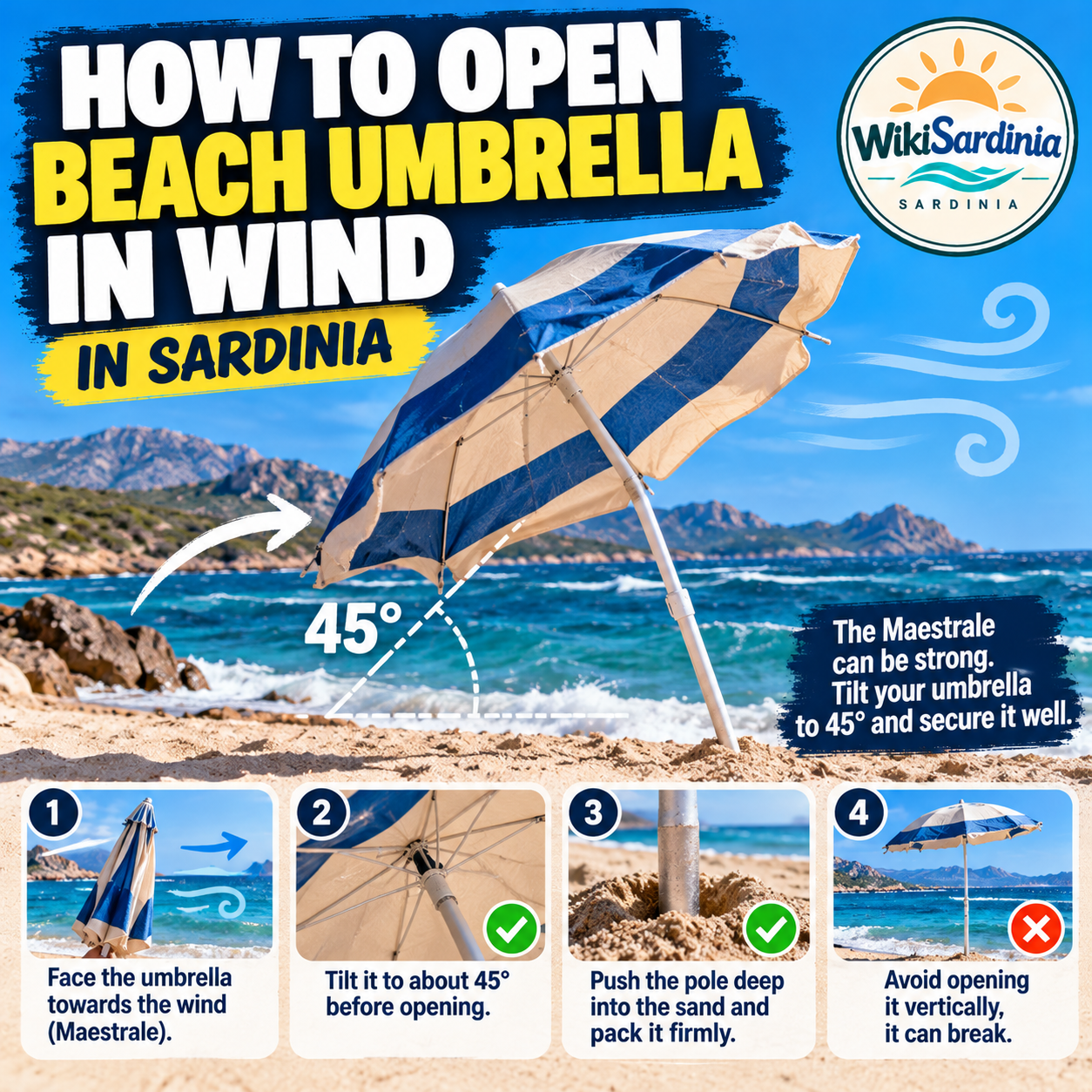
A windy 23°C day with rough water can feel much harsher than a calm 22°C swim in sunshine. Sardinia is exposed to strong winds, particularly the mistral, and local sea state should always take priority over the cold-plunge idea.
If the water is rough, currents are strong or local warnings are in place, skip the plunge.
Do it safely
Enter gradually if you are not accustomed to open-water swimming. Stay close to shore, avoid diving into unfamiliar water and never use breath-holding competitions or hyperventilation as part of a cold-water routine.
If you are swimming alone, keep the session conservative. A beautiful empty October beach also means there may be fewer people around if something goes wrong.
People with cardiovascular or other relevant medical conditions should seek appropriate medical advice before deliberately pursuing cold-water exposure.
WikiSardinia verdict
For “Sardinia best beach for cold plunge”, choose Villasimius for the best all-round combination of easy access, clear water and scenery. Choose Chia if you are based around Pula and want a wilder coastal setting.
And keep the temperature claim realistic: early October water around southern Sardinia is often in the low 20s Celsius, with roughly 22–23°C a useful historical benchmark.
It is not an ice bath. That is precisely why it may be perfect: cool enough to wake you up, warm enough to stay in and swim.