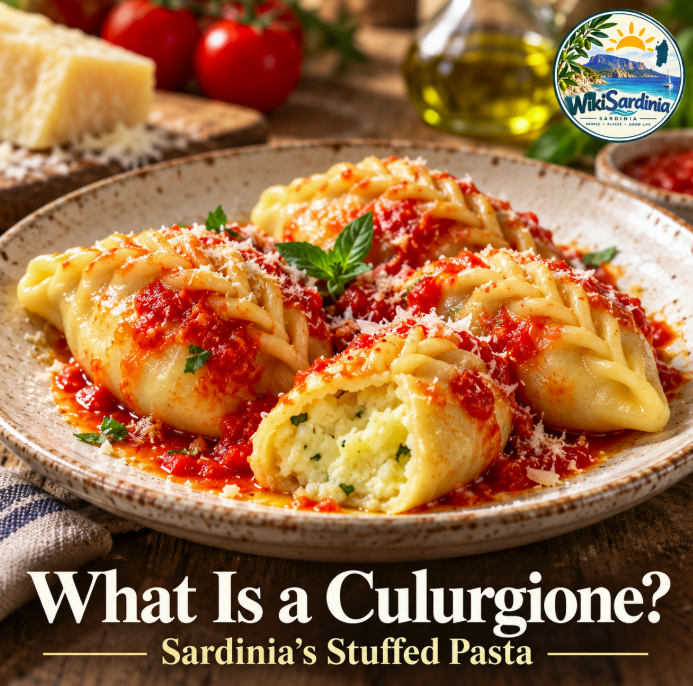
A culurgione is a parcel of Sardinian stuffed pasta, best recognised by the intricate seam that closes it. The plural, culurgiones, is the name you are more likely to encounter on a menu. Think of a small, hand-shaped pocket of dough rather than a particular sauce: its identity comes from the filling, the way it is sealed and the traditions behind it.
For a first encounter, potato and cheese are the flavours to expect. But “Sardinian stuffed pasta” is a starting point, not a promise that every village or restaurant follows one recipe. Understanding those differences makes ordering the dish more interesting.
What is inside a culurgione?
The protected Culurgionis d’Ogliastra PGI product uses a potato-based filling with cheese, fats and possible aromatic ingredients. The specification allows different cheeses and seasonings: mint is familiar, but basil, garlic or onion can also appear. The dough combines durum-wheat semolina and soft-wheat flour. These details are set out in the Qualigeo product description.
The result is usually a soft, substantial filling inside a tender pasta shell. A potato-and-cheese centre can feel creamy without being a liquid cheese sauce. Herbs give another layer of flavour, and the seasoning chosen by the cook changes the balance considerably. If you dislike mint or strongly flavoured cheese, ask what is in that kitchen’s version rather than assuming it will taste like the last one you tried.
The seam that makes them recognisable
The signature closure resembles an ear of wheat. The cook pinches alternating sides of the dough together to form the patterned seam. It is a practical seal and a visible expression of handwork: the finished parcels have a distinctive shape before any sauce is added.
That is why a photograph of culurgiones often focuses on the closure. A heavily dressed plate may hide it, so take a look at the pasta itself when it arrives. In a cooking class, making that seam is a different skill from preparing the filling. Watching an experienced maker do it quickly does not mean your first attempt will be equally neat.
Why Ogliastra matters
Ogliastra, in eastern Sardinia, is central to the dish’s protected identity. Sardegna Turismo’s culurgiones itinerary presents the pasta through places including Lotzorai, Villagrande Strisaili, Osini, Ulassai and Jerzu, highlighting local variations rather than one uniform island-wide recipe.
The protected product name and the broader dish name should not be confused. A menu saying “culurgiones” does not, on its own, establish that the pasta is certified PGI. If that designation matters to you, ask whether the product is certified. Equally, a family or restaurant version can be worth trying without carrying the protected label.
How to order and enjoy them
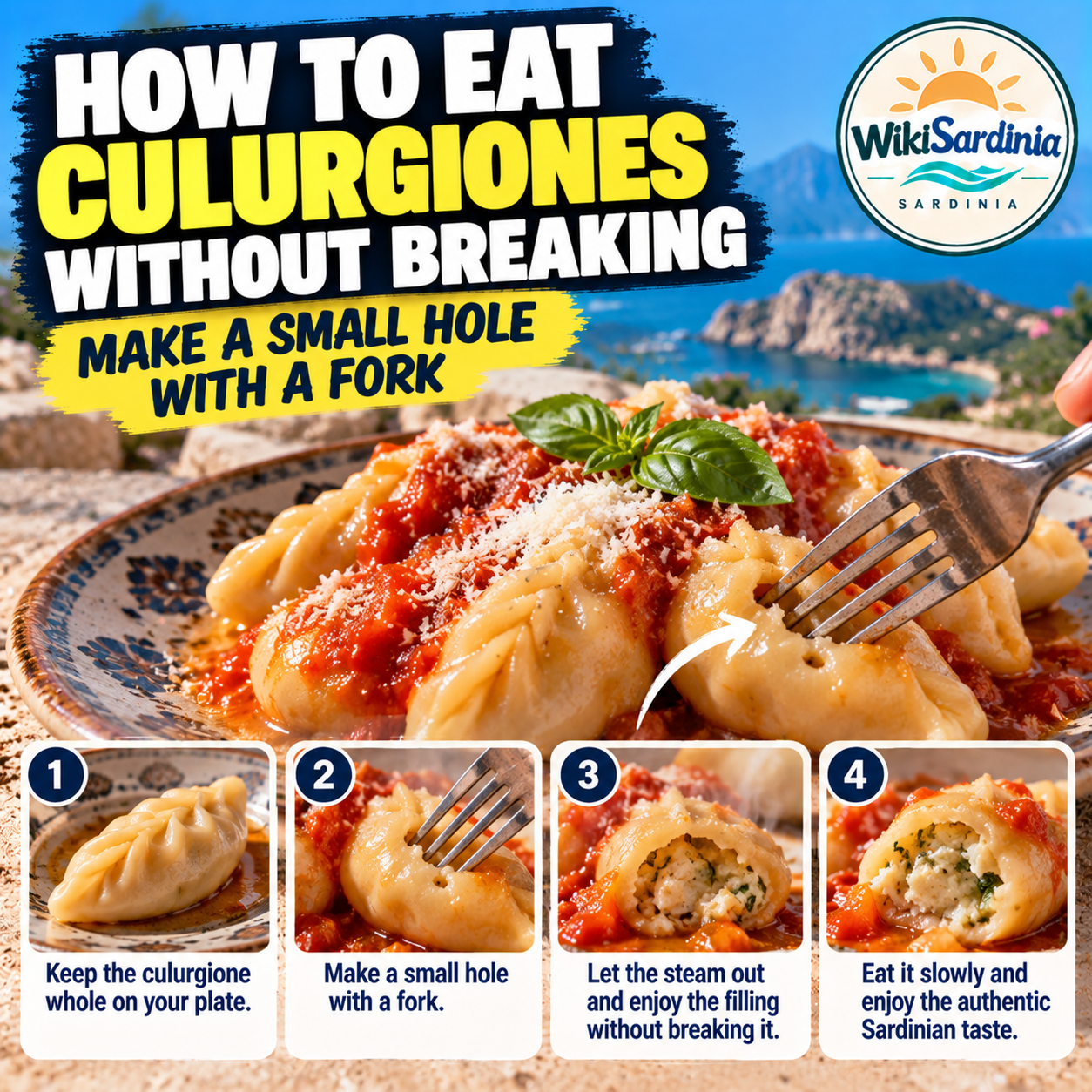
Tomato sauce and grated pecorino are a familiar combination, although preparation and accompaniments vary. For a first tasting, a relatively simple dressing makes it easier to notice the filling and the texture of the dough. Ask how the kitchen serves them before choosing, especially if you are comparing two versions during your trip.
Do not assume potato-filled pasta is automatically suitable for every diet. Wheat and dairy are relevant allergens, and some recipes can contain animal fats. Vegetarians should ask about both the filling and the dough; anyone with a dietary restriction should check the actual preparation rather than rely on the dish name.
If you want an experience beyond lunch, look for a class that explicitly includes shaping culurgiones. Confirm whether you will make the dough and filling, practise the closure yourself and eat the finished pasta. A demonstration and a hands-on lesson offer different experiences.
What about Stanley Tucci?
Official National Geographic press material for Tucci in Italy includes culurgiones in its Sardinia episode captions. That supports the connection between the programme and the dish. It does not establish when a particular social clip circulated or how many people watched it.
Whether you discovered them through television, a short video or a restaurant menu, the useful next step is the same: taste a local version and notice its filling and hand-closed seam. Culurgiones offer a compact introduction to Sardinian cooking through ingredients, geography and a technique you can see on the plate.