Sardinia may be famous for its beaches, but beyond the turquoise water lie limestone cliffs, wild canyons, mountain ridges and ancient shepherds’ paths. Hiking here can be unforgettable. It can also be dangerous if you arrive equipped for a casual seaside stroll rather than the terrain and summer heat.
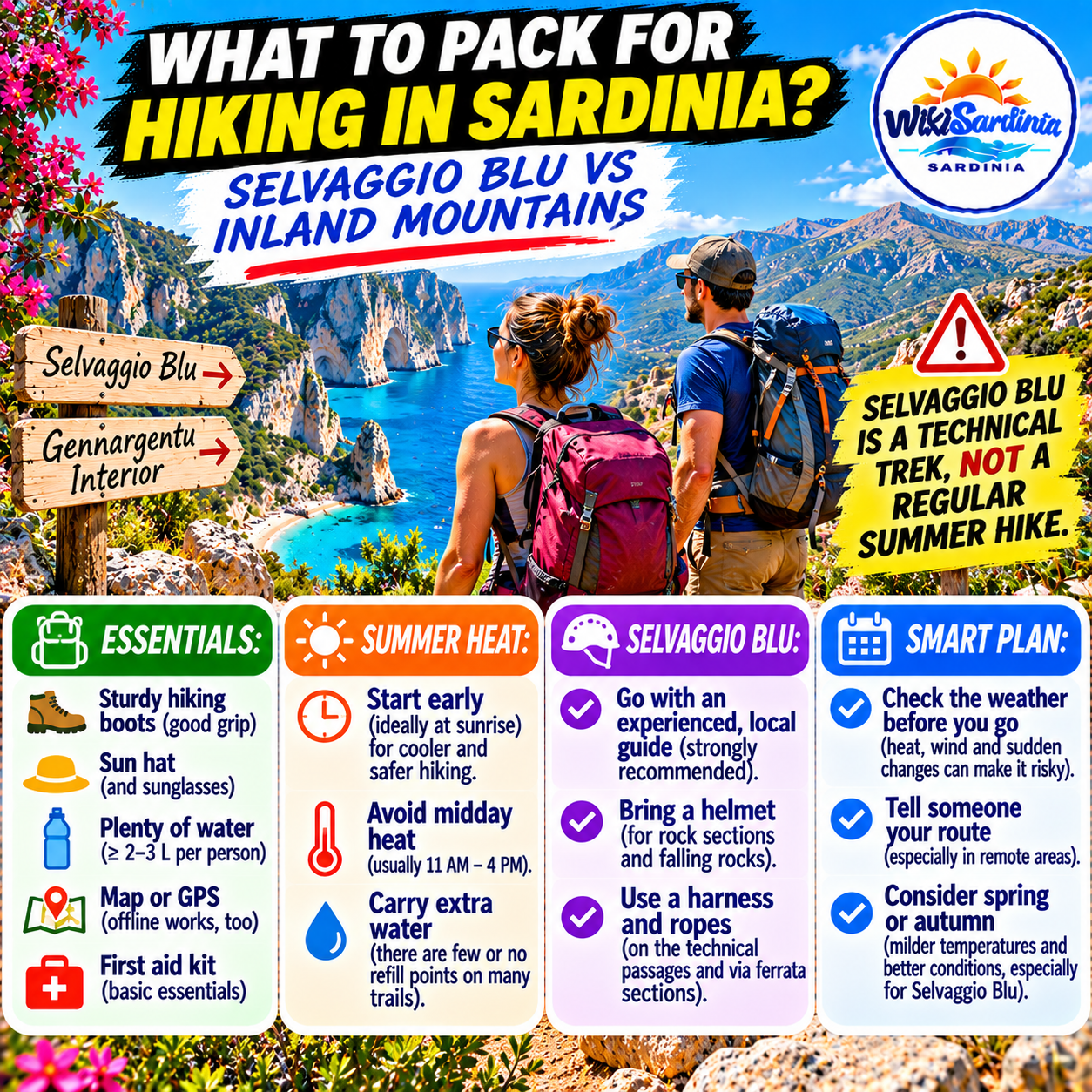
What you should pack depends on the route. A well-marked day hike in the Gennargentu mountains is not the same undertaking as the full Selvaggio Blu, a demanding, multi-day coastal traverse that includes exposed terrain, route-finding and technical rope sections. For either, appropriate footwear, sufficient water, sun protection, navigation and a realistic plan are essential.
First, understand the difference: Selvaggio Blu versus an inland hike
The Selvaggio Blu is an advanced trek along the rugged coast of the Baunei area. The original route is known for difficult limestone terrain, sections without an obvious path, exposed traverses and abseils. Operators describing the route rate it as highly demanding and specify climbing or rope equipment for technical sections. It is not an appropriate independent first hiking adventure for someone without the necessary skills and experience.
By contrast, Sardinia’s inland mountains include a wide range of trails. Some are accessible walks on recognised paths, while others in the Supramonte or Gennargentu are long, remote and technically challenging. Never judge a route by its distance alone: elevation gain, terrain, exposure, heat and availability of water all matter.
Is summer a good time for the Selvaggio Blu?
Often, no. Specialist Selvaggio Blu operators commonly schedule full traverses in spring and autumn rather than peak summer because heat and limited shade can make the journey especially punishing. One established operator explicitly identifies May and October as preferred periods and warns against the high temperatures of summer.
If your visit falls in July or August, consider a shorter, suitable guided outing or a different hiking area, and be prepared to cancel when conditions are unsafe. No packing list can make an extreme-heat day safe by itself.
The essential packing list for a Sardinian mountain day hike
- Broken-in hiking boots or suitable approach shoes: choose secure grip for rocky and uneven ground; avoid new shoes and smooth-soled fashion trainers.
- Comfortable daypack: large enough for water, food, clothing layers, first aid and navigation; the ideal size depends on the trip.
- Water and a realistic refill plan: carry enough for the route, weather, effort and individual needs. Do not assume a spring or fountain is available or safe to drink from.
- Sun protection: broad-brimmed hat, sunglasses, high-SPF sunscreen and breathable clothing that protects exposed skin.
- Food and electrolytes: bring meals or snacks for the full outing plus a margin; long hot walks may require replacement of salts as well as fluids.
- Navigation: downloaded offline maps, a reliable route plan and, where appropriate, a paper map and compass. Know how to use them.
- Phone and power bank: keep your phone charged, but never assume mobile coverage will be available.
- Basic first-aid and emergency kit: blister dressings, personal medication, a whistle, headlamp and an emergency blanket.
- Extra layer and lightweight shell: weather can change in the mountains, and exposed ridges can be windy even in summer.
- Small rubbish bag: carry all litter out and respect the landscape.
How much water should you bring?
There is no safe universal quantity for every Sardinian hike. Water needs depend on body size, fitness, heat, duration, intensity, shade and the availability of verified refill points. A short morning walk and an all-day exposed limestone route require very different plans.
For summer day hikes, two to three litres per person is often discussed as a starting amount, but it may be insufficient for long, strenuous or very hot routes. Some unsupported Selvaggio Blu itineraries require substantially more water for drinking, cooking and overnight use, with supply logistics arranged in advance. Ask an experienced guide or route operator for the specific requirement, and do not start if you cannot carry or secure enough.
Thirst alone is not a reliable planning method. Take regular breaks, drink appropriately and monitor yourself and companions for symptoms of heat illness.
What extra gear does the Selvaggio Blu require?
For the full technical route, operators list equipment such as a helmet, climbing harness, appropriate lanyards or protection systems, locking carabiners and descent equipment. The exact kit depends on the itinerary and the techniques used by the guiding team. Do not buy a random rope kit and assume you are ready. Rope systems require training, inspection, compatible equipment and experienced supervision.
Book with a properly qualified, experienced guide or operator and obtain their final packing list before departure. Ask which technical items are provided or rented, what you must carry yourself, and how emergency support and water supplies are organised. A guided operator may arrange baggage transfers by boat or support vehicle, but this varies and must be confirmed.
Many multi-day trips also require a sleeping bag, sleeping mat, suitable overnight clothing, a headlamp, personal hygiene items and a separate bag for support logistics. Do not assume tents, food, water or sleeping equipment are included in the trip price.
What clothing works best in Sardinian summer heat?
Choose light, breathable clothing with good sun coverage. Durable long trousers can help protect your legs against sharp rock, scrub and sun, even when shorts seem tempting. A light fleece or insulating layer is useful for cooler evenings or exposed areas, and a compact waterproof or windproof shell belongs in the pack.
For technical terrain, clothing should not snag on equipment or interfere with a harness. Your guide may recommend specific footwear, including stiff-soled boots or approach shoes suitable for limestone.
Heatstroke and dehydration: when to change your plans
Sardinian summers can bring intense sunshine and high temperatures. Start suitable hikes early, avoid the hottest hours and seek shaded routes where possible. Check the local forecast and official heat or civil-protection warnings before leaving. If an extreme-heat warning is in place, postponing or choosing a different activity may be the right decision.
Warning signs of heat illness include headache, dizziness, nausea, weakness, unusual fatigue and confusion. Stop exertion, move to a cooler place and seek help promptly if symptoms develop. Confusion, collapse or altered consciousness can signal a medical emergency: call 112, the European emergency number, and begin cooling the person while waiting for help. Do not force drinks on someone who is confused or unable to swallow safely.
Navigation and phone coverage
Remote parts of the Supramonte and other Sardinian mountain areas may have weak or no phone reception. Download maps before departure and know the route’s difficulty, expected duration and escape options. Tell a trusted person where you are going and when you expect to return.
Do not treat a GPX track as a substitute for route-finding skills. GPS can fail, trails can be indistinct and an apparently direct line may lead to cliffs or impassable terrain. The Selvaggio Blu is particularly unsuitable for casual navigation by smartphone alone.
Do you need trekking poles?
Poles can help on some inland hikes, particularly over long distances or descents, but they are not universally useful on scrambling or rope sections where hands must be free. Follow your guide’s advice and secure poles properly when they are not in use.
Can you hike in sandals or ordinary trainers?
Not on serious rocky or technical routes. Proper grip, foot support and protection are essential. Lightweight shoes or sandals can be useful at camp or for a post-hike beach visit, but they should not replace appropriate trail footwear on exposed limestone.
Should you hike alone?
Solo hiking in remote areas adds risk, particularly in high temperatures and places without mobile coverage. Choose a route within your abilities, leave a detailed plan with someone, and consider an organised outing for unfamiliar terrain. For the full Selvaggio Blu, a qualified guide and appropriate technical preparation are strongly recommended.
Respect the environment and local rules
Stay on authorised routes where required, respect protected areas and seasonal restrictions, and take litter away with you. Wildfire danger can be significant in summer; never light fires where prohibited and follow all fire-prevention regulations. Camping, access and overnight arrangements may be regulated differently in different areas, so check the applicable local rules rather than assuming you can pitch a tent anywhere.
Frequently asked questions
Can beginners hike the Selvaggio Blu?
The full original route is not a beginner hike. It involves serious terrain and technical passages. Beginners should choose an easier guided walk appropriate to their experience.
Is the Selvaggio Blu suitable for July or August?
Peak summer heat can make it particularly hazardous. Specialist operators commonly favour spring or autumn for full traverses.
Do I need climbing equipment for the Selvaggio Blu?
For technical versions of the full route, yes. Your qualified guide should specify and check the exact equipment and required skills.
Are two litres of water enough?
Not necessarily. The required amount depends on heat, duration, exertion and reliable supply points. Two litres can be dangerously inadequate on a long exposed summer hike.
Can I rely on my phone for navigation?
No. Download offline maps, carry backup navigation as appropriate and expect possible coverage gaps.
What should I wear in the Gennargentu in summer?
Wear sturdy footwear, breathable sun-protective clothing, a hat and sunglasses. Bring water, food, navigation, first aid and an extra layer for changing weather.
The bottom line: prepare for the terrain, not the postcard
Sardinia’s mountains and coastal cliffs are spectacular precisely because they are wild. For a straightforward inland hike, careful route choice, sturdy footwear, water, navigation and protection from the sun are the foundation. For the Selvaggio Blu, the essentials extend to technical equipment, experienced guidance and serious logistics—and summer may not be the right season at all. Pack carefully, choose a route within your abilities and make safety part of the adventure.