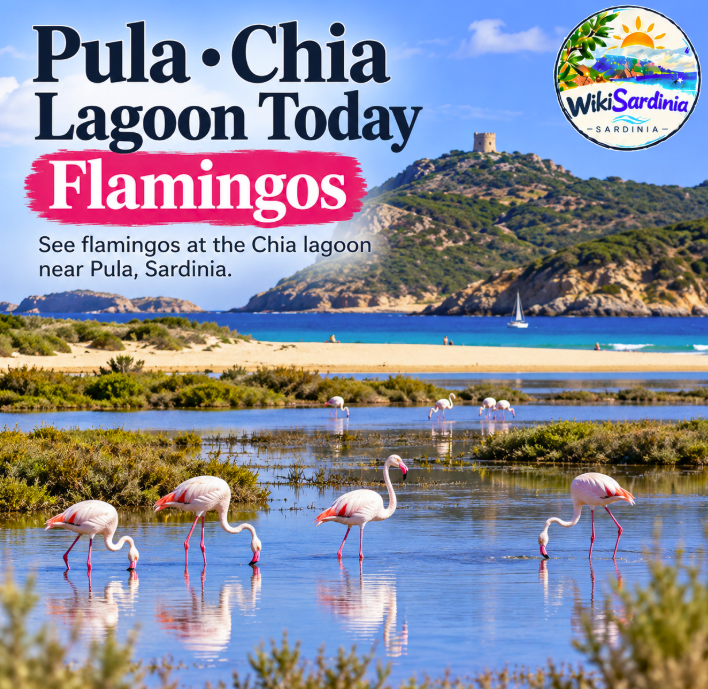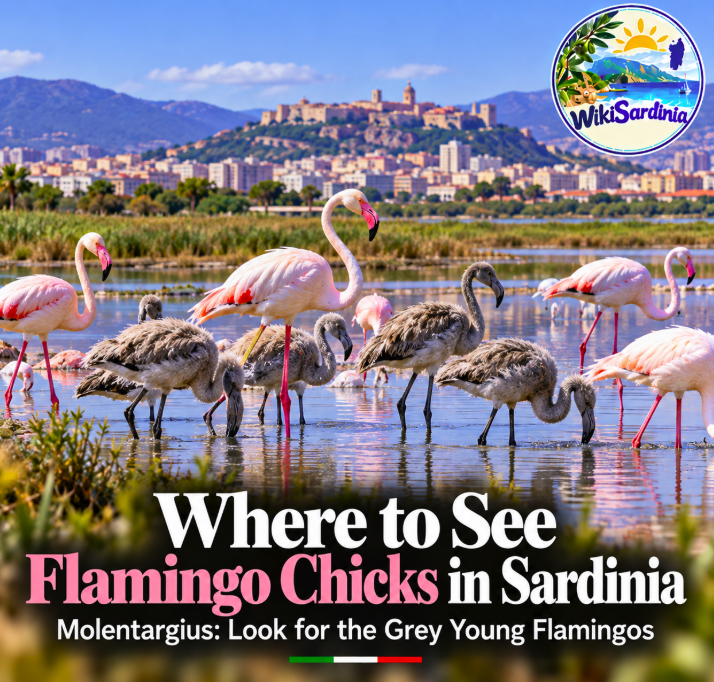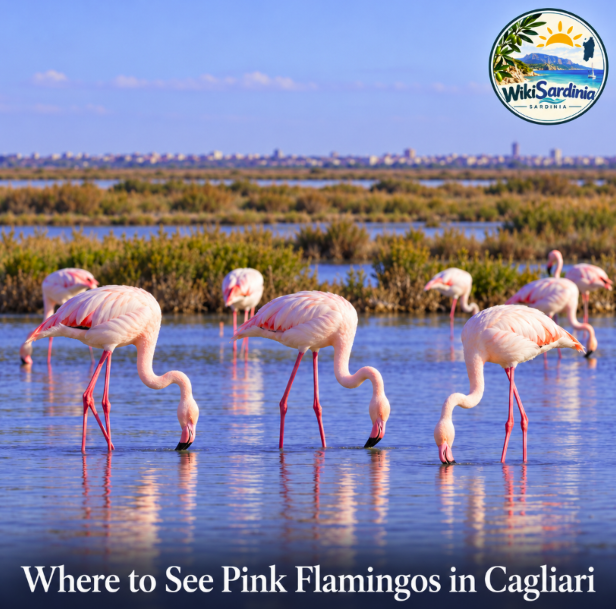
If you are searching for pink flamingos in Sardinia, Molentargius-Saline is a natural starting point near Cagliari. The protected wetland sits beside the urban area, with paths and guided visits offering ways to explore its birdlife. Plan the outing around observation from authorised routes, rather than the expectation of approaching a flock.
One detail is worth settling before you book: seeing flamingos at Molentargius and kayaking along Cagliari’s coast are different experiences. The visitor information checked for this guide supports walks, cycling and guided park tours. It does not establish an independent kayaking route through the flamingo lagoons.
Start with the park, not a roadside photo stop
The Comune di Cagliari’s park guide places Molentargius principally within Cagliari and Quartu Sant’Elena, with smaller areas in Selargius and Quartucciu. It identifies entrances at Via La Palma and beside the Poetto racecourse on the Cagliari side, and at Viale Colombo and Via Don Giordi on the Quartu side.
Via La Palma is a useful place to begin planning because the visitor services are based there. Rather than follow a map pin that appears to put birds close to a road, choose a public entrance and ask which open route offers suitable observation that day. Wildlife movements make a fixed “best flamingo spot” less dependable than current local advice.
There is more to look at than the birds. The park’s freshwater and saltwater basins, former saltworks and low banks form a landscape shaped by both nature and human activity. Take time to notice how the different parts fit together. A quiet visit can be rewarding even when the nearest flock is farther away than you hoped.
Walking, cycling or a guided visit
Città del Sale’s current visitor pages advertise walking, bicycle and minibus tours led by environmental guides, including access to protected areas as part of the organised visit. This does not mean those areas are open for unrestricted exploration. Check the chosen tour’s route, language and availability before booking.
The operator’s visitor FAQ identifies the infopoint in Via La Palma as the start and finish for its tours and recommends advance booking for bicycle availability. Its advice includes comfortable clothing, closed shoes, water and sun protection. Check current opening arrangements directly; park access and visitor-service hours are not necessarily the same.
For a self-guided outing, keep the plan flexible. Bring binoculars if you have them and use a zoom lens rather than walking closer for a photograph. Stay on open routes, respect barriers and leave the birds space. If you are travelling with children, the observation can become a simple exercise in watching feeding behaviour and comparing silhouettes instead of chasing a close encounter.
When should you go?
The national tourism portal Italia.it recommends spring and autumn visits, highlighting nesting activity in spring and migrating birdlife in autumn. That is seasonal guidance, not a guarantee that a particular flock will be visible from a particular path on your date.
Choose a time that suits the conditions and current access hours. Softer light may be more comfortable for observation and photography, while an exposed route can feel quite different in strong sun or wind. Ask the infopoint about recent sightings and any route restrictions before setting out.
Where kayaking fits into a Cagliari trip
For time on the water, investigate a separate coastal outing. Bikappa describes sea-kayaking activities from Marina Piccola around Capo Sant’Elia and Sella del Diavolo. These are coastal settings, rather than the Molentargius flamingo basins. Confirm the exact route, experience requirements and weather arrangements with the organiser.
You can build a visit around both interests without treating them as one attraction: a wetland walk or guided tour for flamingos, and a separately booked sea activity if conditions and schedules allow. Keep enough flexibility for wildlife and weather. The aim is to enjoy two sides of Cagliari’s natural landscape while respecting the different access arrangements each requires.