You sit down at a restaurant in Sardinia, open the menu and—before you have chosen a dish—a waiter sets down a basket of bread. It might be paper-thin pane carasau, a rustic semolina loaf or a mix of local breads. Is it a complimentary starter? Are you expected to eat it? And why does it arrive before your order?
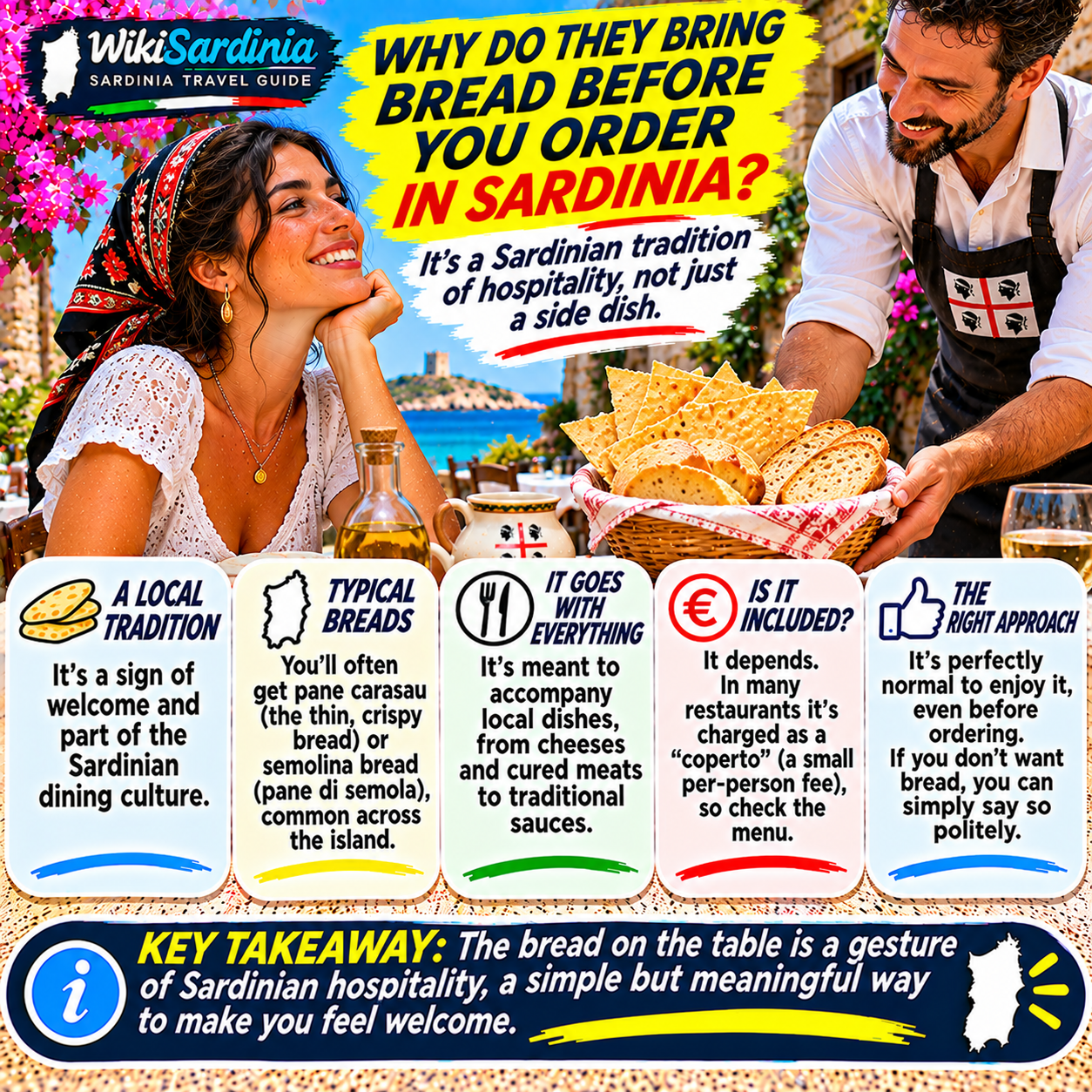
In many Sardinian restaurants, bringing bread to the table early is a familiar part of Italian dining service. It makes bread available throughout the meal and can feel like a gesture of welcome. But the bread is not necessarily free, and there is no rule that every restaurant must serve it.
Why does the bread arrive before the food?
In much of Italy, bread is an accompaniment to the meal rather than a separate starter. Staff may place it on the table as soon as guests sit down so it is ready when antipasti and main courses arrive. This also gives diners something to nibble while reading the menu or waiting for the kitchen. In family-run establishments, the gesture may reflect a longstanding sense of hospitality, although the exact reason and practice differ from restaurant to restaurant.
What is pane carasau?
Pane carasau is one of Sardinia’s best-known traditional breads: extremely thin, crisp sheets with a distinctive toasted flavor. It has historical roots in the island’s pastoral food culture, where a dry, durable bread was practical for people spending long periods away from home. You may see it served plain, with olive oil or alongside cheese, cured meats and other local dishes. Its presence in a restaurant basket is a simple way to introduce visitors to Sardinian food traditions.
What about Sardinian semolina bread?
Sardinia also has many softer and thicker breads made with durum-wheat semolina or other wheat flours. Their names, shapes and textures vary across the island. Depending on where you eat, you might encounter civraxiu, moddizzosu or other local specialties. These breads are well suited to accompanying vegetables, meats and sauces. Not every restaurant serves the same kind, so ask if you are curious about what is in the basket.
Is the bread free?
Not always. Some restaurants include bread in the listed coperto, a per-person cover charge. Others may list pane separately or serve bread without a separate fee. A restaurant’s menu or price list should make applicable charges clear before you order. Do not assume that the bread is complimentary simply because it arrives without being requested, but also do not assume that every bread basket carries an extra charge.
What is the difference between pane and coperto?
Pane means bread. Coperto is a traditional table or place-setting charge that is generally calculated per diner and is not a tip. In some restaurants the two are bundled as pane e coperto; elsewhere they appear as separate items. If the bill is unclear, ask staff to explain what is included. Declining the bread does not automatically eliminate a disclosed coperto, because that charge is usually not solely for bread.
Do you have to eat the bread?
No. You are welcome to enjoy it, but you are not obliged to eat it. If you do not want bread, politely tell the waiter before it is placed on the table or as soon as it arrives. You can say “No, grazie, non desideriamo il pane” (“No, thank you, we don’t want bread”). If you are trying to avoid a separate bread charge, ask how the restaurant handles it rather than assuming refusal will change the bill.
Is it rude to eat bread before ordering?
Generally, no. Bread brought to the table is meant to be available to diners, and eating some while you wait is not a breach of etiquette. You may prefer to save it for the dishes you order, especially if you want to enjoy it with local cheeses, antipasti or sauces. There is no need to treat it as a formal course with strict timing.
Why is bread such a big part of Sardinian food culture?
Sardinia has a rich range of breads connected to agriculture, village traditions, celebrations and pastoral life. Pane carasau is particularly recognizable, but the island’s bread culture extends to decorative ceremonial loaves and everyday semolina breads. A basket on a restaurant table may offer a small introduction to that wider culinary heritage.
What if you are gluten-free?
Traditional pane carasau and semolina bread contain wheat and gluten. If you have celiac disease or a wheat allergy, do not eat the bread and clearly explain your dietary requirements. Ask about safe preparation and cross-contact, since simply removing the bread basket does not guarantee a gluten-free meal. You can say “Sono celiaco/celiaca. Avete opzioni senza glutine?” (“I have celiac disease. Do you have gluten-free options?”).
Useful Italian phrases for the table
“Che tipo di pane è questo?” means “What kind of bread is this?” “Il pane è incluso nel coperto?” means “Is bread included in the cover charge?” “Possiamo avere ancora un po’ di pane?” means “Could we have a little more bread?” And “No, grazie” is enough if you would rather skip it.
The WikiSardinia takeaway
When a Sardinian restaurant brings bread before you order, it is usually part of the normal rhythm of table service and often a welcoming touch. It may introduce you to specialties such as pane carasau or local semolina loaves. Enjoy it if you like, but check the menu to understand whether bread is included, charged separately or covered by the coperto. That way you can appreciate the tradition without surprises on the bill.