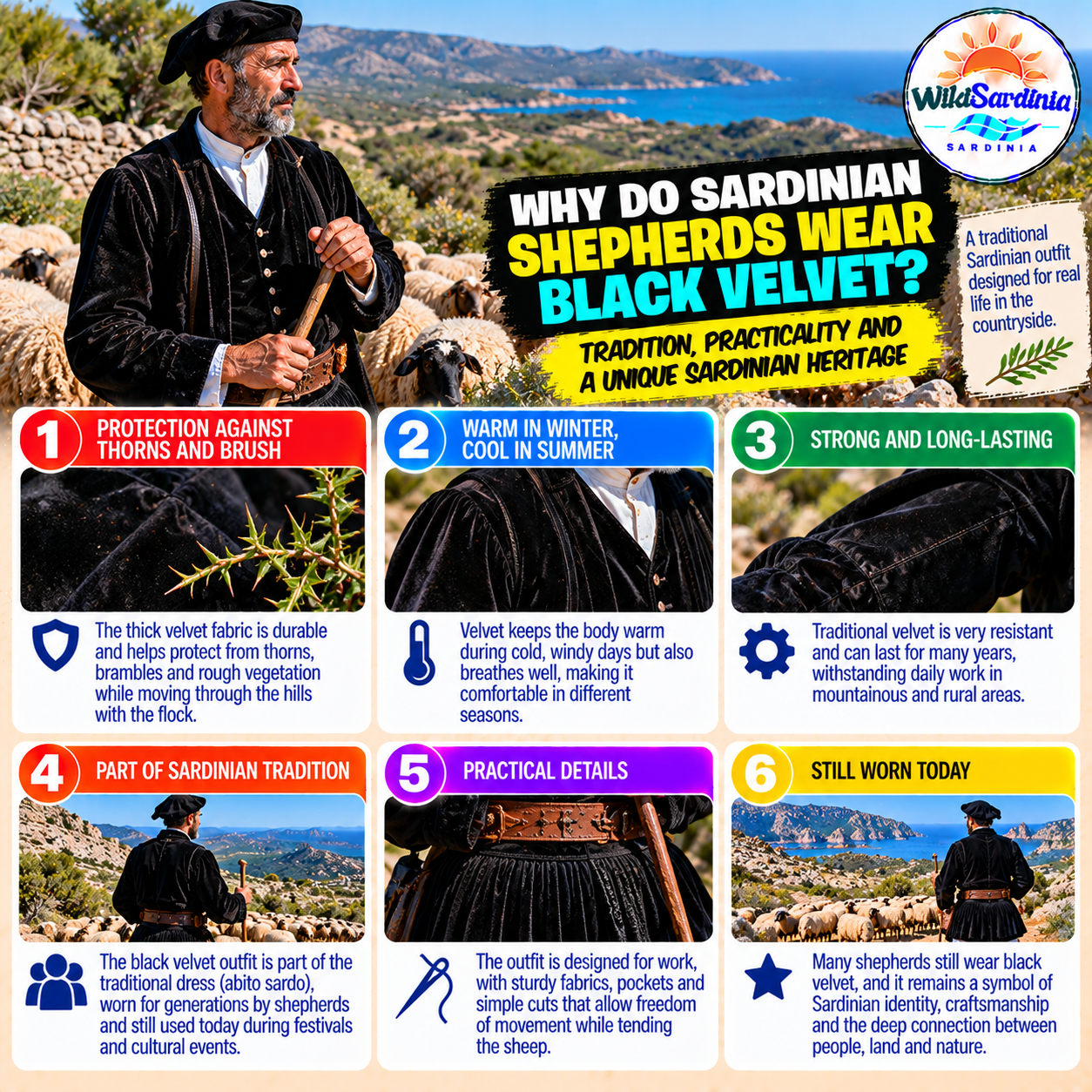
The image of a Sardinian shepherd dressed in black velvet is closely associated with the island’s pastoral heritage. Traditional Sardinian clothing varies from one area to another, but dark jackets, waistcoats and trousers appear in several local dress traditions. The explanation is not simply that black velvet was designed to stop thorn scratches: the clothing has practical, historical and cultural dimensions.
1. Durable clothing for rural work
Shepherds worked outdoors for long periods, moving through fields, rocky ground and Mediterranean scrub. Sturdy garments helped protect the body from everyday wear and contact with vegetation. The exact fabric depended on the garment, local custom, period and the resources available; velvet itself should not be treated as a universal technical solution for every task or every season.
2. A recognisable traditional style
Dark clothing became a distinctive element of some Sardinian traditional outfits, often combined with a white shirt, a vest or jacket, a sash and region-specific accessories. The details can differ significantly between villages and communities. What visitors recognise as a single “Sardinian costume” is actually a family of local styles.
3. Workwear and ceremonial dress are not the same thing
Photographs of shepherds in traditional black outfits may show everyday rural clothing, but they may also show a costume worn for festivals, religious celebrations, folk performances or cultural events. A garment that is traditional does not necessarily mean every shepherd wears it daily today. Modern work clothing varies according to the person, activity and conditions.
4. Why black?
Dark fabrics are a prominent feature of several Sardinian traditional outfits, but there is no single explanation that applies to every garment. Colour and material reflect local dress history, availability, taste and custom. It is better to avoid repeating a simple story—such as black being chosen only to hide dirt—unless it is documented for a particular garment or community.
5. How the outfit differs around Sardinia
Sardinia has many distinct local costume traditions. Headwear, jacket shape, trousers, waistcoats, sashes and decorative details can vary by area and occasion. If you visit a local festival or ethnographic museum, look for the name of the town or community associated with the outfit rather than assuming that one version represents the whole island.
What to look for in traditional shepherd dress
- Fabric and cut: observe how the jacket, waistcoat or trousers are constructed.
- Layering: traditional outfits often combine several garments rather than relying on one heavy item.
- Local details: accessories and garment shapes may indicate a particular regional tradition.
- Context: ask whether the outfit is used for everyday work, a festival or a staged cultural presentation.
A living symbol of Sardinian pastoral heritage
Black velvet is an evocative part of the way Sardinian shepherds are represented in traditional dress, but it should not be reduced to one practical explanation. Sturdy clothing mattered in rural life, while local customs gave garments their distinctive forms and meanings. Today, these outfits also help preserve and communicate Sardinia’s pastoral and cultural identity.
If you see a shepherd wearing black velvet, remember that the outfit may reflect a particular local tradition or ceremonial context—not a rule followed by every shepherd across Sardinia.