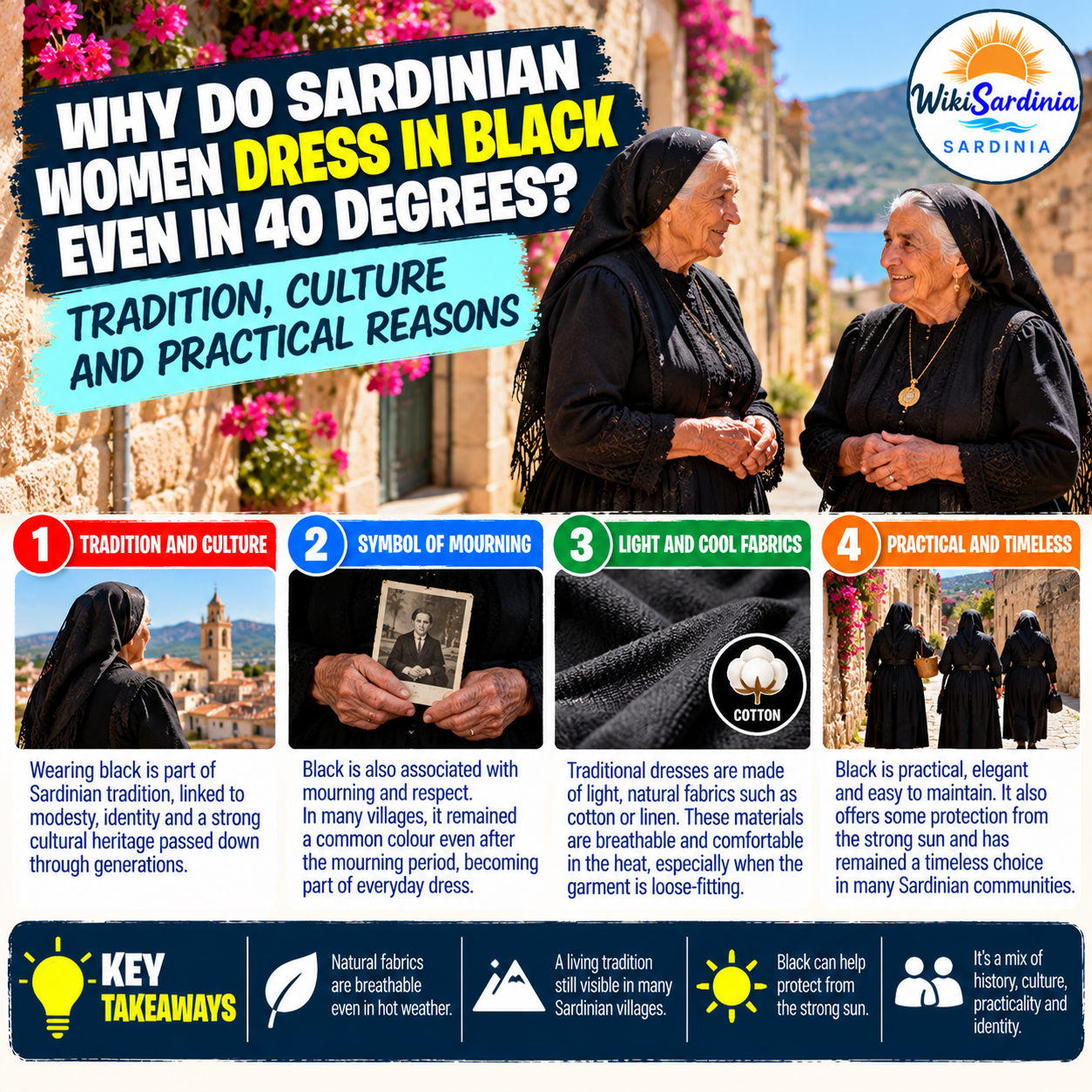
In some Sardinian villages, you may still see older women dressed in black even on very hot summer days. The clothing can be connected to mourning, religious customs, personal preference or local traditions passed down through generations. But there is no single rule across the island, and not every older woman who wears black is in mourning.
1. Mourning and remembrance
In many parts of Italy, including Sardinia, black has long been associated with mourning. Some people continue to wear dark clothing for an extended period after a bereavement, while others follow different customs or choose what feels right to them. The meaning can depend on the person, family and local community, so it is best not to assume someone is grieving just because they are dressed in black.
2. Faith and traditional dress
Dark clothing may also form part of a conservative or traditional style, particularly among older generations. Religious observances, local festivals and personal habits can influence what people wear. Sardinia has diverse village traditions, and dress practices differ across the island rather than following one universal custom.
3. Why wear black in 40-degree heat?
Black fabric absorbs more sunlight than white fabric, so a black garment exposed directly to the sun can become warmer. However, how hot a person feels also depends on the fabric, its weight, fit, weave, airflow and whether the clothing covers the skin from direct sunlight. Lightweight, loose and breathable clothing can help in hot weather, regardless of colour.
It would be inaccurate to say that traditional black clothing is always made from cool cotton. Some garments may be cotton or another breathable fabric, while others may be heavier or made from different materials. The outfit itself does not reveal the exact fabric or why its wearer chose it.
4. A tradition that changes over time
Clothing customs evolve as generations, lifestyles and communities change. Some women keep wearing dark clothes because they are familiar, practical or meaningful; others choose brighter colours or different styles. What visitors notice in one village should not be treated as a rule for all Sardinian women.
5. How to ask about the custom respectfully
If you are curious, ask a local guide or someone who is happy to discuss village traditions. Avoid asking a stranger whether she is in mourning or assuming that her clothes reveal a personal loss. A respectful question about traditional dress or local history is a better way to learn.
Understanding the black clothing you see
Black clothing among some older Sardinian women can reflect mourning, faith, habit, personal choice or a local tradition. The reasons vary, and so do the fabrics. Even in summer heat, clothing choices are shaped by more than temperature alone—and the most respectful approach is to appreciate the cultural context without assuming every person follows the same custom.