How do Sardinians feel about American tourists? If you're visiting Sardinia from the United States for the first time, you may wonder whether locals will be welcoming, whether English is widely spoken and whether American visitors stand out. The reassuring answer is that Sardinia is an established international destination, and there is no good reason to assume that being American will make you unwelcome.
At the same time, it would be misleading to claim that every Sardinian has the same opinion about tourists from the United States. People are individuals, and attitudes vary with circumstances, personal experiences and the pressures tourism can place on communities. A more useful question is: what helps visitors have positive interactions with local people?
Are American tourists welcome in Sardinia?
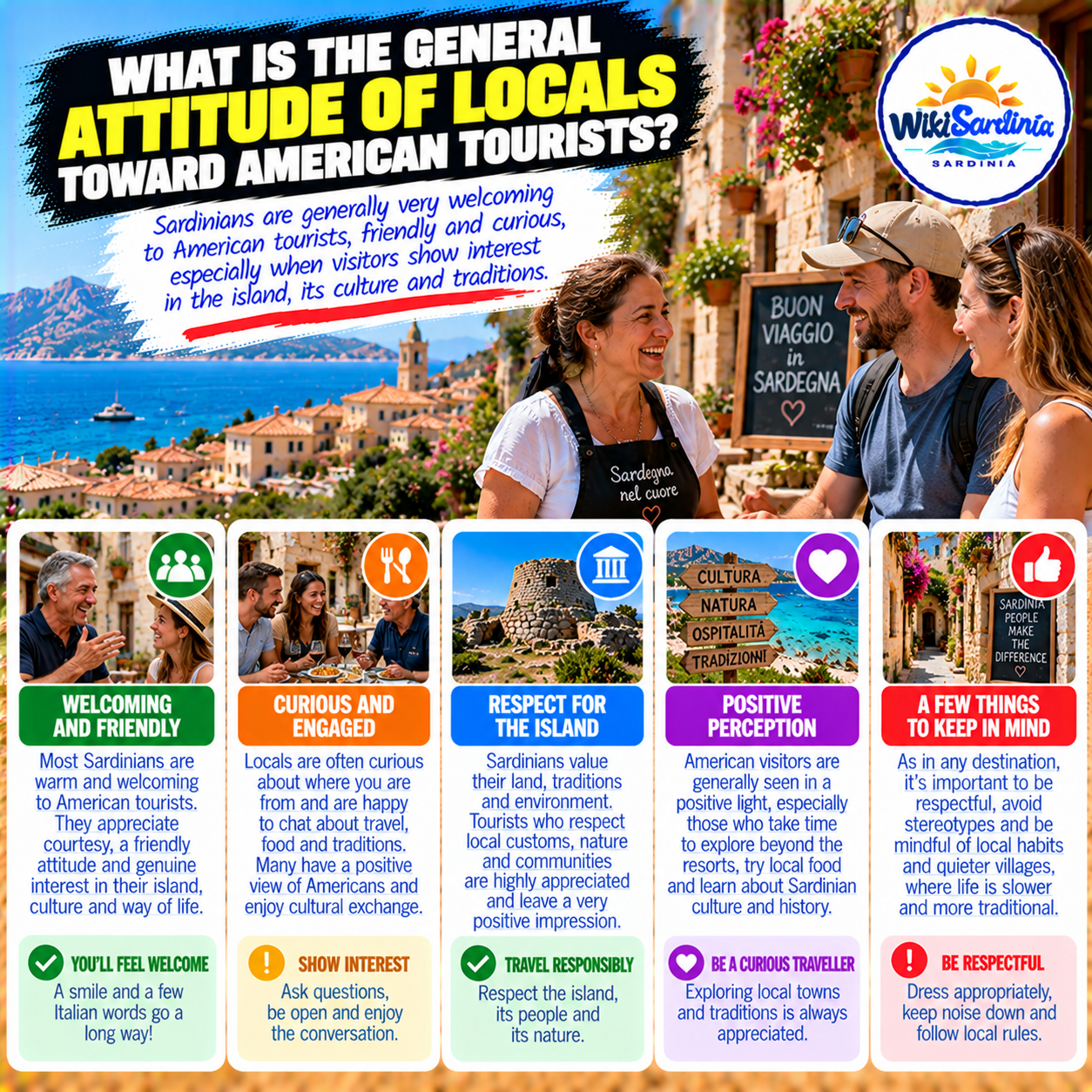
American visitors can travel to Sardinia with the same basic expectations as other international tourists: hotels, restaurants, guides and many local businesses are accustomed to welcoming guests from abroad. There is no evidence that Americans as a nationality are systematically unwelcome on the island.
That is not a scientific claim that all residents hold positive views of Americans. There is no single reliable island-wide survey presented here measuring Sardinians' opinions of US tourists. What visitors encounter will depend on where they go, how they behave and whom they meet.
Do Sardinians treat Americans differently from other visitors?
Not in any predictable, universal way. A hotel employee in a busy coastal destination may interact with travellers from many countries every day. A resident in a quiet inland village may have a very different daily experience of tourism. Neither setting justifies sweeping conclusions about an entire population.
People may ask where you are from or be interested in your travels. Such conversations are best understood as individual interactions, not proof that every local person is especially fascinated by the United States.
Does speaking English make a difference?
English can be useful in tourist-oriented areas, particularly in accommodation, guided activities and some restaurants. However, Italian is the common language of public life throughout Sardinia, and English proficiency varies considerably. In smaller towns, family-run shops or rural areas, you may find that Italian is much more practical.
You do not need to speak fluent Italian to enjoy the island. Learning buongiorno (good morning), per favore (please), grazie (thank you) and scusi (excuse me) is a thoughtful starting point. If you need help, ask politely whether someone speaks English rather than assuming they do.
Is Sardinia culturally different from mainland Italy?
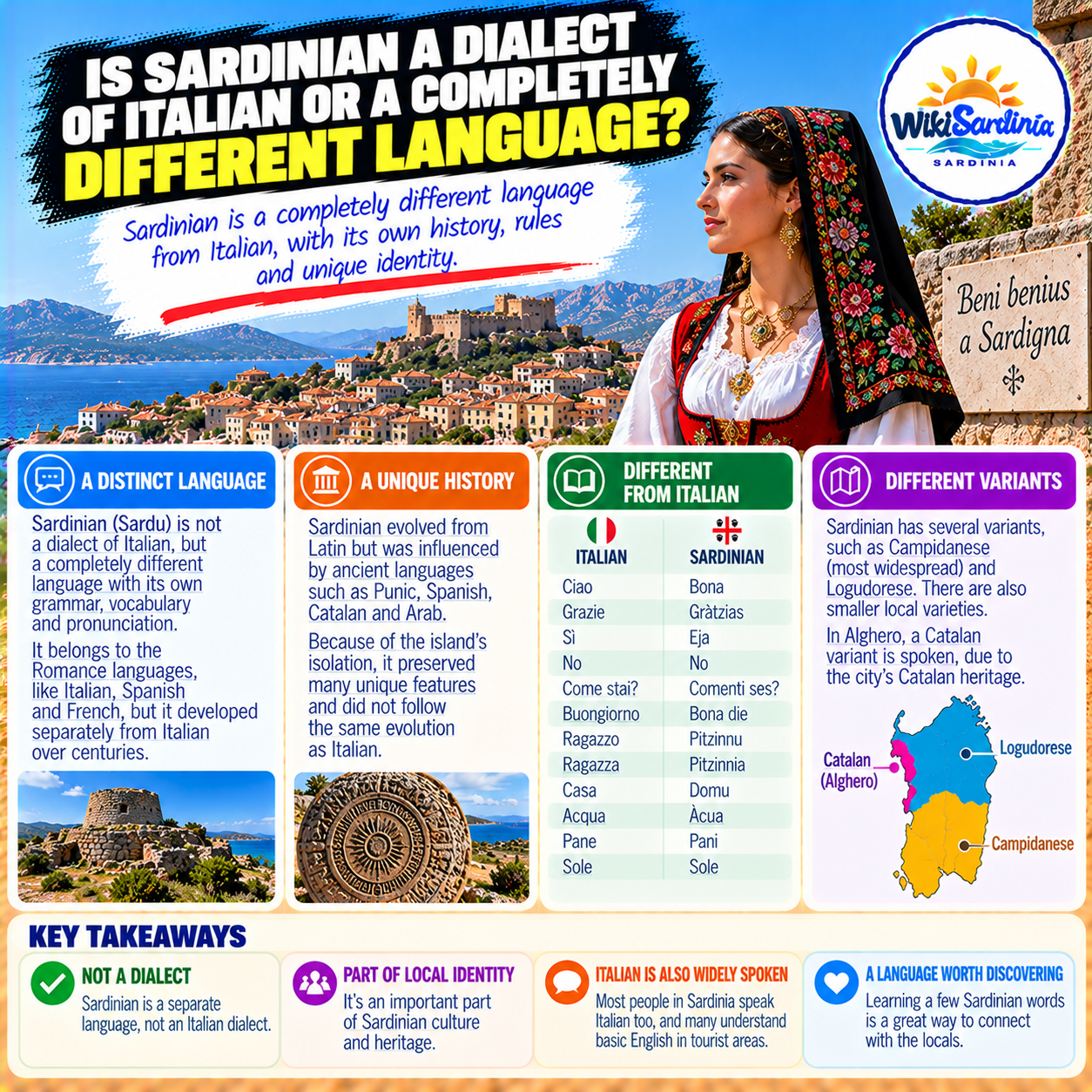
Yes, Sardinia has its own history, regional traditions and linguistic heritage. Sardinian is a distinct Romance language, while Italian is widely spoken and used in public life. The island also has other local linguistic traditions, including Algherese Catalan and varieties spoken in different regions.
American visitors who are interested in Sardinia's culture can enrich their experience by learning about its nuraghi, food traditions, village festivals, craftsmanship and local history. There is no need to pretend to be an expert: curiosity and respectful questions are enough.
What should American visitors know about local etiquette?
Simple courtesy matters more than nationality. Greet people when entering a small shop, speak at a reasonable volume in quiet places and be patient when service follows a different rhythm from what you expect at home. In restaurants, ask questions politely rather than assuming customs will match those in the United States.
Remember that many Sardinian towns are living communities, not open-air attractions. Respect private property, religious sites, residents' privacy and local rules about parking, waste and access to beaches.
What about tipping?
Tipping culture in Italy differs from the United States. Service staff are not generally working under the same tipping expectations common in many American restaurants. Leaving a modest extra amount for particularly good service can be appreciated, but a US-style percentage should not be assumed to be obligatory.
Check the bill for listed charges, including any coperto where applicable, and ask if something is unclear. A cover charge is not necessarily a tip paid directly to your server.
Do locals dislike tourists because of overcrowding?
Tourism can bring economic opportunities while also creating pressures on housing, traffic, beaches, water use and public services. Some residents may be frustrated by overcrowding or behaviour that damages fragile environments. Those concerns should not automatically be interpreted as hostility toward Americans—or toward every visitor.
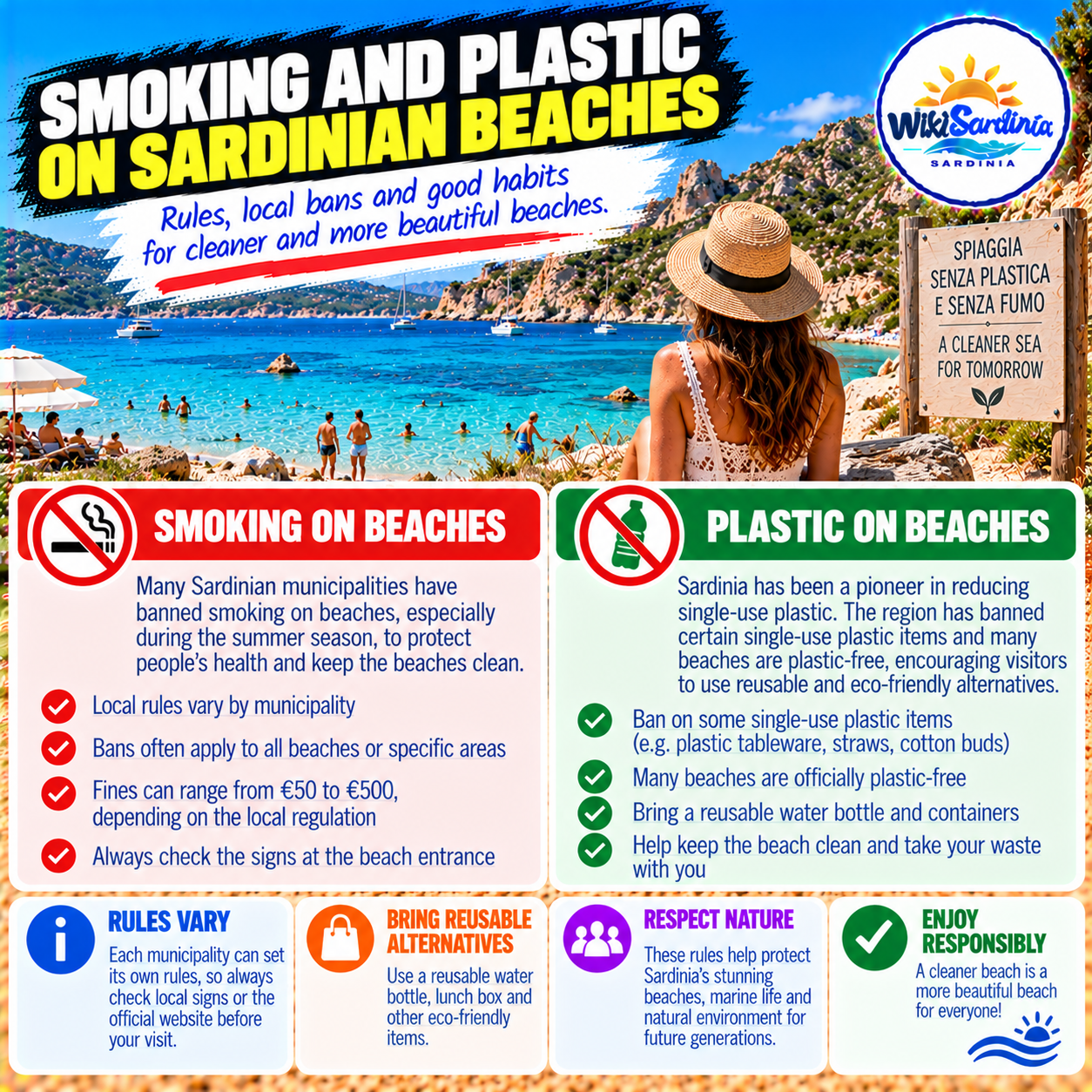
Responsible travel can make a difference. Follow beach rules, do not remove sand or shells, avoid disturbing protected dunes, dispose of waste properly and consider visiting outside the busiest weeks if your schedule allows.
Is it better to stay in a resort or visit smaller towns?
Both can be rewarding. Resorts may offer more services in English and straightforward logistics for a first-time visitor. Smaller towns can offer opportunities to experience everyday Sardinian life, local markets and traditional food, though they may require more language preparation and careful transport planning.
When visiting less-touristed places, approach them as communities where people live and work. Spend money at local businesses where practical, respect opening hours and avoid treating residents as performers for photographs.
Will American politics affect how people treat me?
People in Sardinia, as anywhere, may have opinions about US politics, international events or cultural differences. But those opinions cannot be predicted from someone's nationality or hometown. If a conversation turns political, you can engage respectfully or simply steer it toward travel, food or local culture.
There is no reason to assume that a resident's opinion of an American government or policy is the same as their attitude toward an individual American traveller.
What if someone seems unfriendly?
A brief interaction may reflect a busy workday, a language misunderstanding, a personal mood or cultural differences in communication. One encounter does not represent Sardinia as a whole. Be polite, avoid escalating a misunderstanding and seek help from your accommodation or a visitor information service when needed.
Equally, it is fine to set boundaries if anyone behaves inappropriately. Being a respectful visitor does not mean accepting harassment, discrimination or unfair treatment.
Five ways to have a better experience in Sardinia
- Learn a few Italian greetings. Even a small effort can make everyday conversations smoother.
- Respect beaches and natural areas. Follow local access rules and leave sand, shells and wildlife undisturbed.
- Allow time for local routines. Opening hours, meal times and transport schedules may differ from those at home.
- Show genuine interest in Sardinian culture. Try local food and ask about traditions without assuming the whole island is the same.
- Travel beyond stereotypes. Let individual encounters shape your impression rather than expecting every person to behave alike.
Can American tourists feel comfortable travelling independently?
Yes. Many practical challenges of independent travel—transport, parking, language and seasonal crowding—are shared by international visitors regardless of nationality. Prepare the basics, choose accommodation suited to your itinerary and keep important information accessible on your phone and offline.
If you plan to explore remote areas, do not assume that English-language services or frequent public transport will be available everywhere. A little planning helps you spend less time worrying and more time enjoying the island.
The verdict
American tourists should not expect hostility simply because they are American. Sardinia welcomes international travel, but local attitudes cannot be reduced to a single universal opinion. The best approach is to be courteous, learn a little Italian, respect the environment and remember that the people you meet are individuals—not representatives of a stereotype.
Come to Sardinia curious about its beaches, history, food and traditions, and give yourself time to discover the island on its own terms.