Sardinia’s turquoise water can look calm and inviting, but visitors should never assume that every beach has a lifeguard watching the sea. The island has supervised bathing areas, including some public beaches, but also many remote coves and stretches of coast without an active rescue service.
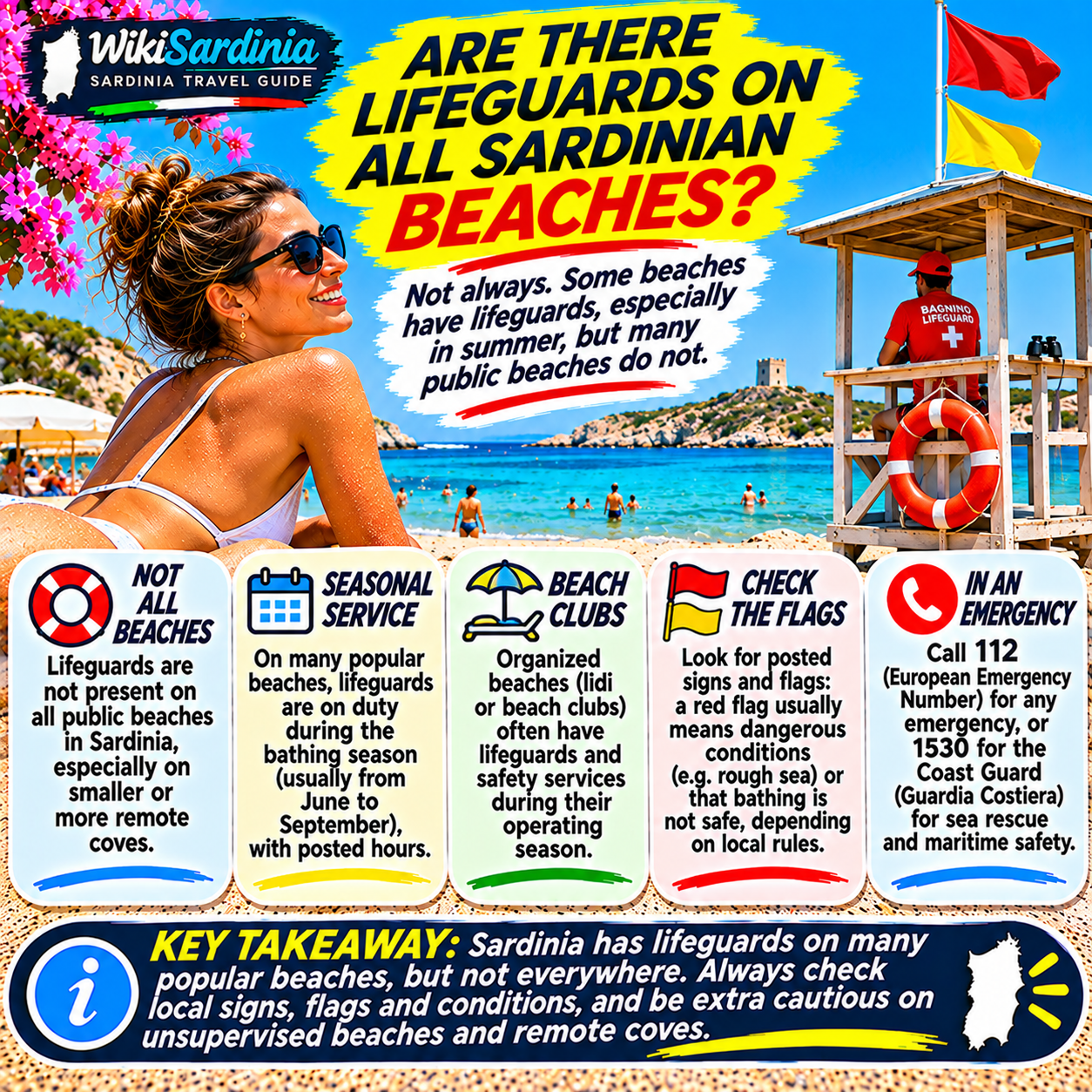
No, lifeguards (bagnini di salvataggio) are not on duty at every public beach in Sardinia. Whether rescue coverage is provided depends on the location, the type of beach, the bathing season, opening hours and the applicable maritime safety ordinance. The official SardegnaTurismo website specifically warns that not all beaches have lifeguard services.
What is the difference between a public beach and a beach club?
A spiaggia libera is a freely accessible beach area, not necessarily a beach with staffed services. An equipped beach establishment, or stabilimento balneare, generally has rescue-service obligations during the relevant operating season and hours under the applicable Coast Guard ordinance. On free beaches, municipalities or other competent bodies may organize rescue coverage; where no service is provided, official warning signs should make the situation clear. Always check the local ordinance for the beach you intend to visit.
Are lifeguards present during the summer?
Many supervised beaches operate rescue services during defined summer periods, but there is no single schedule that guarantees coverage across the island. For example, the Municipality of Cagliari announced four rescue posts at Poetto and Cala Mosca from 15 June to 15 September 2026, operating daily from 9 a.m. to 7 p.m. That is a documented local arrangement for 2026, not a promise that the same beaches or other Sardinian beaches have identical coverage every year.
Source: Municipality of Cagliari: 2026 beach rescue service.
What about secluded coves and remote beaches?
Remote coves reached by hiking trails or boats may have no lifeguard, rescue tower or immediate assistance. Some beaches have sudden changes in water depth, rocks, waves or currents that are not obvious from shore. Do not assume that calm-looking water is safe, and avoid swimming alone in isolated places. If there is no rescue service, consider choosing a supervised beach instead, particularly when travelling with children or less-confident swimmers.
What do red and other beach flags mean?
A red flag is a serious warning. Depending on the local ordinance and circumstances, it can indicate dangerous bathing conditions or the absence or interruption of rescue coverage. Do not enter the water when signs or authorized personnel indicate that bathing is unsafe or prohibited. Other flag colors may be used to communicate operating conditions, but their precise meaning should be read together with the posted local legend and notices. No flag does not guarantee safe water.
What if there is a sign saying 'Balneazione non sicura'?
The Italian warning “Attenzione – Balneazione non sicura per mancanza del servizio di salvataggio” means that bathing is not considered safe because no lifeguard service is provided. It is not a promise that someone will be able to assist you in an emergency. Regional beach guidance requires warning signage in areas where rescue coverage is absent. Treat such a notice seriously and make a conservative decision about swimming.
Source: Sardinia regional beach ordinance.
How can you check whether a lifeguard is on duty?
Look for a staffed lifeguard post, current operating hours, flags and signs at the beach entrance. The presence of an empty rescue tower or a beach bar does not prove that a lifeguard is on duty. Ask the local tourist office, municipality or beach operator if you need reliable information before arriving. Maritime safety ordinances issued by the competent Capitaneria di Porto provide the formal local rules.
How can you stay safe in the water?
Check wind and sea conditions, obey warnings, remain within designated swimming areas and avoid swimming beyond your ability. Watch children continuously, even at supervised beaches: lifeguards do not replace parental supervision. Stay away from rocks and cliff-jumping spots when waves are present, and do not attempt a risky rescue without training. If someone is in difficulty, call emergency services promptly and alert any nearby lifeguard.
What number should you call in an emergency?
In an emergency in Italy, call 112, the European emergency number. For maritime emergencies, the Italian Coast Guard also operates the 1530 emergency line. Provide your exact location, nearest beach name, visible landmarks and the nature of the emergency. The Municipality of Porto Torres lists 1530 in its information accompanying the 2026 maritime safety ordinance.
Source: Porto Torres: 2026 Coast Guard safety ordinance.
The WikiSardinia takeaway
There are lifeguards on some Sardinian public beaches, especially during summer, but not on every beach and not at all times. Check whether the rescue post is actually staffed, follow the flags and warning signs, and be particularly cautious at remote coves. If you want greater peace of mind, choose a beach with confirmed active lifeguard coverage rather than assuming every beautiful stretch of coastline is supervised.