You're sitting in a family-run Sardinian trattoria, reading a menu full of unfamiliar but delicious-sounding dishes. One looks perfect, except for an ingredient you don't eat. Can you ask the waiter to leave it out, or would that offend the chef?
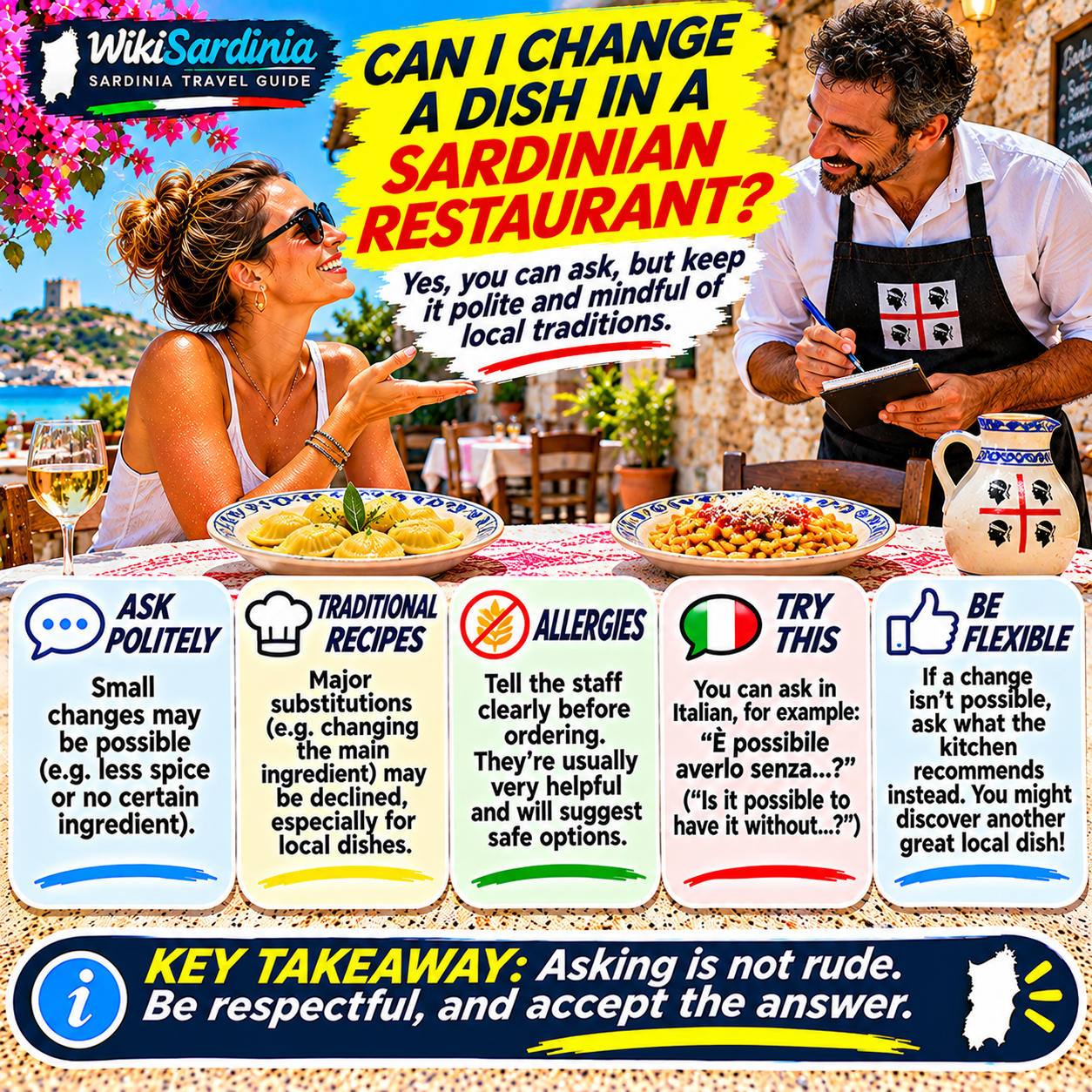
It is not inherently rude to ask for a small modification in a Sardinian restaurant, provided you ask politely and accept the answer. But traditional restaurants may be less accustomed to extensive customization than some visitors expect. A dish might follow a family recipe, be prepared in advance or depend on ingredients that cannot easily be removed.
Why do traditional recipes matter?
Sardinian cuisine has strong local traditions. Dishes such as culurgiones, malloreddus alla campidanese and porceddu are more than a combination of interchangeable ingredients: their preparation and flavor reflect regional cooking methods. Asking for a simple adjustment is different from asking the kitchen to reinvent a dish. The Michelin Guide notes that substitutions and omissions are less customary in Italian dining than in some other countries, particularly when they alter the character of a recipe.
What kinds of requests are reasonable?
Small changes may be possible: dressing served separately, omitting a garnish, or replacing a side dish when alternatives are available. But a sauce prepared earlier may already contain onions, meat or cheese, and a filled pasta cannot be made free of an ingredient simply by removing it at the table. The restaurant can say no without being unfriendly. Ask before ordering rather than after the dish arrives.
What if you have a food allergy?
Allergies and medically necessary restrictions are different from ordinary preferences. Explain them clearly before ordering and ask staff to check ingredients and preparation, including possible cross-contact. Do not assume that removing a visible ingredient makes a meal safe. If the kitchen cannot reliably accommodate the allergy, choose a different dish or restaurant. Food Allergy Research & Education recommends communicating with restaurant staff, checking preparation methods and using an Italian-language allergy card when helpful. See FARE's Italy travel advice.
Can vegetarians and vegans ask for alternatives?
Yes. Tell the waiter about your dietary requirements and ask what the kitchen can prepare. Sardinian menus can include vegetable dishes, salads, legumes, breads and other suitable options, but recipes may also contain pecorino, meat broth, lard, eggs or seafood even when the dish sounds plant-based. Ask specifically rather than guessing from the name. For a fixed menu or agriturismo meal, contacting the venue ahead of time is especially useful.
Useful Italian phrases for polite requests
“È possibile averlo senza formaggio?” means “Is it possible to have it without cheese?” “Potrei avere il contorno a parte, per favore?” means “Could I have the side dish separately, please?” “Sono allergico/allergica a…” means “I am allergic to…” and should be followed by the specific allergen. “Cosa mi consiglia in alternativa?” means “What would you recommend instead?” The words per favore and grazie make the conversation friendlier, but clarity about allergies matters more than perfect grammar.
What if the waiter says no?
It usually means the kitchen cannot make that change, not that the staff dislikes tourists. Ask which other dish would suit your needs. You may discover something better than the original choice. The Michelin Guide recommends trusting the restaurant's expertise and asking about the day's specialties rather than demanding extensive changes. Read its Italian dining etiquette guide.
Will a substitution cost extra?
Possibly, depending on the restaurant and the ingredients involved. There is no single Sardinia-wide rule about whether a change is free. If a substitute ingredient or extra side dish is offered, ask whether it changes the price before confirming the order.
Is it different at an agriturismo or tasting menu?
It can be. An agriturismo may serve a set menu prepared for many guests, sometimes with dishes cooked hours in advance. A tasting menu may likewise be planned around specific ingredients and courses. Inform the restaurant about dietary restrictions when booking, and ask whether a suitable alternative is available. Last-minute changes may be impossible even when the hosts are happy to help.
How can you show respect for Sardinian food culture?
Be curious about local specialties, explain your request briefly, and accept the kitchen's decision without making a scene. If you are unsure about a dish, ask what it contains or what the chef recommends. A polite question is welcome; treating the menu as an unlimited list of customizable ingredients may be less well received.
The WikiSardinia takeaway
Asking is not rude; insisting can be. Small substitutions are sometimes possible in Sardinian restaurants, while major changes to traditional recipes may not be. Always speak up about allergies and dietary restrictions, preferably in advance, and let the staff suggest safe and suitable alternatives. A little courtesy makes the meal more enjoyable for everyone.