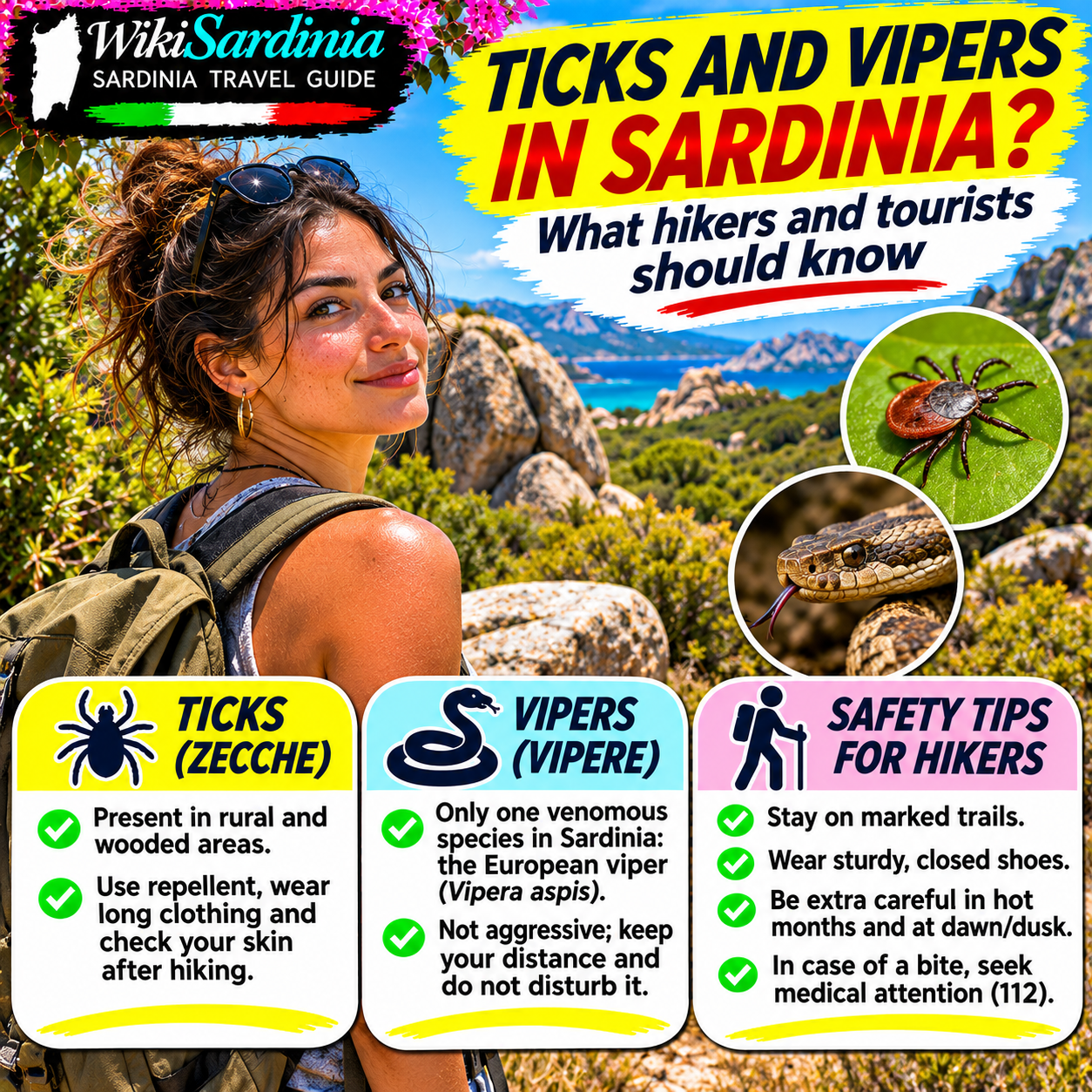
Ticks are a genuine concern when walking through Sardinia's Mediterranean scrubland, especially in grassy, wooded and rural areas. Venomous vipers, however, are not an established danger on the island: Sardinia has no native vipers. Hikers should focus on preventing tick bites, protecting themselves from heat and navigating rocky trails safely, rather than fearing every snake they encounter.
Are there venomous vipers in Sardinia?
Unlike much of mainland Italy, Sardinia has no established native populations of vipers, including the European asp viper (Vipera aspis). Several non-venomous snake species live on the island. Do not handle, corner or attempt to identify a snake by approaching it. Give any wild snake room to move away. If a bite occurs and the species is uncertain, seek medical advice rather than relying on a visual guess.
Are ticks common in Sardinia?
Ticks occur in rural environments, grass, scrub, pasture and woodland, particularly where wild and domestic animals are present. They can attach to people or pets when brushing against vegetation. Exposure varies by season, habitat and weather; it is not limited to a single summer month. A short walk in the countryside can involve tick exposure even without a strenuous hike.
Can ticks transmit disease?
Yes. Some ticks can transmit pathogens, although not every tick is infected and a bite does not necessarily cause illness. In the Mediterranean region, tick-borne infections include Mediterranean spotted fever, associated with Rickettsia conorii. Other tick-borne diseases vary geographically and by vector. Avoid assuming that a particular disease is common on every Sardinian trail without local surveillance data.
How can I prevent tick bites while hiking?
Wear closed hiking shoes, long trousers and, where practical, tuck trouser cuffs into socks. Stay near the center of marked paths and avoid brushing against dense vegetation. Use a skin repellent according to its label and consider permethrin-treated clothing where suitable; never apply permethrin clothing treatments directly to skin. Check your clothing and skin after outdoor activities, including behind knees, around the waist, underarms, groin and scalp. Check children and pets as well.
What should I do if I find an attached tick?
Remove it promptly using fine-tipped tweezers or a purpose-made tick-removal tool. Grasp it as close to the skin as possible and pull steadily upward without twisting or crushing its body. Clean the bite area and your hands afterward. Do not use oil, heat, nail polish or other folk remedies to force the tick off. If mouthparts remain embedded or you cannot remove it safely, seek professional advice.
Should I see a doctor after a tick bite?
Not every bite requires emergency treatment. Record the date and location and monitor for symptoms over the following days and weeks. Seek medical evaluation if you develop fever, rash, severe headache, unusual fatigue or other concerning symptoms. Tell the clinician that you were bitten by a tick in Sardinia. Do not take antibiotics prophylactically without professional medical guidance.
What if I see a snake on a trail?
Stop at a safe distance, let it move away and continue only when the route is clear. Never try to catch, kill or move it with a walking stick. Wear sturdy footwear and avoid placing hands in rock crevices or beneath stones where you cannot see. Although native vipers are absent from Sardinia, any animal bite should be cleaned and medically assessed if the skin is broken or symptoms develop.
What if someone is bitten by a suspected venomous snake?
If there is a serious or unexplained bite, call 112 for emergency guidance. Keep the person calm and avoid unnecessary movement. Do not cut the wound, suck out venom, apply a tourniquet or attempt to capture the animal. Follow instructions from emergency personnel. This is general emergency advice and does not imply that wild vipers normally occur in Sardinia.
Are some areas riskier than others?
Tick exposure is possible across inland grazing areas, scrubland, forest edges and rural paths, including landscapes in Barbagia, Ogliastra and other parts of the island. Risk depends on vegetation, animals and current conditions rather than the name of the destination. Coastal trails can also cross grassy or scrubby terrain. Check for ticks after hikes even when you have not seen any insects.
Can ticks get into accommodation or rental cars?
Ticks can hitchhike on clothing, gear or pets. After a hike, inspect socks, trousers, backpacks and pets before returning to your room or car. Follow clothing-care instructions; appropriate high-heat drying can help kill ticks on dry garments. Do not spray pesticides inside a rental vehicle or accommodation without authorization.
Are ticks a problem for dogs?
Dogs can pick up ticks in countryside and scrubland. Ask a veterinarian about appropriate preventive treatments before travel, inspect your pet after walks and remove attached ticks correctly. Keep dogs under control around livestock and wildlife and respect protected-area rules.
What else should hikers watch for?
Heat exposure, dehydration, sudden weather changes, loose stones, poor mobile coverage and wildfire danger can be more immediate hazards than snakes. Carry water, sun protection, suitable footwear, a charged phone and offline maps. Tell someone your intended route and expected return. In an emergency, call 112 and provide coordinates or a recognizable trail location.
Frequently asked questions
Are there vipers in Sardinia?
No established native viper populations are present on the island. Do not confuse Sardinia with mainland Italy, where vipers occur.
Are all Sardinian snakes harmless?
Do not handle wildlife. While Sardinia lacks native vipers, bites and other injuries can still require medical attention.
Can you get ticks on coastal paths?
Yes, especially where trails pass through grasses, scrub and animal habitats.
Are tick bites always dangerous?
No. Most do not automatically lead to illness, but some ticks carry pathogens, so prevention and symptom monitoring matter.
Should I use oil to remove a tick?
No. Use fine-tipped tweezers and steady upward pressure.
Do I need antibiotics after every tick bite?
No. Seek professional medical advice if symptoms or other concerns arise.
What number do I call in an emergency?
112 is Italy's emergency number.
Should children avoid hiking in Sardinia?
No. Choose appropriate routes, use protective clothing and check their skin for ticks after walking.
The takeaway
For Sardinian hikers, ticks deserve practical attention; native venomous vipers are not an established threat. Wear protective clothing, use repellent correctly, inspect your skin after hiking and remove ticks promptly. Give snakes space and follow standard outdoor safety precautions.
Further authoritative guidance: CDC — Preventing tick bites; CDC — What to do after a tick bite; ECDC — Tick-borne diseases; Istituto Superiore di Sanità; Sardegna Ambiente — Regional environmental information.