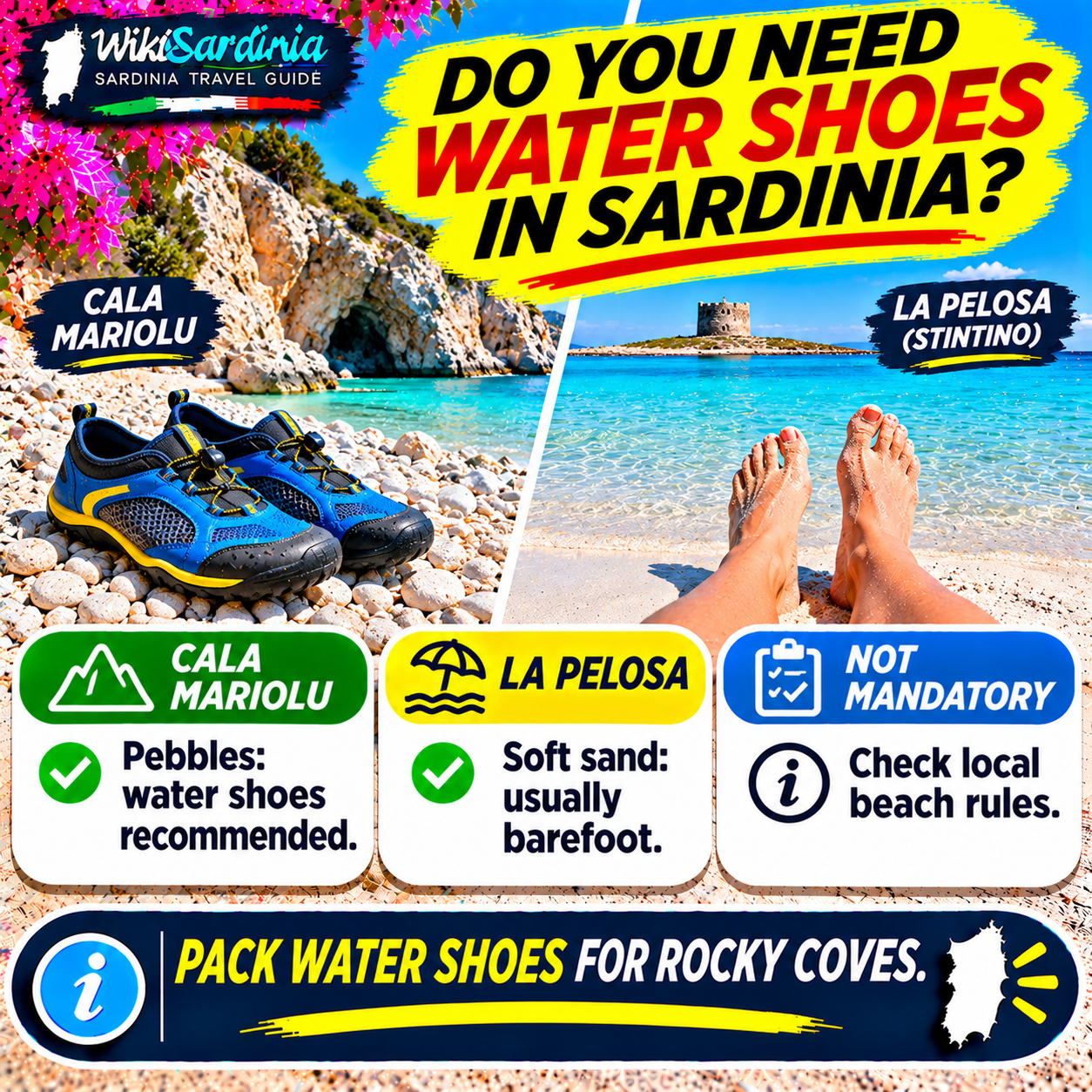
Water shoes are not generally mandatory on Sardinian beaches, but they are a smart choice for Cala Mariolu and other rocky or pebbly coves. La Pelosa at Stintino is a very different experience: its famously fine, white sand and shallow sandy water are normally comfortable for barefoot beachgoers. Do not confuse water shoes with La Pelosa’s separate conservation requirement to put a protective mat underneath your beach towel.
Are water shoes legally required at Cala Mariolu or La Pelosa?
No general rule requiring every visitor to wear water shoes at either beach was identified in the official visitor and beach regulations reviewed. Footwear is a matter of comfort, grip and safety, subject to any additional instructions posted locally. The Sardinia regional tourism authority describes Cala Mariolu as a beach of small, rounded pink-and-white pebbles mixed with sand. Visit Stintino describes La Pelosa as having extremely fine white sand. Their surfaces call for different packing decisions.
Cala Mariolu: why water shoes are recommended
Cala Mariolu, in the Baunei coastline of the Gulf of Orosei, is made largely of small, sea-smoothed pebbles rather than the powdery sand many visitors expect from photos. The stones are beautiful but can feel hard or uncomfortable underfoot, especially when carrying bags or entering the water. Rocks around the cove and the underwater shoreline can be slippery. Lightweight water shoes with flexible soles and decent grip make walking and swimming entry more comfortable. They are a practical recommendation, not a universal admission condition. The Italian Ministry of Culture’s Cala Mariolu description independently confirms the beach’s small white pebbles.
Can you go barefoot at Cala Mariolu?
Yes, if you are comfortable on small stones and can safely navigate the beach and water’s edge. Some visitors do, especially when they remain in one place and swim from an easy entry point. Others find the pressure of the pebbles painful after only a few minutes. The surface is not the same as sharp broken rock everywhere, but rounded pebbles can still be uncomfortable, and individual sections vary. If you have sensitive feet, children in your group or plans to explore rocky edges, pack shoes rather than relying on barefoot comfort.
La Pelosa in Stintino: is the sand soft enough for bare feet?
Usually yes. La Pelosa is celebrated for very fine, pale sand and shallow turquoise water. Barefoot walking and swimming entry are generally comfortable on its main sandy beach. Water shoes may still be useful if you intend to explore nearby rocky areas, have sensitive feet or want protection from unexpected sharp objects. They are not a necessary purchase simply because you are visiting La Pelosa. The official Stintino tourism site confirms the fine sandy shoreline.
What is actually mandatory at La Pelosa?
The beach has special environmental rules designed to protect its delicate sand. The official La Pelosa booking portal lists a mat underneath beach towels among its requirements, alongside foot-rinsing facilities and prohibitions on removing sand. The municipal beach regulation explains that towels should not lie directly on the sand without a suitable protective mat. These are not footwear rules. The 2026 season also used a controlled-access booking and QR-code system; verify the latest reservation dates and conditions before a future visit.
Can water shoes help protect against sea urchins?
They can offer some protection on rocky seabeds, but no ordinary water shoe guarantees protection against sea-urchin spines. The best prevention is to avoid stepping on sea urchins and to look carefully before putting your feet down. Do not touch, move or collect marine animals. In clear water, use your eyes rather than assuming footwear makes a rocky area safe. Shoes with thin fabric or soft soles may be penetrated by sharp objects.
What about slippery rocks and underwater stones?
Choose shoes with textured, non-slip soles that fit securely and drain water. Loose sandals can slip off in surf, and ordinary flip-flops often have poor grip on wet rock. Even good water shoes cannot prevent falls on algae-covered stones, uneven rock shelves or in waves. Move slowly, avoid jumping into unfamiliar water and do not climb slippery rocks simply to reach a photo spot.
Are water shoes useful for children?
For Cala Mariolu and other pebble beaches, many families find them worthwhile because children may be less comfortable on small stones and can lose their footing while entering the water. Fit matters: shoes that are too loose can trap stones or come off, while tight shoes can rub. On La Pelosa’s main sandy beach, most children will not need them for the sand itself, although individual comfort and nearby rocky areas may change that decision. Supervise children closely in the sea regardless of footwear.
Should I bring water shoes for a Gulf of Orosei boat tour?
Yes, if the itinerary includes Cala Mariolu or other pebble-and-rock coves. A pair of lightweight aqua shoes takes little space and is useful for shore landings and uneven surfaces. Ask the operator whether passengers step onto a jetty, directly onto sand or into shallow water; landing arrangements can vary by boat, weather and local rules. Do not assume every stop on a Gulf of Orosei cruise has the same beach surface. If your tour only visits soft-sand locations, the shoes may remain in your bag.
What if I hike to Cala Mariolu?
Water shoes are not a substitute for proper hiking footwear. The regional tourism authority describes the land approach to Cala Mariolu as a challenging route suitable for experienced hikers, not a casual beach walk. Wear appropriate hiking boots or trail shoes for the approach and change into water shoes at the shore if useful. Check trail access, weather, daylight and local guidance before considering the hike. For most visitors, a boat excursion is the more straightforward option.
Which other Sardinian beaches might need water shoes?
Think about the beach surface rather than the name of the destination. Rocky inlets, limestone shelves, coarse gravel, pebble coves and snorkeling spots with exposed rock are the places where water shoes often help. Fine sandy beaches such as La Pelosa usually do not require them for ordinary swimming. Some beaches have mixed sections, so one end can be soft sand while another has stones. Ask a local operator or check recent, reliable descriptions for the specific entry point you plan to use.
What kind of water shoes should I pack?
Look for a snug, comfortable fit, a grippy sole thick enough to reduce pressure from pebbles, fast-draining material and a secure heel. Try them on before travel; poorly fitting shoes can cause blisters and trap sand or stones. They do not need to be expensive or specialized climbing footwear for an ordinary beach visit. For demanding rocky terrain, more substantial protective footwear may be preferable, but never assume a shoe makes hazardous terrain safe.
Can I buy water shoes in Sardinia?
Beach-equipment shops, sporting-goods stores and some seasonal retailers may sell them, particularly in tourist areas. Availability, sizes and prices are not guaranteed, especially at remote coves. Cala Mariolu is not a place to rely on for last-minute footwear shopping. If you know you will visit pebble beaches, bring a pair from home or buy one before boarding your boat.
What should I do with sand and pebbles stuck in my shoes?
Rinse or shake out your footwear before leaving the beach, using designated rinsing facilities where available and following local rules. Do not deliberately remove sand, stones, shells or other natural material as souvenirs. The Sardinian Region’s 2026 beach-protection guidance explains that taking coastal materials is prohibited and can lead to fines from €500 to €3,000. Avoid washing shoes with soap or detergent at beach foot-rinsing stations.
Are there special access rules I should check?
Yes. La Pelosa operates a seasonal controlled-access system with reservations under the rules published for the relevant year. Cala Mariolu’s access and boat-landing arrangements can also be affected by local visitor-management measures, sea conditions and excursion schedules. These are separate from footwear advice. Before visiting in 2027 or later, check the official beach or municipal website for updated access requirements, and confirm boat departure and return arrangements where relevant.
Quick packing guide
| Beach or activity | Water shoes? | Reason |
|---|---|---|
| Cala Mariolu | Recommended | Small pebbles and rocky sections |
| La Pelosa, main sandy beach | Usually unnecessary | Very fine, soft sand and shallow sandy water |
| Rocky snorkeling cove | Recommended | Uneven or slippery entry points |
| Gulf of Orosei boat tour | Useful to pack | Different landing surfaces across stops |
| Mountain hike to a beach | Not for the hike | Use suitable hiking footwear for the trail |
Useful Italian phrases
“Le scarpette da scoglio sono obbligatorie?” — Are water shoes mandatory? “La spiaggia è di sabbia o ciottoli?” — Is the beach sandy or pebbly? “Il fondale è roccioso?” — Is the seabed rocky? “Dove posso sciacquare i piedi?” — Where can I rinse my feet? “Serve una stuoia sotto l’asciugamano?” — Do I need a mat under my beach towel?
The WikiSardinia takeaway
Pack water shoes for Cala Mariolu; enjoy the soft sand barefoot at La Pelosa if you prefer. Neither beach has a generally identified water-shoe mandate, but Cala Mariolu’s pebbles make footwear a sensible comfort and safety choice. La Pelosa’s important special rule is the protective mat beneath your towel, not shoes on your feet. Wherever you go, respect local access rules and leave every grain of sand and pebble where it belongs.