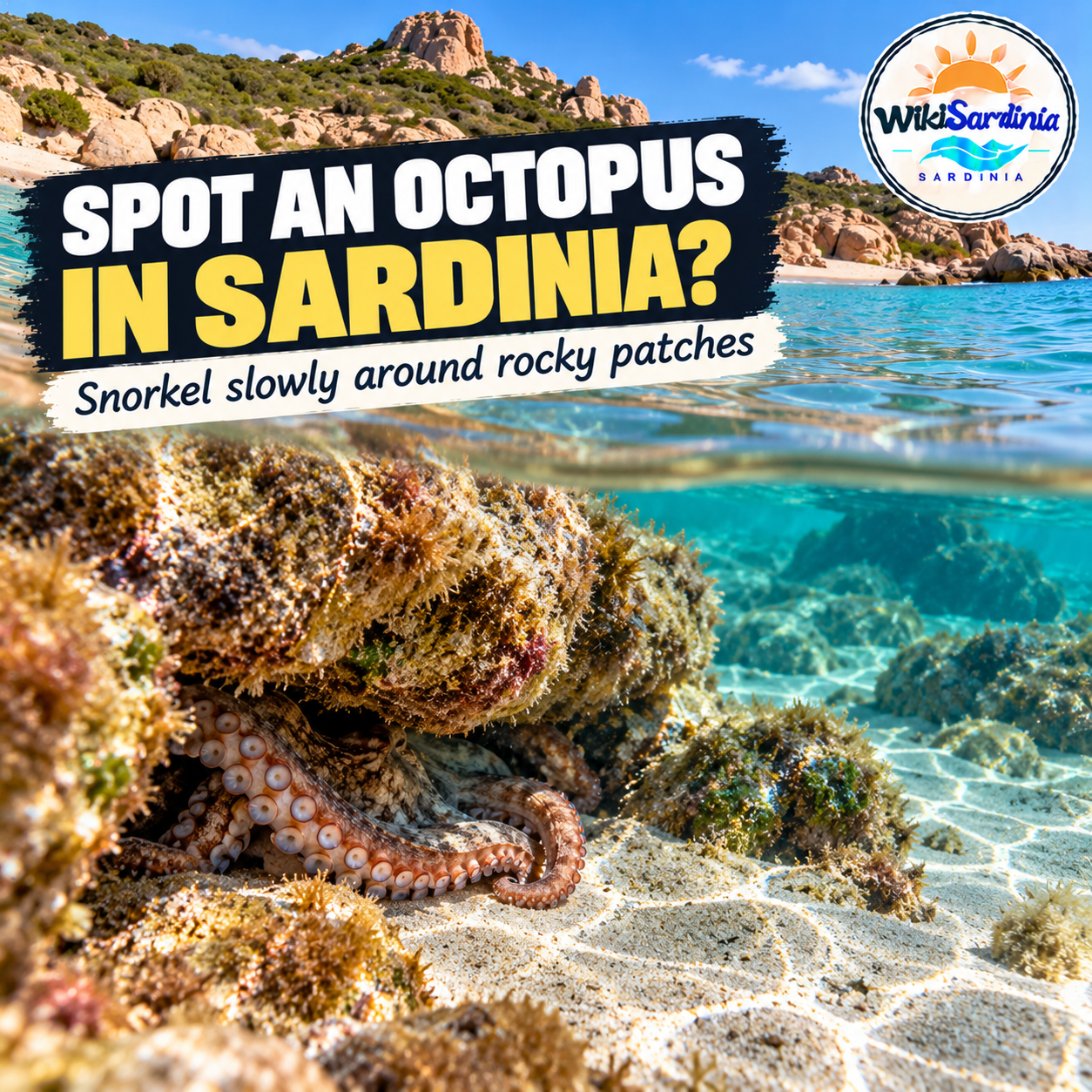
If you hope to spot an octopus while snorkelling in Sardinia, try looking around rocky patches and natural crevices rather than scanning only the open sandy seabed. Cala Cipolla, near Chia in the municipality of Domus de Maria, is a scenic cove with clear water, a mostly sandy seabed and scattered rocks. It is popular with people who enjoy snorkelling and diving, although no beach can guarantee an octopus sighting.
Why consider Cala Cipolla?
Cala Cipolla is framed by two pink-granite headlands, with Mediterranean vegetation and dunes behind its small beach. The water is often transparent, and the seabed remains shallow for a distance from shore, with occasional rocky sections breaking up the sand. Those rock edges and crevices are the kind of places where marine life may shelter, making them interesting to explore slowly with a mask and snorkel.
The official SardegnaTurismo guide describes Cala Cipolla as a clear-water cove appreciated by snorkellers and divers. That supports it as a good place to explore underwater, but it does not mean octopuses are always present or easy to find.
How to look for an octopus
Octopuses are masters of camouflage. Rather than expecting to see eight arms waving in the open, look for subtle clues: a change in the shape or colour of a rock, a rounded mantle tucked into a crevice, or an arm extending from a sheltered hole. Move slowly and allow your eyes time to adjust to the underwater scene.
- Scan rocky edges: look from a comfortable distance around natural crevices and the borders between sand and rock.
- Pause and observe: sudden movements and splashing can scare wildlife away.
- Choose good visibility: calm water and clear light make it easier to see the seabed.
- Bring suitable equipment: use a well-fitting mask and snorkel, and fins only if you are confident using them safely.
Never lift rocks or touch marine life
Do not turn over stones, pull an octopus from a hole, touch it for a photograph or feed it. Rocks and crevices provide shelter for many small animals, and disturbing them can cause harm. If you spot an octopus, keep a respectful distance, avoid blocking its escape route and take a photograph without chasing it.
When is the best time to snorkel?
Clear, calm conditions are more important than a particular hour or month. Morning can offer pleasant light and sometimes less surface activity, but underwater visibility changes with wind, waves and recent weather. Check the local marine forecast and avoid entering the water when waves or currents make the cove unsafe.
Getting to Cala Cipolla
Cala Cipolla is on the Chia coast in southern Sardinia. From the main road, follow the signs towards Chia’s beaches and use the designated parking area; the final approach is on foot. The official regional tourism information notes that the car park is around 400 metres from the beach, so bring water and footwear for the walk.
Read the official SardegnaTurismo guide to Cala Cipolla for the setting and access details. Local conditions, parking arrangements and beach services can change, so check current information before travelling.
A little patience is the real secret
Cala Cipolla is a lovely place to explore Sardinia’s clear coastal waters, but spotting an octopus depends on luck, conditions and the animals’ natural behaviour. Snorkel slowly, watch the rocky edges and leave every stone in place. The best encounter is one in which the octopus remains undisturbed—and you get to enjoy a glimpse of a remarkable wild animal.