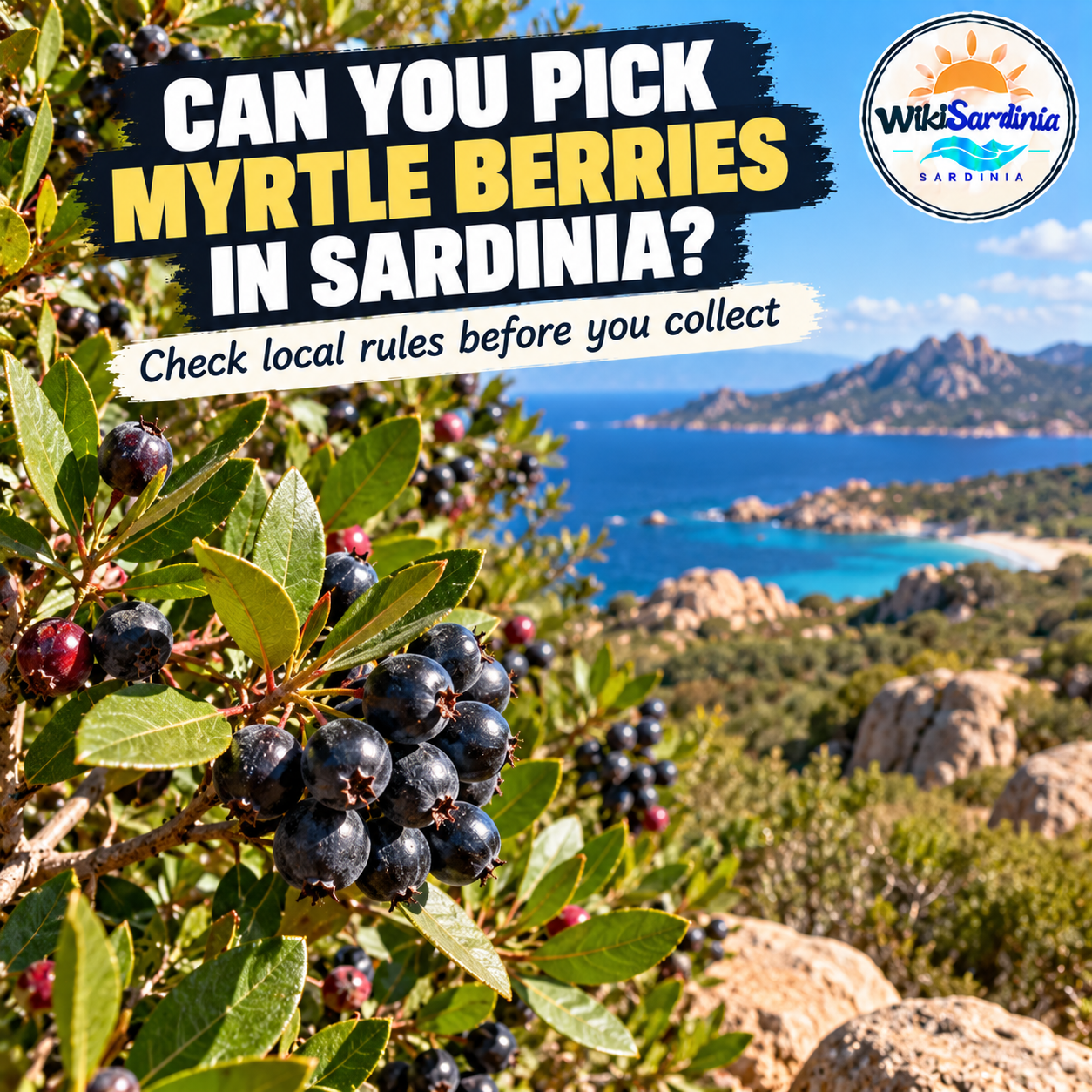
Myrtle berries (bacche di mirto) are closely linked to Sardinian food culture, especially the island’s famous myrtle liqueur. But if you spot ripe berries on a wild shrub, don’t assume you can automatically pick them—or that a universal one-kilogram limit applies across Sardinia. The rules can depend on the location, land ownership, protected-area status and local ordinances.
Is picking myrtle berries legal?
There is no safe basis for treating “up to 1 kg per person” as blanket permission to collect myrtle berries anywhere on the island. Some online summaries mention a one-kilogram daily limit for wild berries, but the cited Sardinian rule concerns blueberries (mirtilli), not myrtle (mirto). Do not apply a limit for one plant to another without checking the relevant legal text.
Local rules can also change. For example, the Municipality of Noragugume published a municipal ordinance in February 2026 regulating the collection of wild herbs, mushrooms and wild fruits, citing Sardinia’s Regional Law 4/2025. This is a reminder to check the municipality where you plan to collect rather than relying on a general social-media claim.
What should you check before picking?
- Local municipal rules: check the municipality’s current notices or ask the local police or municipal office whether myrtle collection is allowed and whether a limit or season applies.
- Land ownership: do not enter private land or collect from someone’s property without permission.
- Protected areas: national and regional parks, nature reserves and other protected sites may prohibit or restrict collecting natural materials.
- Temporary restrictions: drought, fire risk, conservation measures or a local ordinance may affect access and collection.
- Commercial collection: rules for collecting berries to sell or process commercially may differ from casual personal use.
When are myrtle berries ripe?
Myrtle berries usually ripen in autumn, with timing varying according to weather, altitude and local conditions. Ripe berries are generally dark blue-purple to almost black. If you are unsure about identification, do not harvest or eat the fruit. Collect only from clean locations away from busy roads and areas that may have been treated with chemicals.
How to collect responsibly
If collection is permitted at your chosen site, take only the amount allowed by the applicable rules, avoid damaging branches and leave plenty of fruit for wildlife and natural regeneration. Do not use rakes or methods that strip shrubs, and respect signs, barriers and instructions from land managers. If the rules are unclear, the safest option is to leave the berries on the plant and buy mirto or berries from a local producer.
Can you make mirto liqueur from wild berries?
Myrtle liqueur is a well-known Sardinian tradition, and many families have their own recipes. However, a tradition of making mirto at home does not itself establish a right to harvest wild berries at any location. Confirm collection rules first, and make sure the berries are correctly identified and suitable for food use.
The practical answer
You may be able to collect myrtle berries for personal use in some places, but do not assume it is legal everywhere or that a one-kilogram daily limit applies. Check the current rules for the exact municipality and site, obtain permission where needed, and follow any restrictions for protected areas. The best foraging trip is one that respects both Sardinia’s traditions and its natural landscape.
Useful starting points: Comune di Noragugume — 2026 ordinance on wild plant and fruit collection; Regione Autonoma della Sardegna — forest and woodland rules. Always check for newer municipal measures that apply to the specific place you plan to visit.