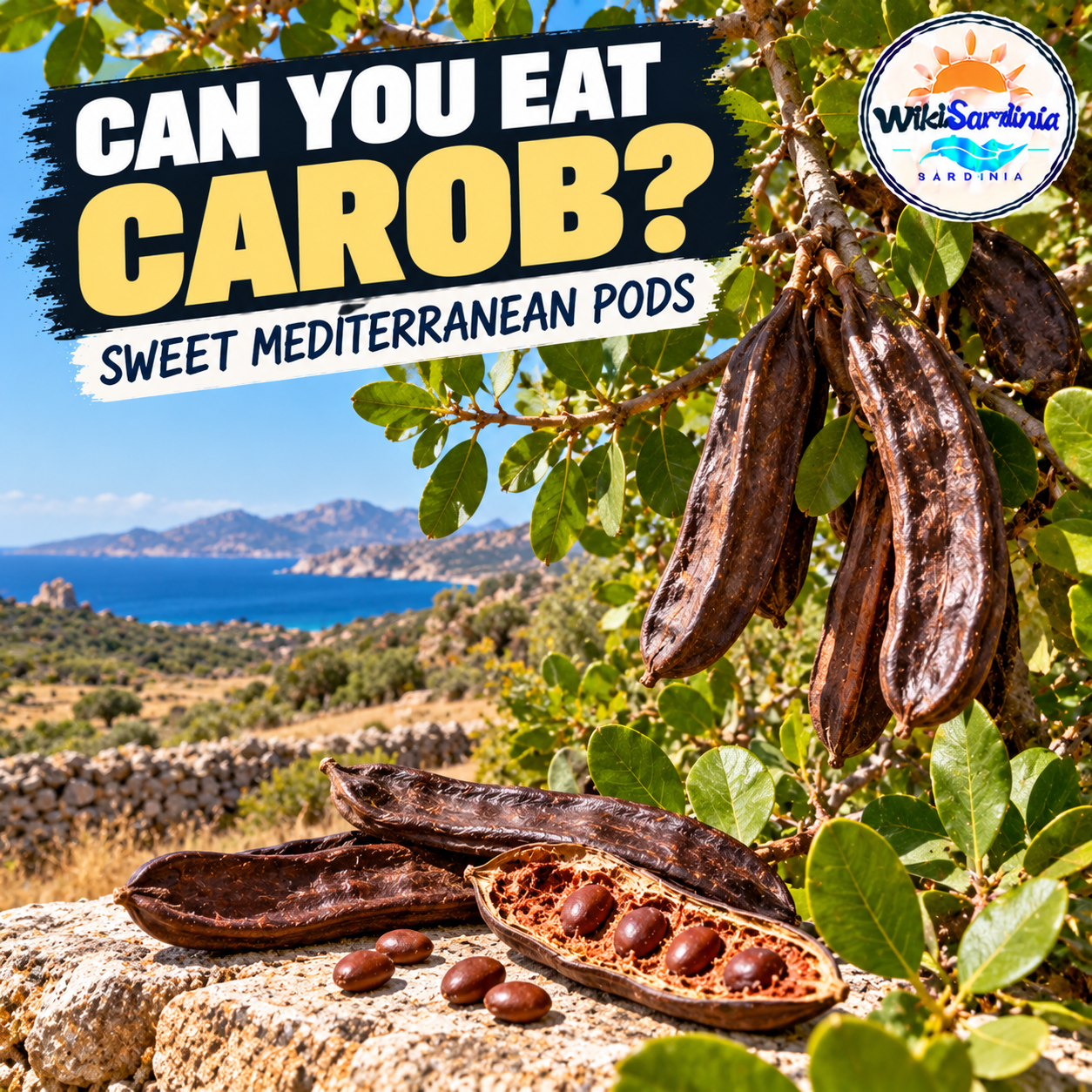
Yes—ripe carob pods are edible straight from the tree, and you may come across carob trees in Sardinia’s Mediterranean countryside and gardens. The long, dark-brown pods have a naturally sweet pulp with a flavour often compared to caramel, malt or mild cocoa. They are not exactly like chocolate, but dried and roasted carob is commonly ground into a cocoa substitute.
How to recognise a ripe carob pod
Carob pods develop over many months. When ripe, they are usually dark brown, firm and leathery, with a slightly wrinkled surface. The pulp is sweet and chewy, and the pod contains several hard, glossy seeds. Green or immature pods can taste harsh and strongly astringent, so they are not the best choice for eating.
What does carob taste like?
The pulp is naturally rich in sugars, which gives ripe pods their sweetness. Depending on the tree and growing conditions, the flavour may remind you of caramel, toasted malt or a gentle cocoa note. Carob is naturally low in fat and contains dietary fibre; its taste and composition vary between varieties and growing conditions.
Carob powder is widely used in baking, drinks and sweets as an alternative to cocoa. Unlike cocoa, carob does not naturally contain caffeine or theobromine.
Can you eat the whole pod?
The sweet pulp is the part usually enjoyed or processed. The seeds are very hard and are not pleasant to chew, so do not bite down on them. For cooking, pods are often dried, broken and processed to separate the seeds from the pulp.
Where can you find carob trees in Sardinia?
Carob (Ceratonia siliqua) grows in warm Mediterranean climates and may be found in coastal and lowland parts of Sardinia, in gardens, farmland and uncultivated areas. Not every tree bears fruit, and the timing of ripening varies with local weather and the tree itself.
Pick responsibly and check the tree
- Be certain of the identification: do not eat a pod unless you are confident it is carob.
- Choose ripe fruit: dark-brown mature pods are generally sweeter than green ones.
- Avoid contaminated locations: do not collect from busy roadsides or trees that may have been treated with chemicals.
- Respect ownership: ask permission before picking from private land and follow any local restrictions.
- Wash and inspect: discard pods that are mouldy, damaged or contaminated.
A traditional Mediterranean food
Carob has been used across Mediterranean food traditions for generations. Its sweet pulp can be eaten, dried or turned into flour and syrup, while the seeds have other food-industry uses. If you find a carob tree in Sardinia, a fully ripe pod can be a simple taste of the Mediterranean landscape—just make sure the fruit is correctly identified and safe to collect.
Further reading: FAO — Carob; Review of carob’s composition and food uses.