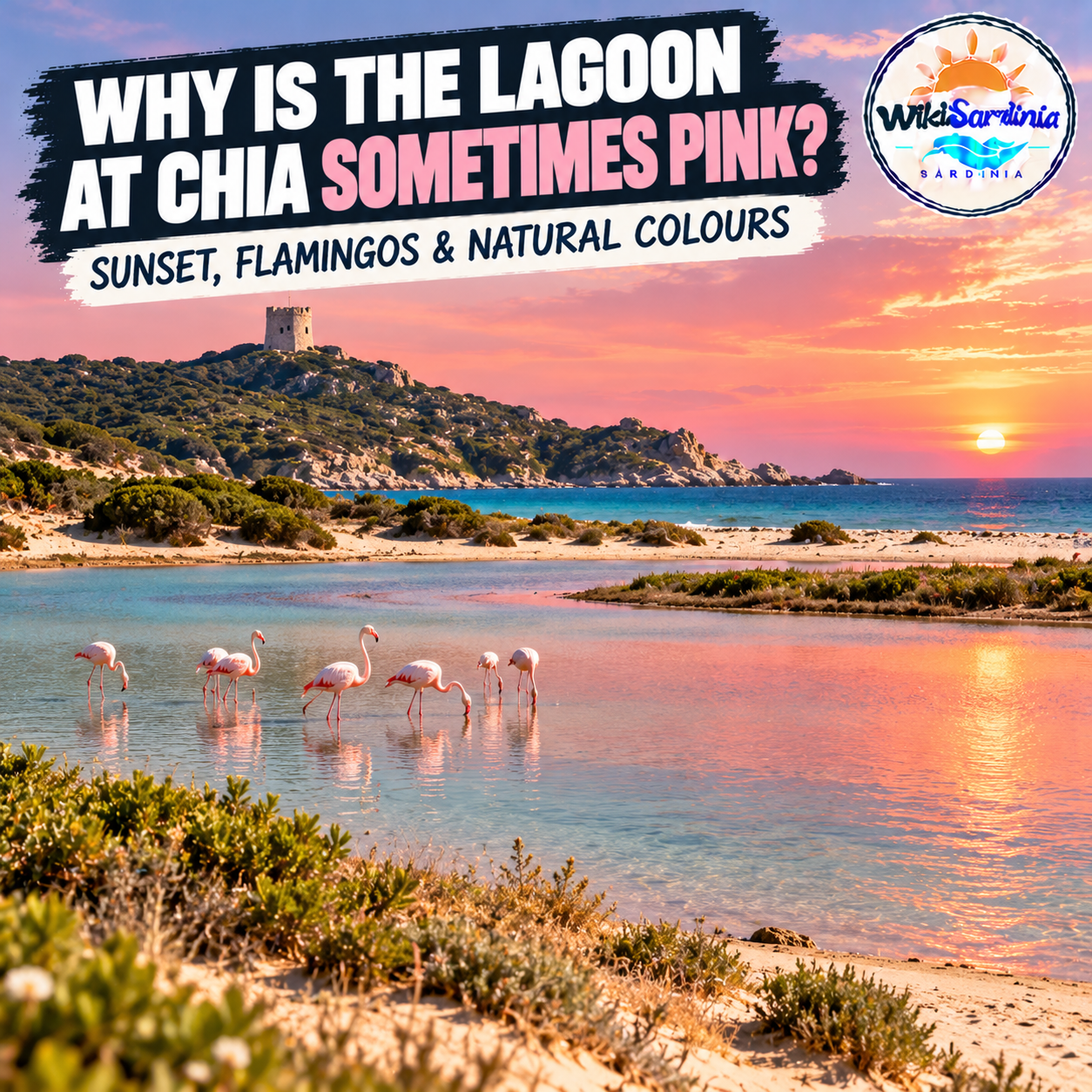
Behind Su Giudeu beach at Chia, in southern Sardinia, a shallow lagoon sits just beyond the dunes. On some evenings the water can take on pink, peach or rose-gold tones, creating a striking contrast with the blue sea and pale sand. The effect is not necessarily a sign that the lagoon itself has changed colour: sunset light reflecting on shallow water, together with the presence of pink flamingos, can help create the impression.
Does the lagoon really turn pink?
Sometimes the water’s appearance changes with the angle of the sun, cloud cover, depth and the colour of the surrounding landscape. At sunset, warmer light can reflect across the surface and tint the lagoon pink or orange. Shallow water can also reveal the colour of the sandy or muddy bottom, while ripples break the reflections into shifting patches.
The official Italian tourism portal describes the small lagoon behind Su Giudeu as a place where visitors can spot pink flamingos. It also identifies the nearby wetlands around S’Acqua Durci and Stangioni de su Sali as habitats for flamingos and other waterbirds. These are real natural features of the Chia coast, not artificial attractions.
Do flamingos make the water pink?
Flamingos do not normally turn a lagoon pink simply by being there. Their own pink colouring comes from pigments in their diet, while the colour of the water is a separate matter. When flamingos stand in shallow water at golden hour, their bodies and reflections can add small pink accents to a scene already coloured by the sky and the landscape.
Could bacteria be responsible?
Some saline lakes and lagoons around the world can develop pink or reddish tones because of microorganisms, including certain algae and salt-loving microbes. However, we could not verify reliable evidence that bacteria are the specific cause of the pink appearance at Chia’s lagoon. It would therefore be misleading to present “pink bacteria” as the established explanation for this location.
If water shows an unusual, persistent colour change, a strong smell, foam or dead fish, do not assume it is just a natural sunset effect. Follow local notices and ask the relevant environmental authorities for information before entering the water.
When is the best time to see the pink tones?
Try visiting in the late afternoon and staying through sunset, when warm light can colour the lagoon’s surface. The effect depends on the weather and viewing angle, so it will not appear the same every day. Bring binoculars if you want to watch flamingos without approaching or disturbing them.
Where to look around Chia
The lagoon behind Su Giudeu is the most relevant place to start. The nearby wetland system also includes Stangioni de su Sali and the smaller pond behind S’Acqua Durci. These areas support a range of birdlife and are best enjoyed quietly from public paths or permitted viewpoints. Avoid entering sensitive wetland habitat or approaching birds for a closer photograph.
For local context, read the official Italia.it guide to Su Giudeu and SardegnaTurismo’s guide to S’Acqua Durci.
A beautiful colour, with more than one influence
When Chia’s lagoon looks pink, the safest explanation is to start with the light, shallow water and the scene around it—including the flamingos. Microorganisms can colour some waters elsewhere, but a bacteria-based explanation for Chia has not been established by the sources we checked. Visit near sunset, observe wildlife from a distance and enjoy the changing colours without assuming that every pink reflection has the same cause.