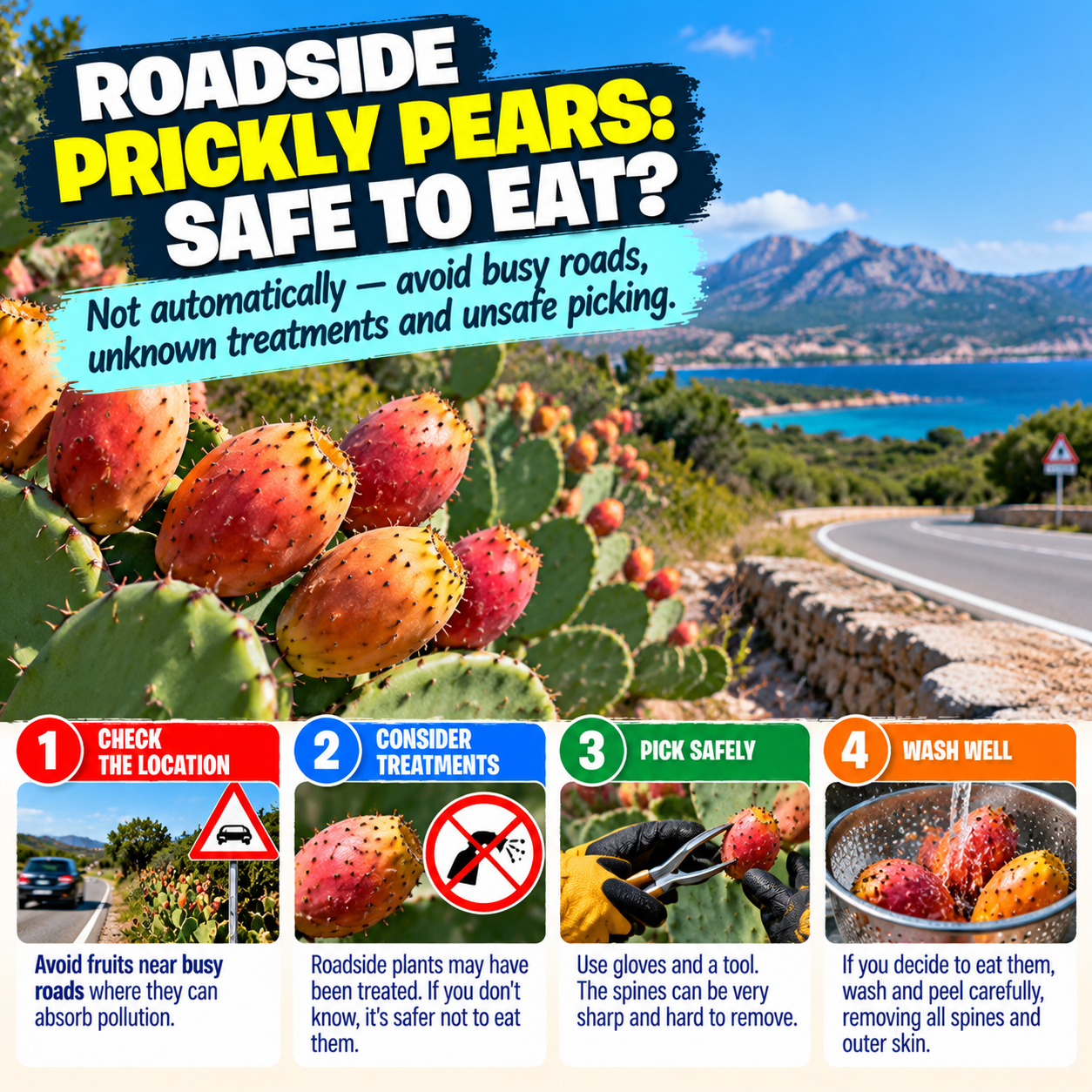
Prickly pear cactus grows across Sardinia, and its colourful fruit is a familiar late-summer treat. You may spot it on roadside banks, field boundaries and rural paths. But you should not assume roadside prickly pears are safe just because they look ripe or because you believe they have not been treated. The location, possible pesticide use, traffic exposure and permission to pick all matter.
1. Avoid fruit beside busy roads
Fruit growing very close to heavy traffic may be exposed to road dust and other pollutants. Choose fruit from a known, clean location away from busy roads, industrial areas and other potential contamination sources. Washing can remove some surface dirt, but it cannot guarantee that all contaminants have been removed.
2. Do not assume the plant has never been treated
A roadside plant may belong to a nearby property or agricultural plot, and you may not know whether it has been sprayed or otherwise treated. If you cannot establish the location’s history, the safer choice is not to eat the fruit. Ask the landowner or choose fruit from a trusted producer who can explain how it was grown.
3. Check that picking is permitted
Not every plant growing beside a public road is free for anyone to harvest. The cactus may be on private land, within a managed property or in an area subject to local restrictions. Get permission where needed, and do not stop or park in a way that puts you or other road users at risk.
4. Handle prickly pears carefully
The fruit and pads can carry tiny hair-like spines called glochids, which can lodge in skin and cause irritation. Do not handle the fruit with bare hands. Traditional harvesting uses suitable tools and protective equipment, and the fruit must be carefully cleaned of its spines before it is peeled or eaten. If you have never handled prickly pears before, buying prepared fruit from a reliable seller is the safer option.
5. Wash and prepare the fruit properly
Once the fruit has been harvested legally from a suitable location and its spines have been safely removed, wash it with clean running water and peel it without transferring spines from the skin to the edible flesh. Keep the work surface and utensils clean. Do not eat fruit that is mouldy, damaged, fermented or otherwise spoiled.
Where is a better place to get Sardinian prickly pears?
Look for fruit at a greengrocer, market or farm shop where the seller can explain its origin. You can still enjoy this classic Sardinian fruit without guessing whether a roadside plant has been treated or exposed to traffic pollution. If you want to harvest it yourself, choose a clean location away from busy roads and confirm that picking is allowed.
The simple rule
Yes, prickly pears are edible when properly identified, harvested and prepared—but that does not mean every roadside fruit is safe. Avoid busy roads, do not assume the plants are untreated, get permission before picking and take care with the tiny spines. When the source is uncertain, choose fruit from a trusted seller instead.
Further reading: Italian Ministry of Health — food safety information; Sardegna Agricoltura — regional agricultural information.