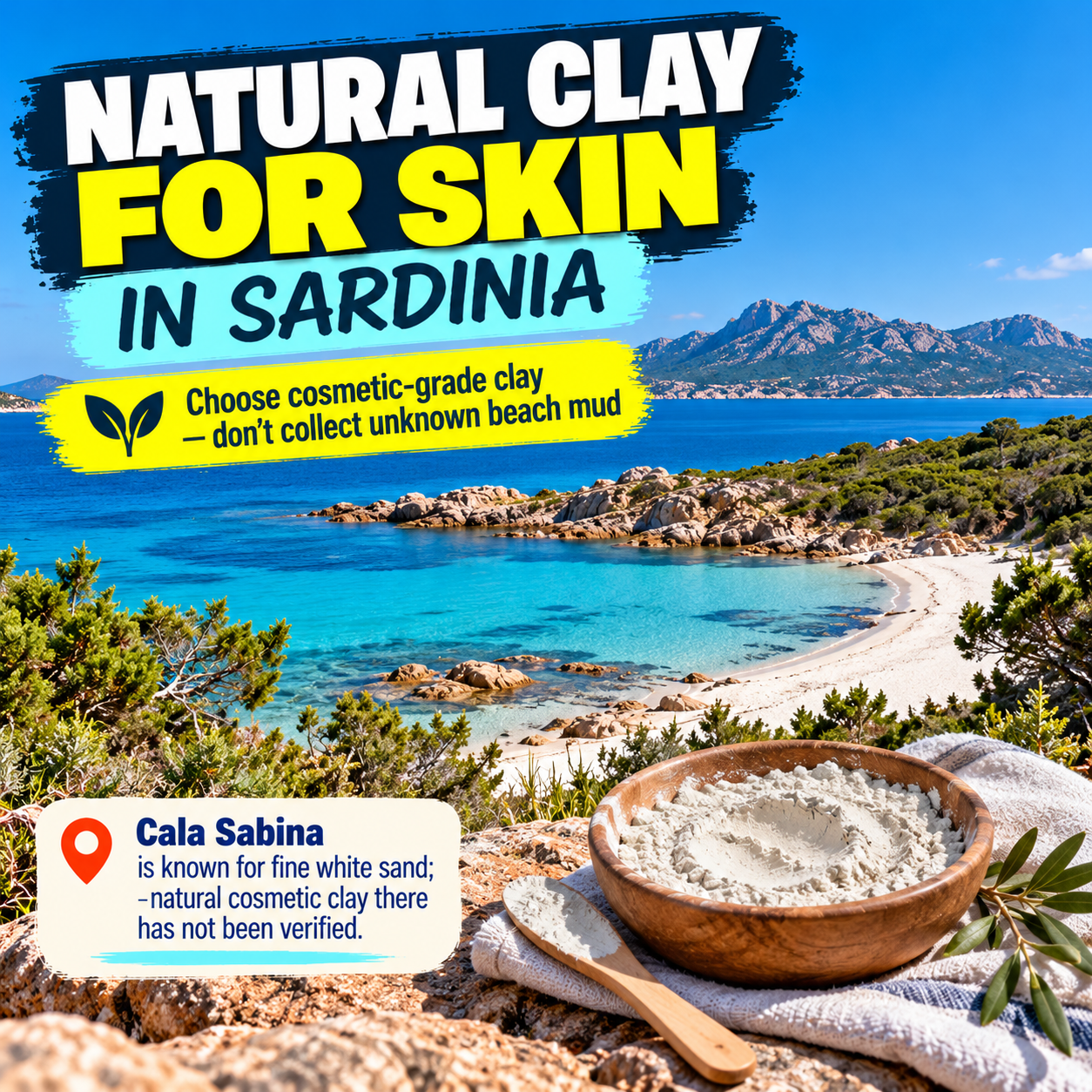
If you are looking for natural clay to use on your skin while visiting Sardinia, the safest approach is to choose a product specifically made for cosmetic use rather than collecting material from a beach. Cala Sabina near Golfo Aranci is known for its fine white sand, but we could not verify claims that it has a natural white-clay or therapeutic-mud deposit suitable for skincare.
Is the white material at Cala Sabina clay?
Official Sardinian tourism information describes Cala Sabina as a beach with fine white sand, surrounded by junipers and Mediterranean scrub. That description does not establish that the beach contains cosmetic-grade clay. White sand, pale sediment and mud can look similar in a photograph, but they are not interchangeable materials and cannot be identified safely by colour alone.
If you visit Cala Sabina, enjoy the beach as a natural landscape rather than treating it as a source of skincare ingredients. Sardinia prohibits removing, possessing or selling sand, pebbles, stones and shells taken from its coastline without the required authorisation.
How to choose clay for a face or body mask
Look for clay sold specifically as a cosmetic ingredient or as a finished skincare product by a reputable manufacturer. The packaging should identify the product, provide a full ingredient list and include instructions and warnings. Avoid unlabeled powders or material collected outdoors, where composition and contamination are unknown.
- Check the label: make sure the product is intended for external cosmetic use and follow the directions.
- Look for a traceable producer: choose a product with clear manufacturer or responsible-person details.
- Do not assume “natural” means risk-free: naturally occurring clays can contain unwanted contaminants, including heavy metals.
- Patch-test cautiously: follow the product instructions and stop using it if irritation occurs.
- Avoid broken or irritated skin: do not apply an unfamiliar clay mixture to damaged skin or close to the eyes.
Can you use mud found on the beach?
It is not a good idea to apply unknown beach mud directly to your face or body. Its mineral composition, microbial content and possible contaminants have not been tested for cosmetic use. A substance that looks smooth or feels pleasant does not prove it is clean or suitable for skin.
Research reviews on medicinal and skincare clays note that potential benefits need to be considered alongside safety risks, including possible exposure to toxic elements. For everyday skincare, a clearly labelled cosmetic product is a more dependable choice than a homemade mixture from an unidentified source.
Where to look in Sardinia
Instead of searching for an unverified natural deposit, ask pharmacies, herbal-product shops or established Sardinian cosmetics makers for a clay mask intended for skincare. Read the label and ask the seller about the product’s origin if locally made cosmetics are important to you. Availability varies by shop, so contact the seller before making a special trip.
A simple rule for beach discoveries
At Cala Sabina, enjoy the fine white sand and clear coastal scenery, but do not assume that pale beach material is cosmetic clay. Leave the beach’s natural materials in place, and use a tested, labelled skincare product if you want to try a clay mask.
Useful sources: SardegnaTurismo — Cala Sabina, Golfo Aranci; Regione Autonoma della Sardegna — rules for protecting beaches; PubMed — review of the benefits and risks of healing and edible clays.