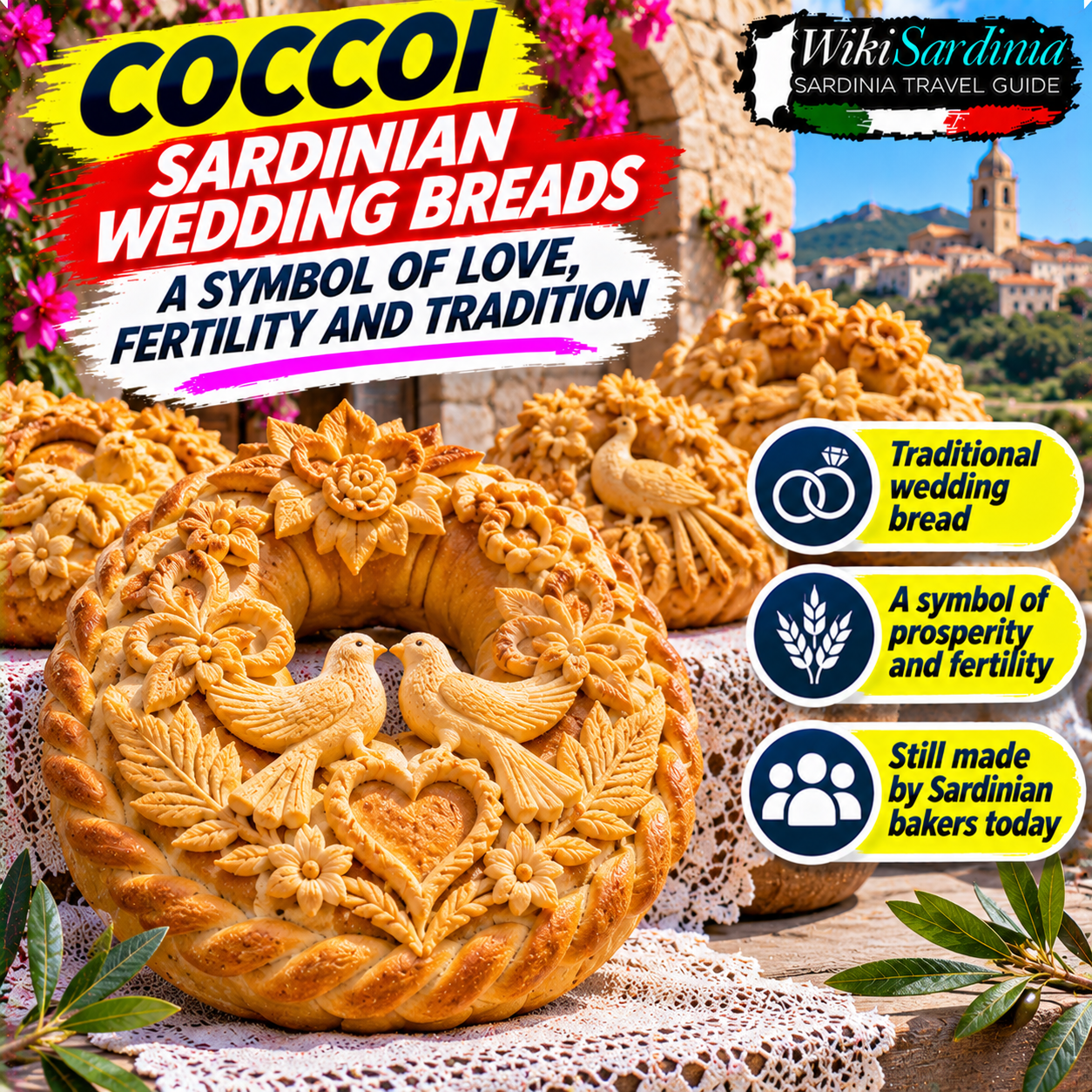
Coccoi is a traditional Sardinian durum wheat semolina bread. Its elaborate ceremonial forms are decorated by hand to mark weddings, religious celebrations and family milestones. Sardinian bakeries preserve this tradition, although not every coccoi loaf is a wedding bread.
Why is bread decorated for weddings?
Bread has long been a central part of Sardinian agricultural and family life. Transforming it into a carefully sculpted ceremonial object gives ordinary food a special role in celebrations. Floral and natural motifs can express wishes for abundance and a happy marriage, although meanings differ between communities and families. Wedding breads may be known as coccoi de is sposus or su pane e sposos, depending on local language and custom.
How are the decorations made?
A relatively firm dough based on durum wheat semolina is kneaded and shaped. Skilled bakers use fingers, scissors and small cutting tools to create relief patterns and pointed edges before baking. The finished bread can have a crisp golden crust and a pale, compact interior. More elaborate ceremonial designs require patience and precision, and are not simply ordinary loaves with decorative icing.
Different breads for different occasions
The official Sardinian tourism guide describes a wide range of decorated breads, including coccois de pitzus, with crested ornamentation and natural shapes, and Easter coccoi cun s'ou, incorporating a boiled egg. It also distinguishes sa cozzula, a crown-shaped wedding bread associated with church ceremonies. Leaf-shaped decoration is another longstanding tradition. These names and forms are not interchangeable everywhere on the island.
Can tourists buy coccoi?
Yes. Ask a traditional bakery or panificio for coccoi di semola. Simpler loaves may be available for everyday eating, while elaborate wedding breads often need to be commissioned. Explain whether you want a loaf to eat, a ceremonial centerpiece or a demonstration of traditional shaping. Ask about lead time, price and storage, rather than assuming every bakery makes elaborate designs daily.
Where to discover Sardinian bread culture
Southern Sardinia and the Campidano are good areas to explore semolina bread traditions. The regional tourism guide highlights bread museums in Borore, Arzachena, Monteleone Roccadoria, Pompu, Sanluri, Siddi and Olmedo. Olmedo is especially interesting for visitors staying near Alghero because of its bread nativity tradition. Check current museum opening hours and workshop availability before traveling. The regional guide to Giba also describes its bread festival, traditionally held in early August; future dates should be confirmed locally.
How does coccoi taste?
Ordinary edible coccoi has a distinctive wheat flavor and firm crust. Enjoy it alongside local cheese, vegetables or traditional meals. Ceremonial pieces may be prepared specifically for display and may become very hard during storage, so ask the baker whether a particular piece is intended for eating. Traditional wheat-based coccoi contains gluten.
Useful Italian phrases
- Avete il coccoi di semola? — Do you have semolina coccoi?
- Fate il pane decorato per gli sposi? — Do you make decorated wedding bread?
- È da mangiare o da esposizione? — Is it for eating or display?
- Bisogna ordinarlo in anticipo? — Does it need to be ordered in advance?
FAQ
Is coccoi sweet?
Ordinary coccoi is a savory bread rather than a wedding cake.
Is every decorated loaf a wedding bread?
No. Decorative traditions also mark Easter, religious festivals and other occasions.
Are the decorations edible?
Decorations made from bread dough are generally edible when freshly baked, but display pieces may be unsuitable for eating. Ask the maker.
Can visitors watch the bread being shaped?
Ask artisan bakers or bread museums about demonstrations or workshops. Availability varies and advance arrangements may be necessary.
Source: SardegnaTurismo, the official regional tourism portal. Individual bakery stock, workshop schedules and prices have not been independently confirmed.