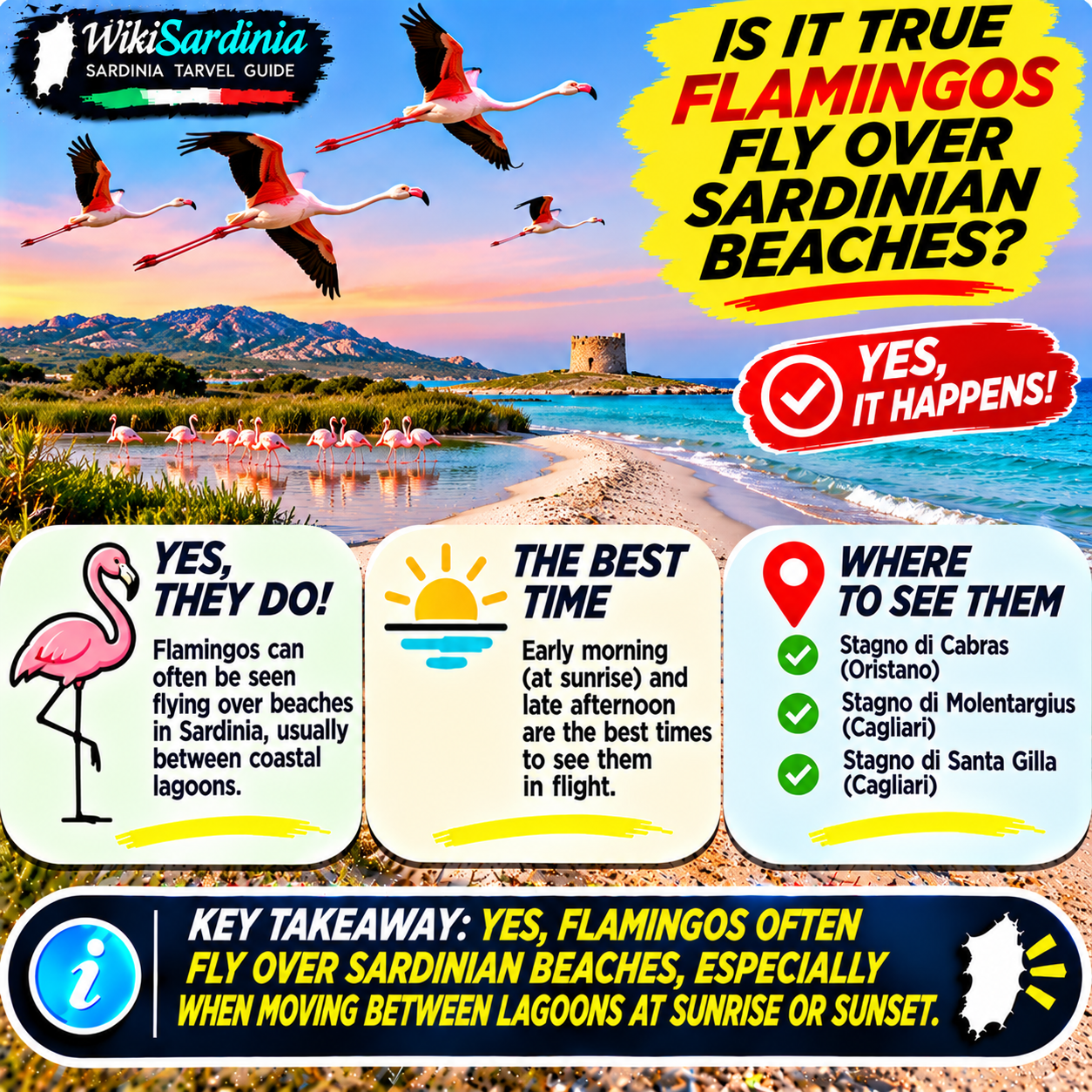
Yes, flamingos really can fly over beaches in Sardinia. The island's coastal wetlands are home to greater flamingos, and these striking pink-and-black birds sometimes cross shorelines, lagoons and nearby stretches of sea while moving between feeding and resting areas. If you happen to be on a beach close to a major wetland, looking up might reward you with an unforgettable sight. But there is no beach where an overhead flock is guaranteed.
Why do flamingos fly along the Sardinian coast?
Greater flamingos (Phoenicopterus roseus) use shallow lagoons and saltwater wetlands to feed, rest and breed. They move between suitable sites as water levels, food availability and disturbance change. Some journeys take them across nearby beaches or coastal waters. Their long necks and legs stretch out in flight, while their wings reveal striking black flight feathers contrasting with pink and pale plumage.
Where are the best areas to look?
Molentargius-Saline, near Cagliari and Quartu Sant'Elena: This protected wetland is one of Sardinia's most famous places for observing flamingos. Established observation areas and authorized paths are preferable to trying to intercept birds from the beach.
Santa Gilla lagoon, near Cagliari: Another important coastal wetland supporting flamingos. Observe from permitted public viewpoints, respect restricted areas and avoid stopping vehicles in unsafe places.
Cabras wetlands, near Oristano: The lagoon landscape around Cabras offers opportunities for birdwatching, depending on season and conditions. The broader Sinis coast combines wetlands and beaches, but a flamingo flight directly over a particular beach remains a matter of chance.
Is sunrise the best time to see them flying?
Early morning and late afternoon can be rewarding because light is softer and some birds may be moving between feeding and resting sites. Yet flamingos can fly at other times, including at night, and their movements do not follow a fixed daily tourist timetable. Weather, tides, water conditions and local disturbance all matter. Arriving at sunrise improves the photographic atmosphere, not the certainty of a sighting.
Will you see flamingos on the sand with swimmers?
Usually not. Flamingos favor shallow, productive wetlands rather than crowded recreational beaches. You are more likely to spot them feeding or standing in a lagoon, or flying in the distance, than walking among beach umbrellas. Never approach a resting flock to make it take off for a photograph.
How to watch them responsibly
Bring binoculars or a camera with a telephoto lens, stay on authorized paths and use designated observation points. Respect nesting-area closures, signs and reserve rules. Do not use drones near birds without explicit permission and compliance with aviation and protected-area regulations. Keep dogs under control wherever they are permitted. If birds become agitated or move away because of your presence, increase your distance.
What about flamingo season in Sardinia?
Flamingos can be observed in Sardinia during much of the year, with numbers and behavior changing seasonally. Breeding is especially sensitive to disturbance, so protected sites may restrict access at certain times. For current conditions, check the official information published by the relevant park or reserve rather than relying on old social-media sightings.
Frequently asked questions
Are Sardinian flamingos wild?
Yes. The flamingos using Sardinia's wetlands are free-living wild birds, not animals released for tourists.
Can flamingos fly over the sea?
Yes. Greater flamingos are strong fliers and may cross coastal waters between wetlands.
Do they always fly at dawn?
No. Dawn and dusk can be pleasant viewing times, but flamingos also move at other hours.
Can I see them from Poetto Beach?
Poetto is close to the Molentargius wetland system, so seeing flamingos in the broader area is possible. An overhead flight from any specific spot on the beach is not guaranteed; designated wetland viewpoints offer a more purposeful birdwatching experience.
Is it safe to get close for a photo?
Keep your distance. Use binoculars or a zoom lens rather than approaching, feeding or disturbing the birds.
The takeaway
Flamingos really do fly across Sardinia's coastal landscapes, and sometimes over beaches. The most sensible places to plan a wildlife outing are the wetlands around Molentargius, Santa Gilla and Cabras. Visit responsibly, enjoy the sunrise if you can, and treat a flock overhead as a beautiful bonus rather than a promised attraction.
Planning sources: Parco Naturale Regionale Molentargius-Saline and Sardegna Turismo. Consult local protected-area notices before visiting.