Driving to Genoa, Livorno or Civitavecchia to catch a ferry to Sardinia? Italian motorway toll booths can seem confusing to first-time visitors, especially if you are travelling in a rental car. The good news is that cash is not generally required: major credit cards are accepted in designated motorway lanes.
Can I pay Italian highway tolls with a US card?
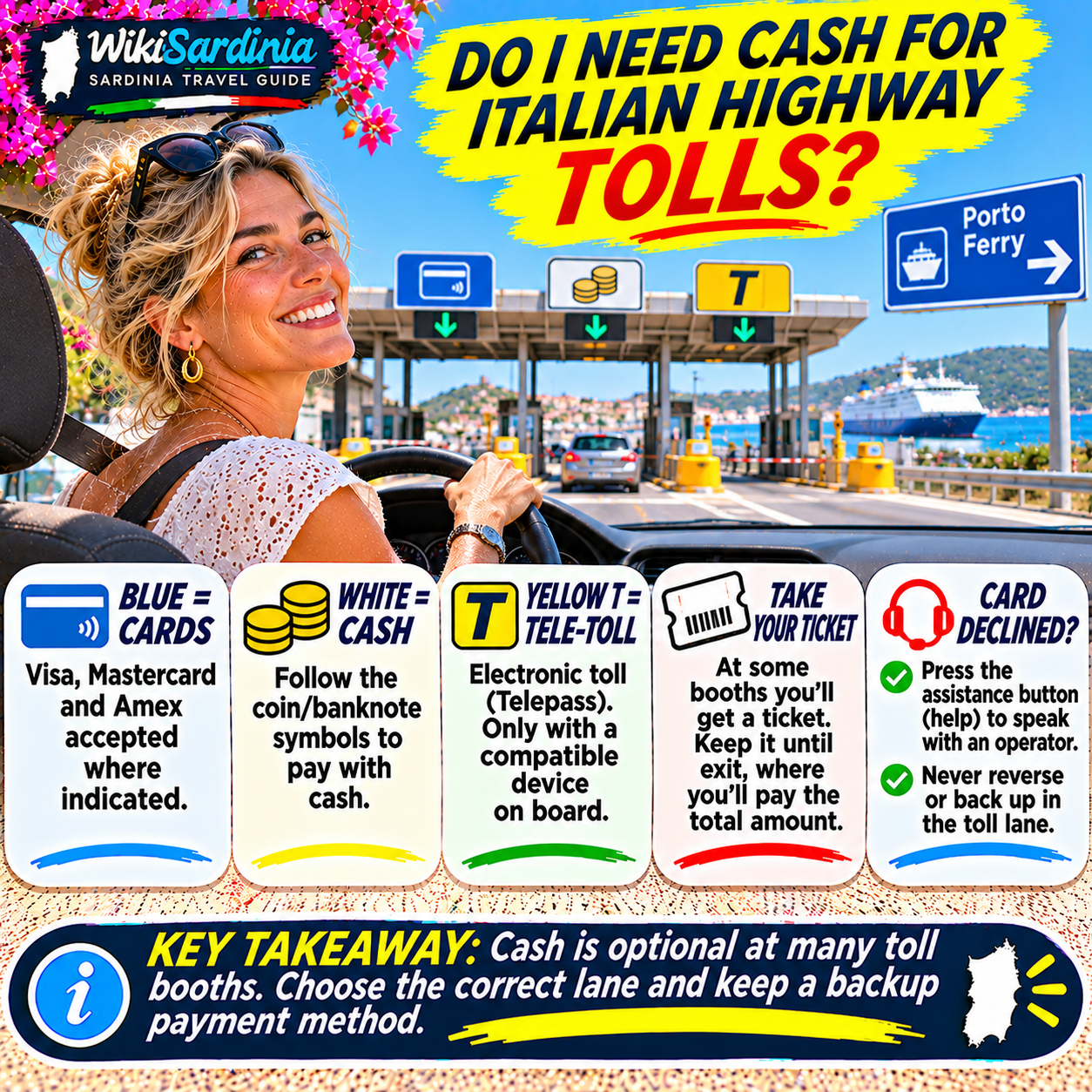
On the Autostrade per l'Italia network, card-payment lanes accept Visa, Mastercard and American Express, among other supported payment cards. However, an individual card may fail because of bank restrictions or processing problems. Keep a second payment method, and check the payment symbols before entering a lane. The official operator explains accepted cards at Autostrade per l'Italia.
What do blue, white and yellow toll lanes mean?
Blue signs with card symbols indicate card-payment lanes. White signs indicate cash payment, sometimes at a staffed booth and sometimes at a self-service machine. Some white lanes also accept cards where clearly indicated. Yellow T signs mark lanes for compatible electronic toll devices. Some blue card lanes also display a T and allow both types of payment. Read the actual symbols above the booth: not every lane accepts every method.
Do I need Telepass?
No. Telepass is one of the electronic toll systems available in Italy, but ordinary travelers can pay by card or cash instead. Never enter a dedicated electronic-toll lane unless your car has a compatible active device. If you rent a car, ask whether electronic tolling is included and whether extra rental-company fees apply.
How does the ticket system work?
On many Italian motorways, you take a ticket at the entrance and pay at the exit. Keep the ticket safe and insert it when requested at the exit booth. Other roads use fixed tolls or different collection systems, so follow the local signs. The toll depends on the route and vehicle class, not simply on which ferry port you are visiting.
What if the card machine rejects my payment?
Stay in the vehicle and press the assistance button. Never reverse or walk across a toll lane. You may receive an unpaid-toll notice with instructions for later payment. On the Autostrade per l'Italia network, the operator says such notices can generally be settled within 15 days without additional assessment charges. Check the specific operator and notice; the rule should not be generalized to every motorway. See the official unpaid-toll FAQ.
Do rental-car prices include tolls?
Usually tolls are separate unless the contract says otherwise. Some rental cars include a toll-payment device that may carry extra service charges. Review the agreement before driving into an electronic lane. Keep toll receipts where possible, particularly if you need to reconcile travel expenses.
How much cash should I carry?
There is no mandatory cash amount for tolls. A small euro cash reserve can be useful as a backup, but a working accepted card is normally sufficient in designated card lanes. If you need to pay with banknotes or coins, choose a lane marked for cash rather than an electronic-only lane.
What about getting to the ferry on time?
Allow time for traffic, toll queues and the ferry operator's vehicle check-in deadline. Your route may include toll and toll-free roads; compare travel times before departing. Ferry boarding procedures are separate from motorway toll payments, so keep your booking reference and travel documents handy.
Useful Italian phrases
“Posso pagare con carta?” means “Can I pay by card?” “Dove si paga il pedaggio?” means “Where do I pay the toll?” “La carta non funziona” means “The card isn't working.” “Mi serve assistenza” means “I need assistance.”
The WikiSardinia takeaway
You generally do not need cash for motorway tolls while driving to a Sardinia ferry port. Use blue lanes displaying accepted card symbols, white lanes for cash and yellow electronic-toll lanes only if equipped. Keep a backup payment method and enough travel time to reach your ferry check-in comfortably.