Feeling unwell during a holiday in Sardinia can be stressful, especially when you are far from home and unfamiliar with the Italian healthcare system. Fortunately, there are public services for non-resident visitors, including seasonal Guardia Medica Turistica clinics, ordinary out-of-hours medical services, pharmacies and hospital emergency departments. The right option depends on how urgent the problem is, where you are staying, the season and your insurance status.
What should I do first if I need medical help?
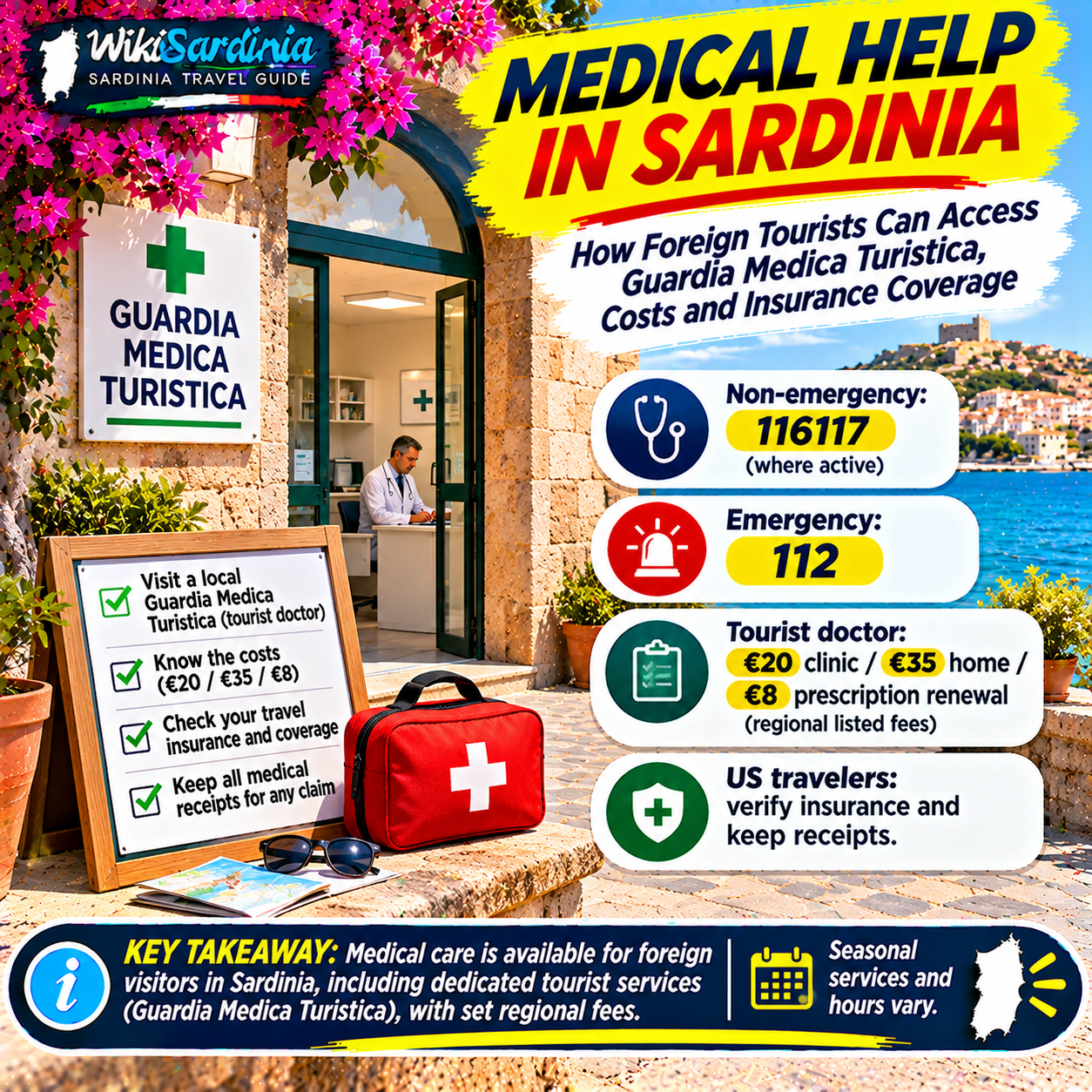
For a serious or potentially life-threatening emergency, call 112 immediately. For a non-emergency problem that needs medical advice, the free 116117 service can direct callers to the appropriate local service where it has been activated. In Sardinia, implementation has expanded by telephone district, so confirm coverage for your location rather than assuming every area uses the same routing. The 116117 line is not a substitute for emergency services.
What is Guardia Medica Turistica?
Guardia Medica Turistica is a public seasonal medical service designed primarily for visitors and other people who are temporarily staying outside their usual area of residence. Depending on the clinic and its arrangements, doctors can assess non-emergency conditions, issue prescriptions, request further tests or specialist assessment, and provide certain medical certificates. Home visits may be possible when clinically appropriate. It is not an emergency department and cannot provide every specialist treatment or diagnostic service.
Where can I find a tourist doctor in Sardinia?
First check the website of the local Azienda Sanitaria Locale (ASL), ask your accommodation provider, or call 116117 in an activated district. Official ASL pages publish seasonal locations, dates and hours. For example, the ASL Gallura tourist medical service lists sites in places such as Olbia, Palau, San Teodoro and Santa Teresa Gallura for the 2026 season. ASL Sassari announced seasonal services in Stintino and Castelsardo in June 2026, with other locations planned. These are examples, not a promise that each clinic is open today or in a future season.
Are tourist clinics open 24 hours a day?
Not necessarily. Hours and operating periods vary significantly by ASL and clinic. In the Gallura area, published 2026 tourist-clinic hours included 10 a.m. to 5 p.m. daily at several locations; the Sassari area published different schedules for certain clinics. Older general tourism pages describing 24-hour coverage should not override a newer clinic-specific notice. Check the current opening schedule before traveling to a clinic, especially outside the summer season.
What if the tourist clinic is closed?
Ask 116117, where active, about ordinary Continuità Assistenziale (also commonly called Guardia Medica), which provides out-of-hours care according to local arrangements. You may also be directed to a general practitioner for an occasional visit or another appropriate service. If symptoms are serious, worsening rapidly or potentially dangerous, use emergency care rather than waiting for a seasonal clinic to open.
How much does Guardia Medica Turistica cost?
Published Sardinian regional tourist-service fees are €20 for an outpatient consultation, €35 for a home visit and €8 for certain prescription renewals or brief follow-up services. These figures appear in the ASL Cagliari's 2026 notice and in the regional tourist medical service information. They are not a universal final price for every medical encounter. Other healthcare services, investigations, medicines or private consultations can have separate charges. Confirm the fee, payment method and receipt arrangements before or during the visit when possible.
Are medical visits free for EU visitors with an EHIC?
The European Health Insurance Card (EHIC, called TEAM in Italy) generally entitles eligible visitors to medically necessary care from public or participating providers under the conditions applicable to people insured in Italy. It does not automatically make every service free or cover private treatment. Special arrangements for tourist medical services may involve an upfront charge and subsequent reimbursement through the appropriate healthcare system. Present your EHIC or valid replacement certificate and identity document, ask whether the specific service is covered directly, and retain payment receipts. See the Italian Ministry of Health's EHIC guidance.
What do American and other non-EU tourists pay?
Visitors from the United States should not assume that US health insurance, Medicare or an ordinary credit-card benefit will pay an Italian clinic directly. Under the Italian Ministry of Health's guidance, short-term non-EU tourists may receive healthcare services but are generally responsible for applicable charges unless an agreement or insurance arrangement covers them. Ask your travel insurer whether it provides direct billing or requires you to pay first and submit a claim. The Ministry's guidance for visitors from non-EU countries explains the general position. Nationality alone does not establish all rights: specific reciprocal arrangements or other eligibility rules may apply.
Will travel insurance reimburse the visit?
Possibly, but reimbursement depends on your policy. Before seeking non-emergency treatment, if practical, call the insurer's assistance number and ask whether the clinic is covered, whether preauthorization is needed, whether there is a deductible, and whether the provider can bill the insurer directly. Keep the medical report, diagnosis where supplied, original itemized invoice or receipt, proof of payment and prescriptions. Ask how to submit documents and whether translation is necessary. Do not delay emergency care while waiting for insurer approval.
What documents should I bring?
Bring your passport or other valid identity document, EHIC if applicable, travel insurance details and emergency assistance number, a list of current medicines and allergies, and any relevant medical information. If you are taking prescription medicines, bring their generic ingredient names as brand names may differ in Italy. Carry a payment card or another accepted means of payment, but ask the specific clinic what it accepts.
Can I get a prescription or medical certificate?
A tourist doctor may prescribe medicines, recommend diagnostic tests or issue certain certificates when medically appropriate. This does not mean every overseas prescription can be refilled automatically or that all medications are available under the same name. Bring packaging or documentation and ask a pharmacist or clinician about an equivalent. If you need a certificate for an airline, insurer or employer, explain the required purpose and check whether the doctor can issue the appropriate document.
What if I do not speak Italian?
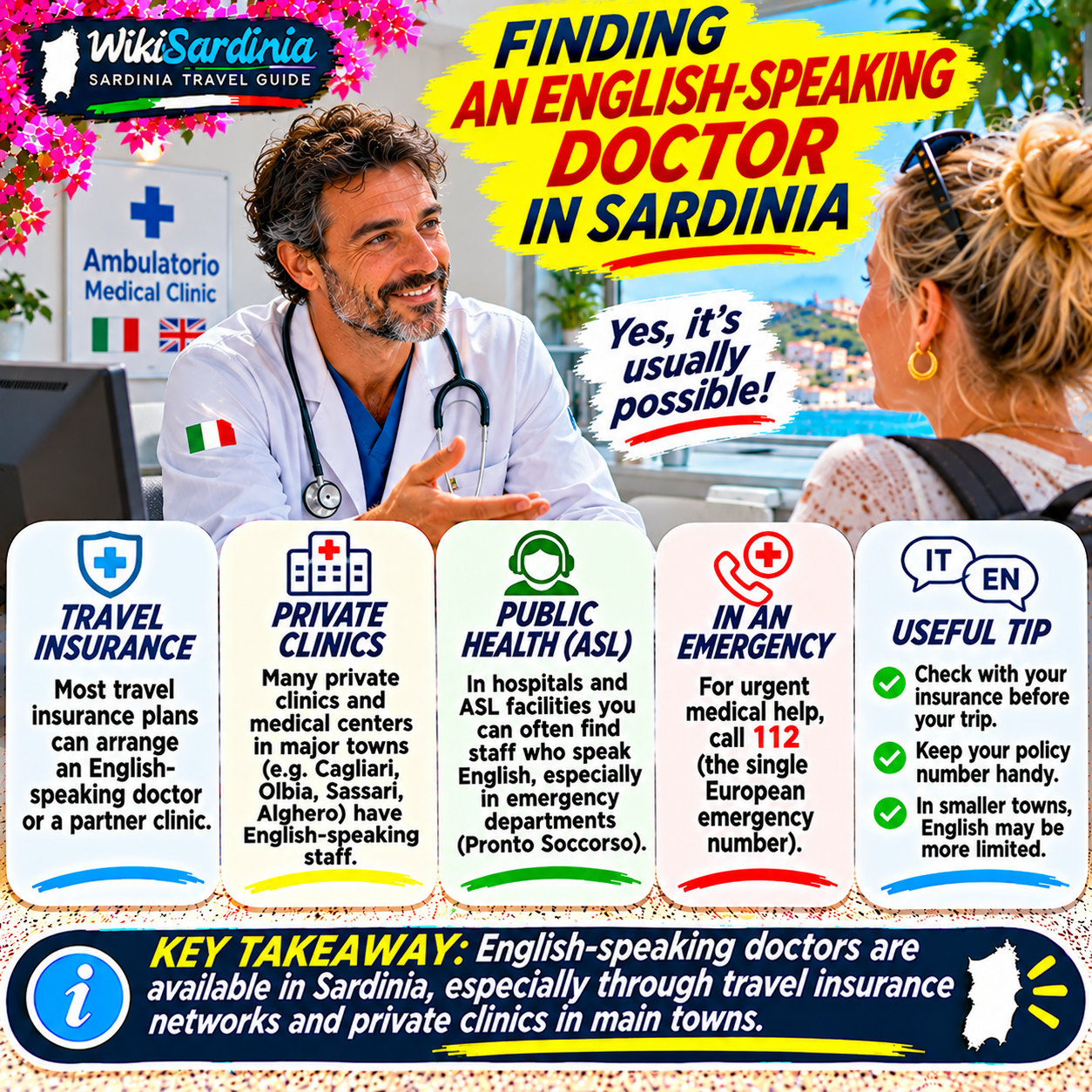
The national Ministry of Health information on 116117 says Italian- and English-speaking operators answer calls. That does not guarantee an English-speaking doctor at every local clinic or the availability of a professional interpreter at all times. Ask your accommodation or insurer for assistance, use a reliable translation tool for simple logistics, and request language support when discussing important medical decisions. Do not rely solely on machine translation for complex consent or treatment instructions.
What if my child becomes ill?
For non-emergency concerns, contact the local service for advice on an appropriate pediatric assessment; the available clinician and pathway vary by location and time. Bring the child's identity document, relevant medical history and medicines list. For serious symptoms or emergencies, call 112. Do not assume a seasonal tourist clinic has a pediatric specialist on site.
What about pharmacies and urgent hospital care?
A farmacia can advise on non-prescription products and explain where to obtain medical assessment; some medicines require an Italian prescription. Pharmacies operate on duty rotations outside normal opening hours. Hospital Pronto Soccorso departments are for emergencies and urgent conditions, with prioritization based on medical severity. Waiting time and any applicable charges vary; a visit to an emergency department is not automatically free for every foreign visitor.
Can I use 116117 everywhere in Sardinia?
AREUS, Sardinia's regional emergency organization, states that 116117 began operating in the Sulcis Iglesiente district in September 2024 and expanded to Ogliastra, Nuoro, Gallura and the Sassari telephone district through May 2026. Check the official AREUS coverage page for current districts and routing. If you cannot connect or your area is not yet served, use the local ASL's published contact channels. For emergencies, always call 112.
Practical checklist before you travel
- Save 112 for emergencies and check whether 116117 serves your destination.
- Locate your destination's ASL website and the nearest appropriate clinic before you need it.
- Check whether the seasonal tourist clinic is operating during your actual travel dates.
- Carry identification, EHIC if eligible, insurance policy number and assistance contact.
- Ask about the consultation fee and request a detailed receipt.
- Keep medical reports and invoices for insurance claims.
Useful Italian phrases
“Dov'è la guardia medica turistica più vicina?” means “Where is the nearest tourist medical clinic?” “Ho bisogno di un medico, ma non è un'emergenza.” means “I need a doctor, but it isn't an emergency.” “Quanto costa la visita?” means “How much does the consultation cost?” “Mi serve una ricevuta per l'assicurazione.” means “I need a receipt for my insurance.” “C'è qualcuno che parla inglese?” means “Does anyone speak English?”
The WikiSardinia takeaway
Foreign tourists can access medical help in Sardinia, but the correct service, opening hours and costs depend on the circumstances. For non-emergency problems, start with 116117 where active or your local ASL; check whether Guardia Medica Turistica operates during your stay. Published tourist-service charges are €20, €35 and €8 for specified services, while EHIC eligibility and travel-insurance coverage require separate checks. For serious emergencies, call 112 immediately.